Everyone is chasing profitable dropshipping niches, yet most are playing it painfully safe. Skincare? Overdone. Phone cases? Please. Real money is in weird corners of the internet. In obsessive communities. In quiet trends with loud buyer intent. Thetype of niches where people don’t think twice about clicking “Buy Now” at 2 a.m.
So if you are tired of selling junk you wouldn’t buy yourself, keep going. Below, you are getting a list that gets straight to the good stuff. These are the 10 high-profit dropshipping niches built for right now – and tomorrow – and picked for one reason: they move fast and make money faster.
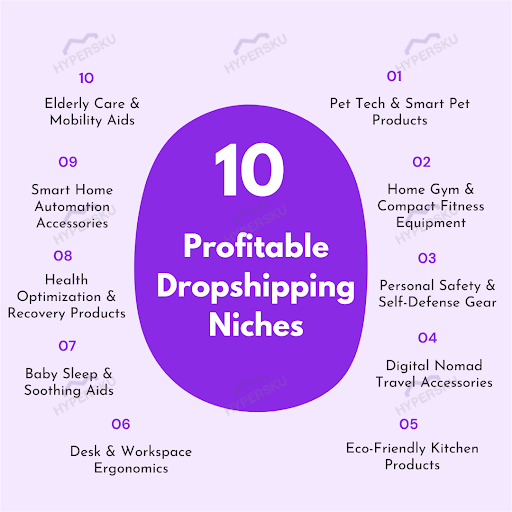
10 Highly Profitable Dropshipping Niches That Are Set To Take Over The Market
Let’s skip the tired categories everyone is already milking dry. What you are getting here is a lineup of the 10 best dropshipping niches that are quietly exploding with buyer demand and low competition.
1. Pet Tech & Smart Pet Products
Everyone is obsessed with their pets right now – and not just in a cute-photo-on-Instagram way. Pet owners are emotionally invested, and emotional buyers don’t overthink price tags. The idea of being a “good pet parent” matters more than saving a few bucks. It is not logic-based shopping. It is a money personality thing — “If my pet is happier, I’ll pay for it.”
Also, with more people living alone (especially in cities), pets are becoming their primary companions. That drives demand for smart pet solutions. In fact, the global smart pet product market is valued at $5.9 billion. Plus, most of these pet supplies are light and easy to ship worldwide. That is a logistical win.
Your buyers:
Millennials and Gen Z who treat their pets like family
People working long hours who need automation
Travelers or digital nomads who want to stay connected to their pets
Apartment dwellers where space and tech efficiency both matter
What sells well:
Smart feeders with timers and cameras
GPS collars with real-time tracking and app sync
Water fountains that purify and keep pets hydrated
Interactive toys that move, bounce, or react on their own
Pet activity monitors that show trends over time (like FitBit for pets)
2. Home Gym & Compact Fitness Equipment
Post-2020, working out at home is no longer just for budget-conscious individuals. And most people don’t want bulky treadmills or overpriced machines. They want gear they can stash under the couch or take on a weekend trip.
This lucrative niche is perfect because you are not selling “fitness dreams” – you are selling real-world practicality. And once customers start building their mini home gym, they usually come back for more.
Your buyers:
Busy professionals working remotely
Parents who need nap-time workouts
Beginners who feel intimidated by gyms
People who travel and want portable equipment
City dwellers with limited space
What sells well:
Resistance band kits with varying tensions
Door-mounted pull-up bars and suspension trainers
Adjustable dumbbells or space-saving kettlebells
Core sliders and ab rollers
Foldable yoga mats, balance balls, and stretch wheels
3. Personal Safety & Self-Defense Gear
Fear drives action – and in this case, purchases. Safety products are powerful, and people feel better having them, even if they never use them. And with so many real-world events triggering anxiety, this niche is riding a very real emotional current.
Plus, these products are usually compact, high-margin, and super shareable on TikTok or Instagram, especially when creators show how they work in real life.
Your buyers:
Women aged 18–40, especially those living or commuting alone
College students (and their parents)
Travel enthusiasts or solo adventurers
Rideshare drivers and delivery workers
Parents buying for teens
What sells well:
Loud personal alarms or keychain sirens
Compact stun flashlights
Door stoppers and lock reinforcements for hotel rooms
Disguised tools like comb knives or keychain pepper spray
Wearable GPS trackers with emergency alerts
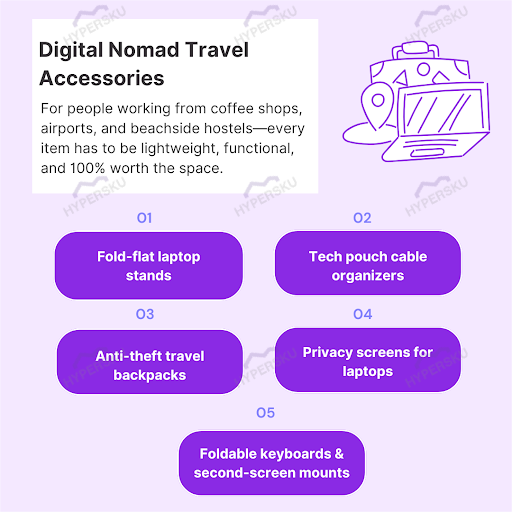
4. Digital Nomad Travel Accessories
More people are leaving traditional offices behind and working from anywhere that has coffee and Wi-Fi. And these digital nomads are serious about functionality and minimalism. They travel light, but every item they carry has to earn its place.
That means high-quality, problem-solving accessories that simplify setup and make them feel productive on the go. Bonus? These people are always sharing their workspace setups online, so your product has a high chance of being organically featured in a YouTube vlog or TikTok roundup.
Anyone tired of cubicles and chasing that laptop-lifestyle freedom
What sells well:
Laptop stands that fold down flat
Cord and charger organizers (tech pouches)
Anti-theft backpacks with hidden zippers and charging ports
Portable laptop privacy screens
Foldable travel keyboards or second-screen mounts
5. Eco-Friendly Kitchen Products
People are over plastic, and they are starting to show it in how they shop. The kitchen is where sustainability hits home hardest, so this niche taps into everyday behavior with visible impact. Today, the sustainable kitchen products market is worth $12.5 billion.
But it is not enough to be eco-friendly – it has to feel like an upgrade. A bamboo brush looks better on your counter than a neon sponge. A reusable food wrap feels cooler than plastic wrap. And when people share their “eco kitchen swaps” online, you are the one making the sale.
Your buyers:
Gen Z and millennials making eco-conscious lifestyle shifts
Parents trying to reduce waste at home
Home cooks who love kitchen gadgets
TikTok creators showing off their minimalist or zero-waste kitchens
What sells well:
Reusable silicone zip bags
Beeswax wraps and stretchy bowl covers
Compost bins with charcoal filters
Biodegradable sponges and brushes
Stainless steel or bamboo lunch kits
Plastic-free dish soap bars and refill kits
6. Desk & Workspace Ergonomics
The “work-from-home” era is evolving. People are working longer hours at their desks, and their backs and necks are begging for mercy. They want a desk setup that doesn’t make them feel like they have been hit by a truck at the end of the day.
And no one is going back to cheap plastic chairs and cramped keyboard trays. They want their workspace to look good and feel good. It is also super visual — Instagram reels, TikTok desk tours, Pinterest inspirational boards. If your product makes someone’s setup feel more cozy or more aesthetic, you have a buyer.
Your buyers:
Remote workers building out full home offices
College students trying to survive Zoom fatigue
Freelancers and creators
Gamers upgrading their battlestations
TikTok and YouTube productivity creators
What sells well:
Ergonomic footrests and wrist pads
Laptop stands (foldable or height adjustable)
Under-desk cable organizers and trays
Monitor risers and arm mounts
Kneeling chairs, seat cushions, and lumbar supports
Minimalist desk lamps with built-in wireless charging
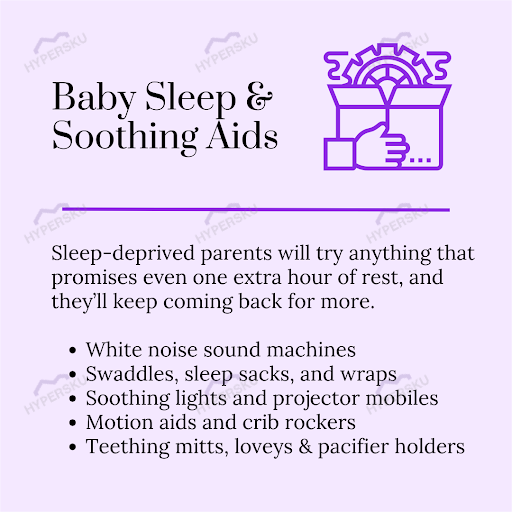
7. Baby Sleep & Soothing Aids
If you have ever seen a sleep-deprived parent, you know they will do literally anything for a decent night’s rest. That is exactly what makes these types of baby products so powerful and emotionally loaded.
New parents are overwhelmed and desperate for anything that helps their baby sleep longer. And unlike impulse gadgets, sleep-related products are investments. If it might even help their baby sleep better, it is going straight into the cart.
Bonus: This niche has very loyal repeat buyers. You win their trust on one item, and they are coming back for everything else.
Your buyers:
First-time parents and new moms
Grandparents and relatives buying gifts
Parents of colicky or high-needs babies
Parents in parenting Facebook groups or baby forums
What sells well:
White noise machines and portable sound soothers
Swaddle wraps and sleep sacks
Soothing night lights and projector mobiles
Baby-safe essential oil diffusers
Rocking crib attachments or motion aids
Pacifier holders, teething mitts, and calming loveys
8. Health Optimization & Recovery Products
There is a whole wave of consumers now obsessed with optimizing how they feel, not just avoiding sickness, but actually feeling great every day. These aren’t your average gym rats either. These are people tracking sleep cycles and doing cold plunges at 6 a.m.
It is a growing audience that lives on YouTube deep dives and wellness podcasts. They research like crazy and buy fast when they find something that fits their routine. And the best part is, they are looking to optimize everything they buy.
Like, for them, it is not enough to take creatine. They will be on Reddit threads and watching expert breakdowns about creatine intake timing – pre-workout vs. post-workout, with carbs or fasted, morning or night.
Now this might sound small, but for this crowd, it is everything. It shows how detail-obsessed they are and how much they are willing to spend on supplements and trackers that give them a measurable edge. And the margins on wellness tools – very, very nice.
Your buyers:
Health nerds and biohackers
Athletes, runners, and lifters
Overworked professionals looking to de-stress and sleep better
People recovering from injuries or burnout
Men and women 25–45 looking for “daily edge” products
What sells well:
Sleep tracking rings and wearable monitors
Red light therapy lamps and panels
Percussion massage guns (targeted or mini versions)
Compression wraps and recovery sleeves
Blue light blocking glasses
Adaptogen teas and stress-reducing tinctures (where legally allowed)
9. Smart Home Automation Accessories
Smart home gear helps people feel more in control, more efficient, and yes, more fancy. These products used to feel ultra high-tech and expensive. Not anymore. These days, you can automate your lights, curtains, and even your coffee machine for the price of a night out.
Once buyers get a taste of that convenience, they keep coming back. They are upgrading one room at a time, which means repeat purchases and upsells galore.
Your buyers:
Millennials setting up their first apartment or home
Tech-savvy homeowners who love gadgets
Busy families trying to make mornings less chaotic
Renters looking for plug-and-play upgrades
People into minimalism and productivity hacks
What sells well:
Smart plugs and timers (for lights, fans, etc.)
Motion sensor lights for stairs, closets, hallways
Voice-controlled LED strips
Remote curtain or blind openers
Smart diffusers and air purifiers
Door sensors and mini security alarms
10. Elderly Care & Mobility Aids
This is one of the most underestimated niches – and it is quietly growing faster than most others. According to a recent study, seniors in the U.S. are responsible for about 50% of all healthcare spending, and it is expected to grow by 7% in coming years.
Most people don’t talk much about mobility issues, but they will absolutely shop for ways to make life easier for their aging parents and grandparents.
The best part is these are products that can’t be bought on the spur of the moment. Caregivers and family members are actively researching. That means they are already typing detailed questions into Google and reading buyer guides before they ever land on your store.
And that is where your biggest edge lies – you can literally study their thought process before you sell to them. A great example is MedicalAlertBuyersGuide. It is a research hub that reviews different medical alert systems and aging-in-place products. All these are based on the needs of older adults and their caregivers.
Spend 30 minutes on that site and you will come away knowing exactly what this audience is worried about, what features they value, and how they decide what to buy. And this kind of insight is exactly what you need to create product pages and ads that actually convert.
Your buyers:
Adults shopping for aging parents or relatives
Seniors living independently
Professional caregivers and nurses
Rehab patients recovering from injuries or surgeries
What sells well:
Foldable canes, walkers, and step stools
Shower grab bars and toilet seat risers
Non-slip mats and easy-on slippers
Bed rails and leg elevation pillows
Pill organizers with alarms or smart reminders
One-touch jar openers and arthritis-friendly kitchen tools
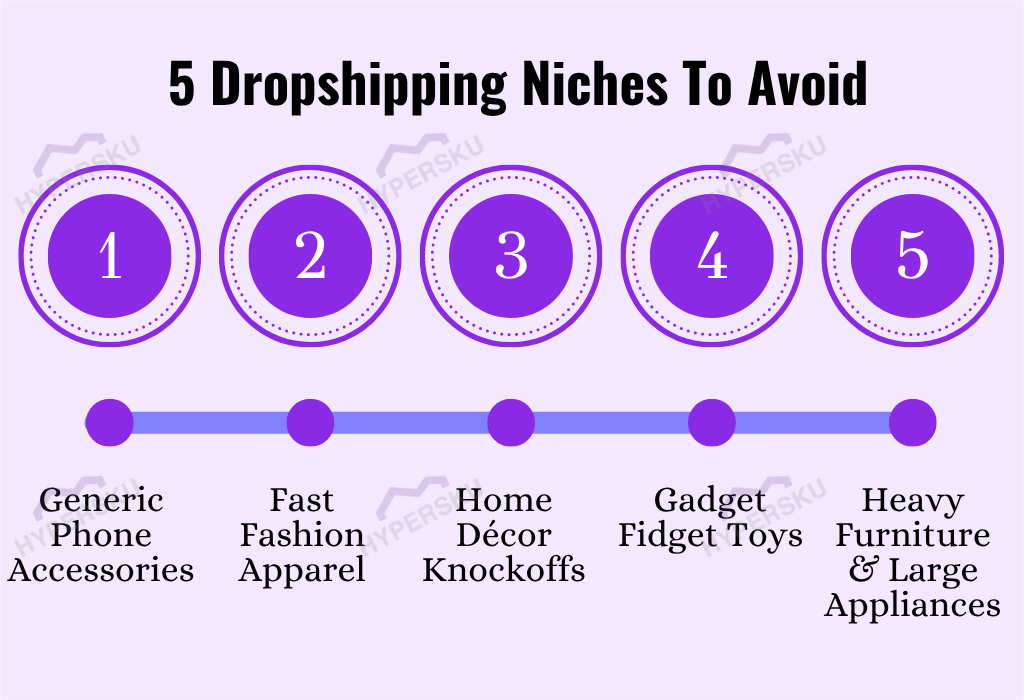
5 Dropshipping Niches You Should Avoid At All Costs
Most popular dropshipping niches just straight-up waste your time. They look exciting until you are stuck with refund requests or spending $50 to sell a $10 product. If you want to save yourself the stress (and your profit margins), completely skip these 5 dropshipping niches in 2025.
1. Generic Phone Accessories
At first glance, this niche looks like easy money. You see thousands of listings and think, “If everyone is selling them, they must be profitable, right?” No, this niche is a total race to the bottom.
Why this isn’t the right dropshipping niche:
Oversaturated beyond belief. You are not just competing with other dropshippers – you’re going up against Amazon, AliExpress, Shein, Walmart, and every gas station on earth.
Zero customer loyalty. No one cares where they get their cable from. They just want the cheapest one that arrives fast.
Margins are garbage. These products are dirt cheap, but not cheap enough to be profitable after ad spend and shipping.
High returns. If a $4 charger doesn’t work? Refund request. And now you are upside-down on the order.
The red flags:
Everyone is selling the exact same thing.
No room to differentiate unless you create your own brand (which beats the point of dropshipping).
Extremely short product lifespan. These are break-and-replace items.
2. Fast Fashion Apparel
Yes, there is a huge global demand for the clothing niche. Yes, people love buying outfits online. But as a dropshipping niche, fast fashion is a brutal minefield that is more likely to destroy your dropshipping store than build a profitable business.
Why is it difficult to sell products in this specific niche:
Sizing nightmares. Asian sizing, inconsistent fits, and vague product pages lead to one thing: returns. Lots of them.
Trendy today, dead tomorrow. Fashion moves FAST. By the time you find a trending style and run social media ads, it is already played out.
High customer expectations. People expect their clothes to look exactly like the photos and arrive quickly. None of that aligns with standard dropshipping.
Returns = profit killer. Clothes are the #1 most returned product online. And returns in dropshipping eat the cost.
The red flags:
You are listing 40 products and hoping one doesn’t tank.
Suppliers are using fake or heavily edited photos.
Fabric quality is a total gamble.
3. Home Décor Knockoffs
Selling aesthetic vases or Scandinavian-style clocks at a markup seems like a clever way to ride the Pinterest and interior design trend. But knockoff décor is a nightmare in disguise. Unless you are running a heavily curated eCommerce store with vetted suppliers, don’t gamble on someone else’s idea of “aesthetic.”
Why this niche backfires fast:
Inconsistency is the default. You might list a product that looks stunning in photos – only for it to arrive looking like it was made in a high school art class.
Breakability = refund city. Most home décor is fragile. And fragile + international shipping = disaster.
Shipping is slow. Buyers hate waiting two weeks for something they thought was “premium.”
Quality rarely matches the photos. You will get bad reviews fast, especially from buyers expecting a West Elm vibe for $28.
The red flags:
Product descriptions are vague, with no size or material details.
Packaging is non-existent or poor.
You have never actually seen the item in real life.
4. Gadget Fidget Toys
The products in this niche dropshipping business come with a built-in expiration date. They pop off every few months. People go nuts, sell thousands in a weekend, and then… it all dies. Fast.
Why this niche flops long-term:
Pure trend chasing. Fidget toys are the definition of a short hype cycle. They peak fast and crash faster.
Child-focused = parents involved. Parents don’t love when their kid’s “toy” takes three weeks to arrive and looks nothing like the TikTok ad.
Zero longevity. There is no path to building a brand around random gadgets that go viral once.
Fake demand. Just because a product has 100M views doesn’t mean people are still buying it.
The red flags:
You are basing product ideas entirely on TikTok trends.
Ads go viral, but conversions are disappointing.
The product gets banned from paid platforms (which happens more than you’d think).
5. Heavy Furniture & Large Appliances
This one is a silent trap for new dropshippers. Big-ticket items sound great – “I only need a few sales to make serious money!” But once you deal with the first broken shipment or angry customer, you will wish you had stuck to socks.
Long delivery windows. People don’t like waiting 3–5 weeks for something they expect in 5–7 business days.
Breakage = chaos. A cracked glass table? A dented fridge? Good luck explaining that to your customer.
Returns are brutal. You can’t just tell someone to “send it back.” They can’t. It is a couch.
The red flags:
Your product is over 15kg and not flat-pack.
You haven’t worked out a return or damage policy.
Your supplier doesn’t offer any protection on breakage.
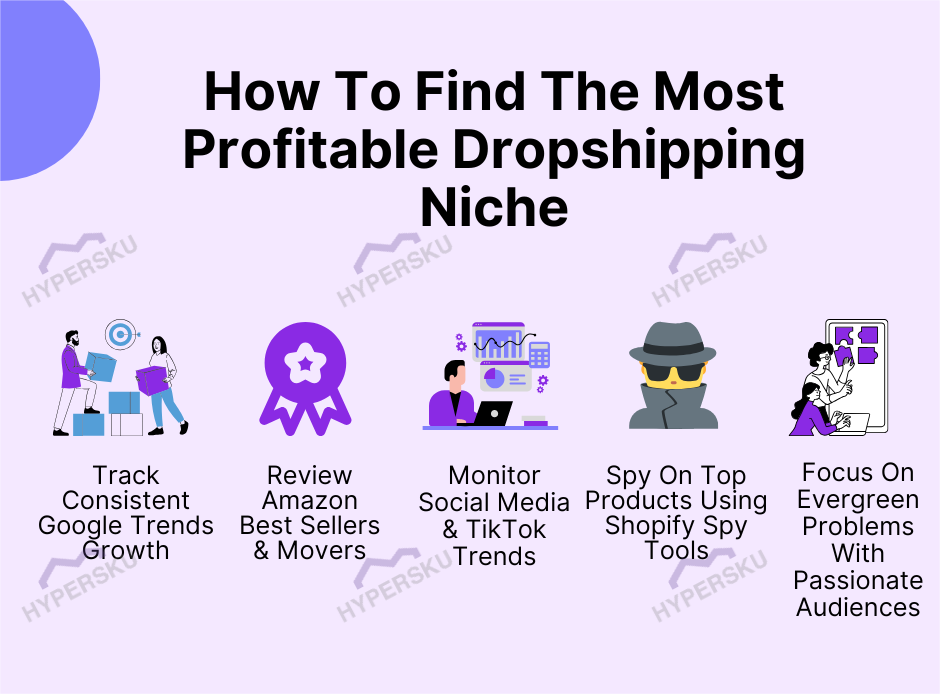
How To Find The Most Profitable Dropshipping Niche: 5 Proven Strategies
Most people are picking niche markets by copying whatever already went viral last month. That is not how a profitable dropshipping business operates. If you want a profitable niche that doesn’t fall apart in 6 weeks, you need to look for a real business strategy. Here are the 5 best ones.
1. Track Consistent Google Trends Growth
Don’t get distracted by sudden spikes. You are looking for niche ideas with slow and steady upward movement over the past 6–12 months. That is a clear sign of rising, sustainable interest.
Go to Google Trends, type in niche keywords.
Filter by “Past 12 months” and location-specific if needed.
Look for gradual growth, not random peaks (those often signal fads).
Compare multiple related terms to see what is actually catching on.
Pair that with lower volume search queries using search engine optimization tools to see if people are actually searching for the product.
2. Review Amazon Best Sellers & Movers
Amazon’s bestseller lists are real-time market demand data. And the shoppers leave clues. If hundreds are raving about a product “solving X,” that is a niche begging for better marketing.
Go to Amazon > Best Sellers, then drill down into subcategories.
Look for repeat types of products showing up across similar categories.
Click into the “Movers & Shakers” section to spot recent momentum.
Read customer reviews – they will tell you what is working and what is missing.
Hire an Amazon Seller Central expert to spot hidden niche gold. It is unconventional, but it works big time. These professionals know how to reverse-engineer what is selling and can read between the lines of bestseller trends. They analyze real-time customer behavior and flag rising subcategories you wouldn’t spot on your own.
3. Monitor Social Media & TikTok Trends
This is where you catch the most profitable dropshipping products before they explode. But instead of just watching market trends, observe buyer reactions.
Search product hashtags like “#AmazonFinds,” “#TikTokMadeMeBuyIt.”
Look for posts that trigger tons of saves, shares, and “Where did you get this?” comments.
Don’t just follow big creators. Find the right influencers with high engagement and viral comments – they reflect the real curiosity of the target audience.
4. Spy On Top Products Using Shopify Spy Tools
Use tools like Minea, Koala Inspector, or PPSpy to get valuable insights into what is selling on other Shopify stores. These tools let you piggyback on someone else’s testing. Learn what works in the top dropshipping niches, then do it better.
Look at ad frequency, engagement, and store activity.
Filter by niche or country to narrow in.
Track how long a product has been running ads – that is a great sign of consistent ROI.
Pro Tip: Hire a financial expert who understands eCommerce math. They can actually help more than you think. Once you have gathered intel from spy tools, a good eCommerce-savvy analyst can break it all down – estimate margins, cash flow cycles, ad spend viability.
Instead of guessing whether a niche is worth chasing, you will have someone crunching the real numbers behind what is working.
5. Focus On Evergreen Problems With Passionate Audiences
Forget trendy. You want problems that won’t go away and buyers who actually care. Most profitable niches grow slowly but pay out forever. Solve a real problem, and people will buy.
Think of chronic pain, sleep issues, pet anxiety, skin conditions, the car accessories niche, etc.
Look for online communities (Reddit, Facebook groups) where people vent, obsess, and recommend solutions.
Passionate = people who conduct market research, compare, and share what works.
Now, here’s the real challenge most people don’t talk about: identifying the right audience for these evergreen problems isn’t as simple as it sounds. Sure, you can guess. You can assume a few demographics or interests. But unless you have done this before or have access to real market intelligence, you are shooting in the dark.
That is why this is the stage where it actually makes sense to bring in a digital marketing agency like SIXGUN. And yes, maybe that sounds cliché, but this can help you more than you think.
They know how to break down who you are marketing to and why they buy. Instead of testing 5 angles and burning through the budget, they will pinpoint exactly which segment of the market is already primed to care.
Whether it is the subreddit where your target hangs out or the TikTok trend they follow at 2 a.m., the agency can use that intel to position your brand to hit with the right message at the right moment.
When your niche is built on emotion or daily struggle, this level of targeting makes all the difference between “just another store” and a brand that is actually remembered.
Why HyperSKU Is Your Perfect Backend Partner
After all the hype around profitable dropshipping niches, the real shift happens when execution meets opportunity. And HyperSKU makes that effortless. We built our platform with one goal in mind: to support entrepreneurs who want to scale fast and smartly.
Here’s exactly what we bring to your table:
Speedy & Reliable Sourcing: Tap into over 2,000 vetted factories for fast, cost-effective sourcing
Express Global Shipping: Get packages to buyers in 7–12 days most everywhere – plus automated tracking and address validation to dodge headaches
Real-Time Inventory & Pricing Sync: No more overselling – everything updates automatically across Shopify, WooCommerce, TikTok Shop, and more
Quality Control & Custom Branding: We inspect every item, remove unwanted labels, and offer custom packing, bundle creation, and even product photography for a true brand experience
Automation That Scales: One-click order fulfillment for up to 100 orders, centralized management across multiple stores, and smart features like bundle setups or BOGO deals
Local Warehouse Storage: Keep top products stocked and ready in regional warehouses, so you can handle demand spikes without long delays
Exceptional Customer Support by Real People: Enjoy 24/7 chat access, 3-to-1 account manager coverage, and proactive after-sales help that keeps the reputation of your online business intact
Print-on-Demand & Private Label Options: Want to add your logo, custom prints, or original designs? We will take care of everything.
Conclusion
Most people scroll past real opportunities because they are too busy chasing what already worked for another successful online business. The thing is, most profitable dropshipping niches are just sitting slightly outside the comfort zone of the average seller.
Just don’t try to build a store for everyone. Build a successful dropshipping business for someone, and do it so well that they stick around.
At HyperSKU, we help you go beyond the usual AliExpress chaos. If you are building an online store in one of these profitable dropshipping products, we at HyperSKU make sure the backend actually keeps up. We source products fast from trusted suppliers and ship in 7–12 days, not 30 – meaning happier customers, fewer chargebacks, and better reviews.
The world of e-commerce is constantly evolving, and private label dropshipping has emerged as one of the most lucrative business models in 2025. Unlike traditional dropshipping, private label dropshipping allows entrepreneurs to create unique brands by customizing and branding products sourced from suppliers — without the need to hold inventory or manage shipping logistics.
If you’re looking to build a profitable online business this year, understanding private label dropshipping and discovering the best private label products to sell is essential.
In this blog, we cover:
What private label dropshipping is and how it differs from traditional dropshipping
Why 2025 is the ideal year to dive into private label dropshipping
Top exclusive private label product niches to help you start your business
How partnering with HyperSKU can boost your private label brand’s success
Let’s dive in!
Understanding Private Label Dropshipping: What You Need to Know
What Exactly Is Private Label Dropshipping?
Private label dropshipping is a business approach where you sell products branded with your own label, but the production, storage, and delivery are handled entirely by a third-party supplier. This means you can focus on designing and marketing your brand without dealing with inventory management.
How It Stands Apart from Traditional Dropshipping Unlike traditional dropshipping — which involves selling generic, unbranded items sourced directly from suppliers — private label dropshipping empowers you to build a branded product line. This brings more control over the product’s look, feel, and customer experience.
Benefits of Private Label Dropshipping:
Brand Ownership: Create a distinct brand that customers can recognize and trust.
Better Profit Potential: Set your own pricing strategy, increasing your margins.
Competitive Edge: Offer unique, branded products that differentiate you from other sellers.
Potential Drawbacks:
Increased Marketing Needs: Establishing brand awareness takes more time and effort.
Initial Costs: You’ll invest upfront in branding, packaging, and promotional activities.
Supplier Coordination: Managing the supply chain and supplier relationships can be more involved.
The Private Label Boom: Why 2025 Is a Game Changer
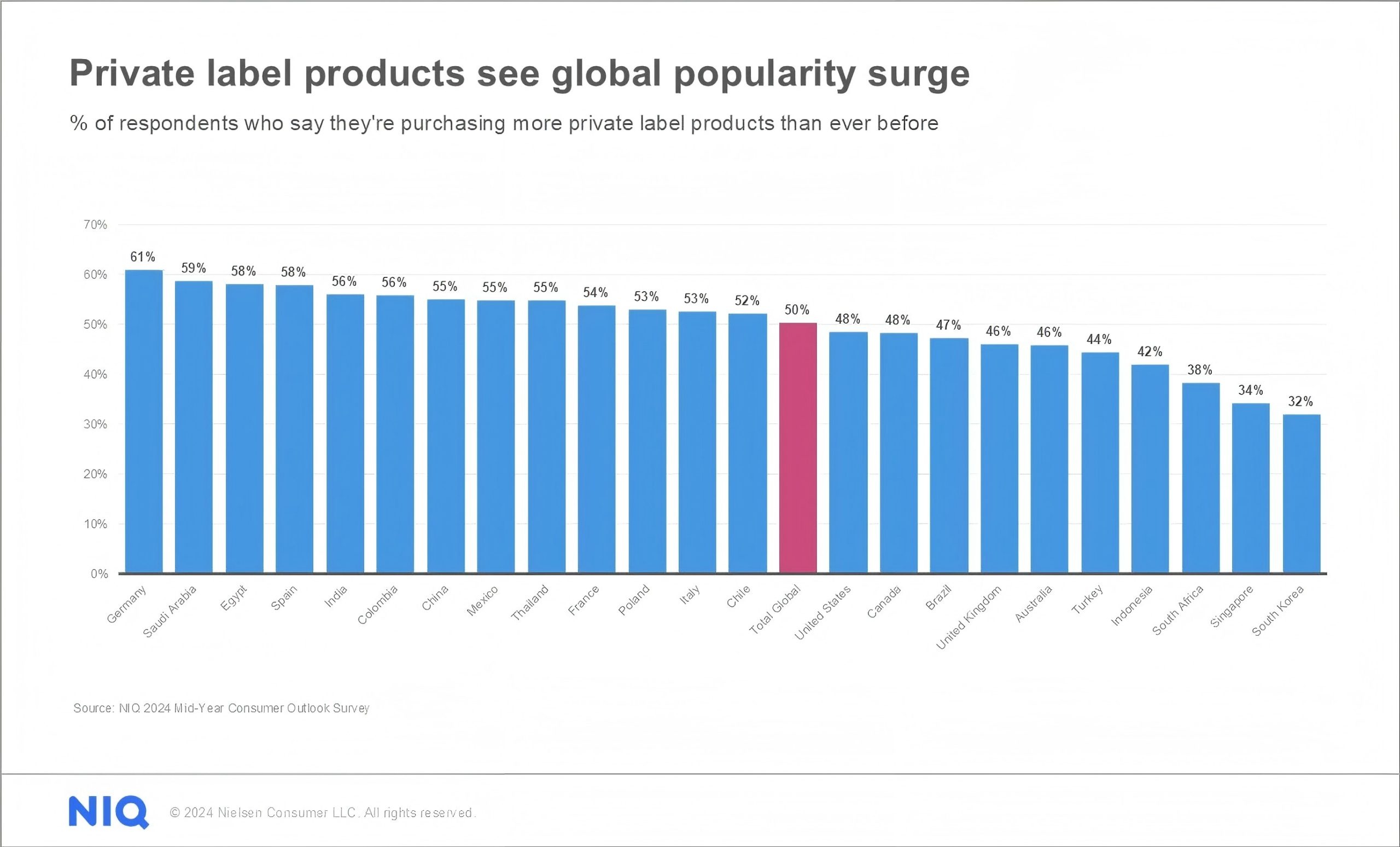
Let the numbers speak for themselves: private label products have been gaining impressive momentum worldwide. According to data from NIQ RMS in Q2 2024, value sales of private label items grew by 5.6% compared to the previous year. The fastest growth came from regions like the Middle East and Africa, soaring by 34.3%, and Latin America, which saw a 14.2% increase—both largely influenced by inflationary pressures. Globally, private labels are steadily capturing a bigger share of the market, showing that consumers are increasingly choosing these brands over traditional options.
Changing Consumer Mindsets: The Private Label Advantage
As we head into 2025, shoppers are no longer just buying products—they’re looking for items that align with their personal identity and values. The demand for authentic, high-quality, and customizable products continues to rise, with consumers willing to invest more in brands that reflect their individuality.
The Need for Personalization: Today’s consumers want to stand out. According to a 2024 report by Sender, 84% of buyers say they prefer being treated as unique individuals rather than just numbers, a trend especially strong among younger generations seeking tailored shopping experiences.
Growing Confidence in Quality: Trust in private label products is increasing. A 2023 McKinsey study shows that over 80% of US consumers rate private-label food items as equal or superior in quality to national brands, while nearly 90% believe private labels deliver equal or better value. This demonstrates that quality and affordability are crucial factors driving the private label market growth.
Market Insights: Key Data Shaping Private Label Success
In 2025, the private label landscape isn’t just growing—it’s evolving in ways that open new doors for ambitious dropshippers. The real advantage lies in knowing exactly where to focus: from carving out micro-niches to targeting regions with explosive e-commerce growth. Here’s your data-driven guide to spotting—and seizing—those high-impact opportunities.
1. Find Your Sweet Spot: Niche Within Niches
Instead of entering broad, crowded categories like “health and beauty” or “home goods,” the real winners are the micro-niches. For example, instead of generic skincare, think “anti-blue-light screen-protection facial mist.” This sharpens your marketing, reduces competition, and allows deeper brand connections.
As one dropshipper shared on Reddit:
“I tend to start large niche then go down a rabbit hole to find a niche within the niche… clothing → dresses with pockets only.” Reddit
2. Rapidly Growing Regions You Can’t Ignore
Emerging markets are where ambitious dropshippers can stake their claim—fast growth and high receptivity create fertile ground:
Latin America: E-commerce here is projected to grow at a CAGR of 8.5% from 2023 to 2027, increasing from USD 182.7 billion in 2022 to around USD 269.8 billion by 2027.
Middle East & Africa: Online shopping markets are expanding at a CAGR of 9.64%, with e-commerce GMV rising from USD 114.4 billion in 2022 to USD 179.1 billion by 2027.
Social Commerce Boom: In the Middle East & Africa, social commerce is booming—expected to hitUSD 12.58 billion in 2024, growing at 27.6% CAGR through 2029.
3. Cross-Border Growth via New Platforms With entry barriers at an all-time low, even small private label brands can now reach global customers faster than ever:
New-generation platforms like PrestaShop, and Lightfunnels offer integrated tools for storefront creation, payment processing, and logistics coordination—tailored for cross-border selling. Combined with hyper-targeted niches and rising demand in emerging markets, these platforms enable brands to scale internationally without the cost burden of maintaining local inventory.
10 Exclusive Private Label Product Niches for 2025
With competition heating up, simply knowing “what’s trending” isn’t enough—you need niches that are not only popular but also have clear room for differentiation. These 10 curated product categories for 2025 are designed to help private label dropshippers target specific audiences, build brand loyalty, and capture market share with products that feel personal and premium.
1. NAD Supplements
Why It’s Perfect: NAD supplements tap into the booming longevity and biohacking trend. Consumers are increasingly interested in products that support energy metabolism, cognitive function, and anti-aging, making this a high-potential niche.
Example Stores:
Elysium Health – Focused on science-backed NAD+ supplements.
Tru Niagen – Popular brand targeting energy and cellular health.
2. Blue Light Glasses
Why It’s Perfect: With the rise of remote work and screen-heavy lifestyles, blue light glasses are in demand to reduce eye strain and improve sleep quality. They appeal to both office workers and gamers.
Example Stores:
Felix Gray – Stylish blue light glasses with clear lenses.
Swanwick – Known for fashionable and effective blue light protection.
3. Luxury Sleep & Relaxation Products
Why It’s Perfect: Self-care and wellness continue to dominate consumer priorities. High-quality sleep masks, weighted blankets, and aromatherapy products meet the growing demand for better sleep and relaxation.
Example Stores:
Brooklinen – Premium bedding and sleep accessories.
Hatch – Offers sleep-focused gadgets and wellness products.
4. Gender Neutral Swimwear
Why It’s Perfect: The inclusivity movement has driven demand for clothing that transcends traditional gender categories. Gender-neutral swimwear appeals to consumers seeking comfort, style, and self-expression.
TomboyX – Known for gender-neutral and body-positive swim collections.
5. Eco-Friendly Baby Clothes
Why It’s Perfect: Parents increasingly prioritize sustainability and safety for their children. Bamboo fiber and organic cotton baby clothes align with this eco-conscious mindset, offering comfort and environmental responsibility.
Finn + Emma – Focused on eco-friendly, non-toxic clothing for infants.
6. Spiritual Products
Why It’s Perfect: Products like tarot cards, crystals, and meditation tools cater to a growing community interested in mindfulness, self-discovery, and spiritual wellness.
Why It’s Perfect: Pet owners are increasingly seeking specialized care and experiences for their small pets, such as rodents or reptiles. Subscription boxes offer convenience, surprise, and ongoing engagement.
Example Stores:
Bunnie Box – Subscription boxes for small animals like rabbits and guinea pigs.
Beardie Box – Monthly curated boxes for bearded dragons and reptiles.
8. Sustainable Cultural Fashion
Why It’s Perfect: There’s a growing interest in fashion that celebrates cultural heritage while being sustainable. Indian, Muslim, and Middle Eastern-inspired designs cater to niche markets looking for authenticity and eco-conscious materials.
Haute Hijab – Eco-conscious modern hijabs and modest fashion.
9. Home Office Wellness & Ergonomic Desk Gear
Why It’s Perfect: As remote work becomes standard, ergonomic and wellness-focused office products are in high demand. These items improve comfort, productivity, and overall health.
Example Stores:
Kensington – Offers a wide range of proven ergonomic desk accessories
Uplift Desk – High-quality standing desks and ergonomic solutions.
10. Artisanal Kitchenware
Why It’s Perfect: Consumers are seeking unique, high-quality kitchen tools that combine functionality and aesthetics. Artisanal kitchenware appeals to home chefs, gifting markets, and lifestyle-conscious shoppers who value craftsmanship.
Example Stores:
The Curated Pantry – Features hand-blown glassware and hand-carved utensils that embody artisan quality and authentic storytelling
Serrv – Features fair-trade, artisanal kitchen tools made by skilled craftspeople worldwide.
Building Your Brand: How HyperSKU Supports Your Private Label Journey
Launching a successful private label brand can be exciting but also challenging. From sourcing the right products to managing packaging, fulfillment, and quality control, there are many moving parts to juggle. That’s where HyperSKU comes in. By streamlining key aspects of the private label process, HyperSKU empowers entrepreneurs to focus on what really matters: building a strong, memorable brand that stands out in today’s competitive e-commerce market.
1. Simplified Product Sourcing
HyperSKU connects you with a wide range of vetted suppliers, making it easier to find the perfect products for your private label. Whether it’s eco-friendly baby clothes or artisanal kitchenware, you can source high-quality items quickly and efficiently.
2. Custom Branding Made Easy
With HyperSKU, adding your logo, custom packaging, or unique labeling is straightforward. This ensures every product reinforces your brand identity and stands out in the competitive e-commerce landscape.
Wanna see how HyperSKU Brandlift Package can empower your business?Get more info
3. Streamlined Order Fulfillment
HyperSKU handles inventory, packaging, and shipping, saving you time and reducing operational headaches. This lets you focus on marketing, customer engagement, and scaling your business.
4. Quality Control You Can Trust
From pre-shipment inspections to consistent supplier monitoring, HyperSKU helps maintain high-quality standards, ensuring your private label products meet customer expectations.
5. Fast and Reliable Shipping
HyperSKU’s global fulfillment network enables faster delivery times and reliable logistics, providing a better customer experience and reducing the risk of negative reviews.
6. Support for Scaling Your Brand
Whether you’re testing a new niche or expanding internationally, HyperSKU’s private label solutions make it easier to scale without sacrificing quality or control.
Final Thoughts
Building a successful private label brand doesn’t have to be overwhelming. With HyperSKU’s streamlined sourcing, custom branding, reliable fulfillment, and quality control, entrepreneurs can focus on growing their business, connecting with customers, and bringing their unique vision to life. Whether you’re just starting out or looking to scale, HyperSKU provides the tools and support you need to turn your private label dreams into reality.
Frequently Asked Questions
1. Why choose private label dropshipping over regular dropshipping? Private label dropshipping allows you to sell branded products under your own label, increasing perceived value and customer loyalty. It differentiates your store from generic dropshipping shops and can justify higher prices.
2. How can HyperSKU help me find private label suppliers? HyperSKU connects you with vetted suppliers offering customizable products ready for private labeling. You can filter suppliers by product category, MOQ, and shipping capabilities to find the best fit for your brand.
3. Can I customize the packaging for my private label products? Yes! HyperSKU supports custom packaging and branding options, including logo printing, branded boxes, and inserts, helping you create a memorable unboxing experience.
4. How do I ensure product quality when private labeling? HyperSKU allows you to request samples from suppliers before bulk orders. You can also read supplier reviews, check certifications, and communicate directly with dropshipping suppliers to maintain quality standards.
5. Do I need to handle inventory for private label dropshipping? No. HyperSKU handles order fulfillment and shipping directly from suppliers, so you don’t need to stock products. You can focus on marketing and growing your brand.
6. How long does it take to launch a private label product using HyperSKU? The timeline depends on customization and shipping. Simple logo-branded items can be launched within a few weeks, while fully customized products with branded packaging may take longer. HyperSKU provides estimated production and shipping times for planning.
Here’s the scenario: you’ve taken the leap into dropshipping — congrats. You’ve set up your store, picked your niche, done your product research, and maybe even made your first sales. Chances are, you started by working with either a private agent or a dropshipping supplier platform to handle fulfillment.
At first, both options might seem fine. But as your store begins to grow — more orders, more customers, more complexity — the choice of fulfillment partner becomes more than just operational. It directly affects your ability to scale, build a brand, and deliver consistent customer experience.
So… which is better for growing your brand?
In this article, we cover:
Key differences between private agents and dropshipping suppliers
Why scaling SMBs are moving away from agents
How dropshipping supplier help with brand scaling
When to consider switching
Whether you’re preparing to scale or already facing fulfillment challenges, this guide will help you evaluate your options — and choose the right path forward for your brand.
Why Choosing the Right Dropshipping Supplier Matters
When you first start dropshipping, a private agent might seem like the ideal partner — flexible, affordable, and available when you need them. In the early days, when you’re handling just a few orders and learning the ropes, they can be surprisingly responsive. You get one-on-one support, direct communication, and help with sourcing or problem-solving on demand.
But as your business grows, that level of responsiveness becomes harder to maintain. With more orders, more customer issues, and tighter delivery expectations, your agent’s time and capacity may start to stretch thin. Delayed replies, missed follow-ups, or fulfillment errors can quickly snowball — affecting your customer experience and your brand.
Fulfillment isn’t just a back-end task. It directly impacts your brand reputation, customer retention, and your ability to scale profitably. If you’re running 10 or more orders per day, or preparing for aggressive marketing campaigns, it’s worth asking whether your current setup can keep up. Many merchants at this stage switch to a morescalable dropshipping supplier platform that offers better infrastructure, automation, and support for growing brands.
A Common Scenario for Growing Dropshippers
Here’s a real-world example that might sound familiar.
Andrew, a seasoned dropshipper in Europe focused on bedding products, was ready to scale. With daily orders rising to 60–100, he expected his operations to grow with him. But his private agent — helpful in the beginning — started to fall behind.
Manual workflows slowed things down. Subpar packaging led to damaged products and unhappy customers. And with limited capacity, his agent couldn’t respond quickly as issues mounted. The growing pains became business risks.
After switching to HyperSKU, things changed fast. Within just a month, Andrew’s store fulfilled over 3,000 orders and surpassed $10,000 in revenue — powered by better packaging, automation, and full transparency. Now, he’s scaling with confidence and far fewer headaches.
Private Agent vs. Dropshipping Supplier: What’s the Difference?
When it comes to order fulfillment, most dropshippers start with either a private agent or a dropshipping supplier platform likeHyperSKU. While both can help you source and ship products, their approach and ability to support your growth are very different.
Definitions
Private Agent: An individual or small team who manually sources and fulfills orders, usually communicating one-on-one through tools like WhatsApp or WeChat.
Dropshipping Supplier Platform: A technology-driven solution that offers automated order syncing, faster fulfillment, centralized product sourcing, and brand customization — all in one place.
Core Service Differences
Private agents often provide a highly personal experience and flexibility early on. But their manual processes and limited bandwidth can become bottlenecks as your business scales. Dropshipping suppliers likeHyperSKU offer scalable solutions that combine automation with real support — without relying on one person.
Feature
Private Agent
Dropshipping Supplier (e.g. HyperSKU)
Product Sourcing
Manual, case-by-case
Platform-based with direct sourcing options
Order Fulfillment
Manual or semi-manual
Automated and streamlined
Shipping Speed
Slower, may vary with workload
Faster, more stable with logistics partners
Communication
Direct but limited during busy periods
Dedicated support + dashboard tracking
Branding Options
Available but requires negotiation
Custom packaging, inserts, and more
Quality Control
Varies by agent
Built-in quality assurance
Scalability
Limited by agent’s capacity
Scales easily with your business
Why Scaling Brands Choose Vetted Dropshipping Suppliers like HyperSKU
As your store grows, informal and manual fulfillment setups often can’t keep up. That’s why scaling ecommerce brands are turning to professional dropshipping suppliers like HyperSKU — purpose-built to support your business as it scales, with structure, reliability, and brand-focused tools.
With HyperSKU, you get:
Consistent quality control — Our dedicated warehouses and established supplier network help ensure stable product quality. For brands seeking even higher standards, our Brandlift Package offers enhanced quality checks, professional product photography, and test orders — giving you full visibility and control before launch.
Faster, more reliable fulfillment — With streamlined logistics, most orders are delivered within 7–12 days to major destinations. (Delivery times may vary depending on countries and regions.)
Multi-store integration and management — Manage multiple stores and sales channels from one dashboard. HyperSKU supports direct integrations with platforms like Shopify, WooCommerce, and more, making fulfillment smoother and more automated. See how easy it is to connect your store in our Help Center
Automation that saves time — Our system eliminates manual processes like spreadsheets or copy-pasting tracking numbers. Orders are synced in real time, inventory is updated automatically, and fulfillment happens with just a few clicks.
Brand-building support — Stand out in a competitive market with custom packaging, inserts, and content. With our Brandlift Package, you’ll gain access to tailored branding solutions such as:
Custom-branded packaging and stickers
Professional, studio-grade product photography
Branding consultation from our team to help you design a consistent unboxing experience
Ready-to-scale infrastructure — Whether you’re processing 10, 100, or 1,000 orders a day, HyperSKU’s operational setup and scalable logistics are built to grow with you — no extra hiring or agent coordination needed.
Which Should You Choose Based on Your Business Stage?
As your business evolves, so do your fulfillment needs. Here’s how to evaluate which solution fits your current stage — and how to recognize when it’s time to upgrade.
Just Starting Out (Fewer than 10 Orders/Day)
If you’re new to dropshipping and still testing your product-market fit, working with a private agent may offer flexibility and low entry barriers. You might benefit from:
Direct, one-on-one communication
Lower minimum order quantities
Quick, ad hoc support on sourcing and product updates
However, private agents typically rely on manual processes and operate without the systems needed for long-term growth.
Scaling SMBs (10+ Orders/Day)
Once your daily volume grows, fulfillment complexity increases — and small inefficiencies can start to impact customer satisfaction and business performance. Relying on a single agent at this stage often leads to:
Delays in communication and problem-solving
Packaging or fulfillment errors due to lack of process automation
Difficulty tracking performance or scaling across multiple stores
Limited access to branding or customization
This is where vetted dropshipping suppliers like HyperSKU make a difference — offering professional infrastructure, automation tools, and branding support tailored for scale.
Learn how HyperSKU helps SMBs streamline fulfillment and scale with confidence → Explore Our Services
Signs You’ve Outgrown Your Private Agent
Still unsure if it’s time to switch? Here are some common signs:
You’re spending too much time on manual order updates or tracking issues
Product quality or packaging complaints are increasing
Your current partner can’t support new product launches efficiently
You’re ready to build a brand, but lack the tools or flexibility
Backend operations are slowing down your growth
If these challenges sound familiar, your business may be ready for a more scalable fulfillment solution.
Final Thoughts
Choosing between a private agent and a professional dropshipping supplier isn’t just about who can ship your products — it’s about who can support your growth. While private agents may offer flexibility in the early stages, they often fall short when it comes to consistency, scalability, and brand-building.
As your store grows, the right fulfillment partner becomes essential. Vetted dropshipping suppliers like HyperSKU provide the infrastructure, automation, and brand support today’s ecommerce businesses need to scale confidently.
Do I need to use a dropshipping platform to run a dropshipping business?
No — but using a dropshipping platform can significantly improve your operations, especially as your order volume grows. While it’s possible to work manually or with a private agent, platforms like HyperSKU offer automation, inventory tracking, and direct platform integration that help reduce fulfillment errors, improve shipping times, and support long-term scalability.
How do I switch from a private agent to a professional dropshipping supplier?
Start by evaluating what your current agent is lacking — whether it’s speed, consistency, or branding. Then, explore vetted dropshipping suppliers like HyperSKU that offer fast onboarding, integration with your store, and responsive support. The transition typically involves syncing your product listings and SKUs, setting up fulfillment rules, and working closely with your new account manager to ensure a smooth switch.
Can a dropshipping supplier help with custom packaging and branding?
Yes. Not all dropshipping suppliers offer this, but HyperSKU provides advanced brand-building support, including custom packaging, branded inserts, and professional product photography through our Brandlift Package. These services help you stand out in a competitive market and build customer loyalty.
How do I know if my dropshipping supplier can handle scaling up my order volume?
Ask the right questions: Can they fulfill 100+ orders per day? Do they have automated systems in place? Is there a dedicated support team to resolve issues quickly? A supplier like HyperSKU is built for scale — offering stable fulfillment infrastructure, quality control processes, and transparent communication, so your operations remain smooth as you grow.
Have you opened Temu recently expecting the same wide selection of low-priced products, only to find fewer options, more local listings, or higher final costs?
The shopping experience has changed.
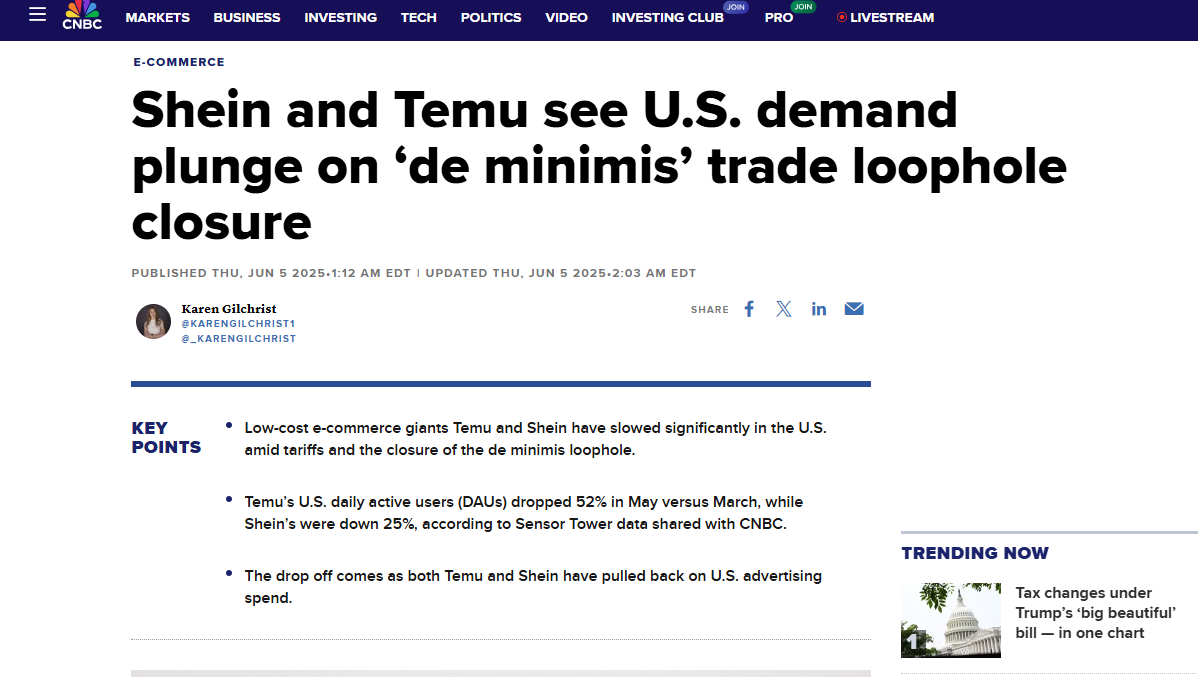
One of the biggest reasons is the shift in U.S. de minimis rules. The duty-free de minimis exemption ended for products from China and Hong Kong on May 2, 2025, and was later suspended more broadly for low-value shipments entering the U.S. on August 29, 2025.
This change had a direct impact on platforms built around low-cost cross-border shipping. In May 2025, Temu stopped shipping products directly from China to U.S. consumers and shifted its U.S. experience toward locally based sellers and domestic warehouse fulfillment.
For shoppers, this means Temu may no longer feel like the same ultra-low-cost marketplace it once was. Product variety can be more limited, pricing may be less aggressive, and the shopping experience depends more heavily on local inventory.
That is why many consumers are now searching for sites like Temu, Temu alternatives, and other affordable shopping sites that can still offer competitive prices, reliable delivery, and a smoother buying experience.
Below, we compare the best sites like Temu in 2026, including major marketplaces, budget shopping apps, regional platforms, and independent Shopify stores backed by reliable sourcing and fulfillment partners.
What Made Temu So Popular
You might be wondering how a shopping app nobody had heard of in 2022 became a household name almost overnight. A few things clicked together perfectly.
1. Pricing — “Shop Like a Millionaire”
Temu’s slogan isn’t just marketing fluff. It taps into a very human desire: getting luxury-style deals without spending like one. Everything from fashion to kitchen gadgets came with bargain pricing that felt almost too good to be true — because, as it turns out, a lot of it was built on a trade loophole. But more on that below.
2. Fast Shipping — Outspeeding the Competition
At its peak, Temu could get packages from Chinese warehouses to U.S. doorsteps in under two weeks — faster than most cross-border platforms at the time. For shoppers used to waiting a month for AliExpress orders, that was a genuine upgrade.
3. Generous Refund Policy — Risk-Free Shopping
Temu’s “no-questions-asked” refund policy made it easy to take a chance on a $3 item. If it showed up broken or nothing like the photo, you got your money back — no lengthy disputes, no return shipping. That low-risk feel kept shoppers coming back.
The Flip Side — What Shoppers Should Know
The cracks started showing in 2025, and by 2026, the platform looks noticeably different.
1. The De Minimis Loophole Is Gone
This is the big one. The rule that let packages under $800 enter the U.S. duty-free — and that quietly powered Temu’s entire pricing model — was eliminated for Chinese shipments on May 2, 2025, and extended globally on August 29. The result? Temu stopped shipping directly from China to the U.S. altogether. The $5 sneakers and $1.50 gadgets that defined the platform are largely gone, replaced by a smaller selection from U.S.-based warehouses at noticeably higher prices.
2. Less Variety, Same Cluttered App
Browse Temu today and the catalog feels thinner — a lot of what made it fun to scroll through simply isn’t available anymore. Meanwhile, the app itself hasn’t gotten any calmer: the banners, countdown timers, and push notifications are still all there, just with fewer products behind them.
3. Lingering Trust Concerns
Data privacy questions and inconsistent product quality were already common complaints before 2025. With the platform now in the middle of a major operational overhaul, reviews on product consistency have become even more unpredictable as new U.S.-based sellers come onboard.
Taken together, this explains why so many shoppers are actively looking for sites like Temu that deliver on what Temu originally promised — low prices, fast shipping, and a shopping experience that doesn’t feel like a gamble.
Temu’s model has changed, but demand for affordable online shopping is still strong. The best Temu alternatives are not just the cheapest platforms. They are the platforms that balance price, delivery speed, product quality, buyer protection, and overall shopping experience.
Here are the best sites like Temu to consider in 2026.
Amazon’s direct answer to Temu. Haul is a dedicated section within Amazon offering products priced at $20 or less, sourced from budget sellers. You get the rock-bottom pricing of Temu combined with Amazon’s logistics network, buyer protection, and easy returns.
Best for: US shoppers who want Temu-level prices without the uncertainty
Pros: Trusted platform, domestic fulfillment, no import surprises
Cons: Smaller catalog than full Amazon, product selection still growing
👉 If Temu’s unpredictability was the issue, Haul is the most straightforward upgrade.
Walmart’s online marketplace has quietly become one of the strongest domestic alternatives to Temu. Millions of third-party sellers list budget products across every category — often at prices that rival cross-border platforms, but with the speed and reliability of US-based fulfillment.
Best for: Everyday essentials, groceries, household goods
Pros: Free 2-day shipping on qualifying orders, in-store pickup, trusted brand
Cons: Less of the “discovery” browsing feel that made Temu fun
👉 Not flashy, but dependable — exactly what a lot of shoppers are looking for right now.
If Temu is the flashy new kid, AliExpress is the OG. It’s been around for years, connecting shoppers with thousands of overseas sellers. You can find almost anything here — from phone cases to wedding dresses — usually at rock-bottom prices.
Best for: Electronics, fashion, home goods, quirky finds
Pros: Massive selection, global reach, buyer protection
Cons: Shipping can test your patience (weeks, sometimes months), and product quality depends heavily on the seller
👉 Great for treasure hunting, as long as you don’t need your order tomorrow.
SHEIN started out as a fast-fashion powerhouse, but now it’s way more than clothes. Think home décor, beauty gadgets, pet supplies — if it’s trending on TikTok, there’s a good chance SHEIN has it (in multiple colors).
Best for: Trend-driven fashion and affordable lifestyle goods
Pros: Frequent flash sales, personalized app experience, constant new arrivals
Cons: Returns aren’t always straightforward, and supplier transparency can be murky
👉 If you love chasing the latest trend at a fraction of the cost, SHEIN feels like candy shopping — just be ready for some trial and error.
Think of DHgate as more of a wholesaler’s marketplace. It’s been a go-to for dropshippers and bulk buyers for years. You’ll see everything from branded lookalikes to customizable products straight from factories.
Best for: Bulk orders, branded alternatives, customization
Pros: Very competitive pricing, private-label and custom options from suppliers
Cons: Quality can be hit-or-miss, and shipping often takes weeks
👉 If you’re patient and buying in larger quantities, DHgate can be a goldmine. For quick one-off purchases, less so.
Once the butt of memes about weird products and painfully long delivery times, Wish has been quietly improving. Prices are still ultra-low, and the scroll-and-discover vibe makes it fun if you’re in browsing mode.
Best for: Impulse buys, quirky gadgets, novelty gifts
Pros: Budget-friendly, playful UI, easier to navigate now
Cons: Still inconsistent quality, shipping times vary a lot
👉 Wish is like the digital version of a dollar store — you might not find what you need, but you’ll almost always find something you want.
LightInTheBox has been around forever but doesn’t get as much hype as Temu or SHEIN. The platform covers fashion, tech accessories, and lifestyle gear, with localized languages and payment options that make global shopping easier.
Best for: Special occasion outfits, accessories, lifestyle gadgets
Pros: Wide range of categories, localized support in multiple markets
Cons: Less popular than competitors, reviews can be inconsistent
👉 Not the first platform people think of, but a solid backup when other sites don’t have what you’re looking for.
New & Emerging Sites Like Temu
These newer or rapidly growing platforms are gaining attention for replicating — or improving on — what Temu originally offered.
TikTok Shop isn’t just a gimmick — it’s become a legitimate marketplace in its own right. If you’ve watched a product go viral on your For You page, you’ve probably already seen it sold here.
Best for: Trending beauty, lifestyle, and viral products
Pros: Social proof through influencers, impulse-friendly shopping
Cons: Harder to filter and search, mixed delivery experiences
👉 Great if you’re hunting what’s hot right now, but less ideal for planned, practical purchases.
Branded Shopify Stores
Not every alternative to Temu has to be a large marketplace.
Many independent Shopify stores now offer a more curated shopping experience, with clearer product positioning, stronger brand presentation, and more predictable fulfillment. These stores may not have the same endless catalog as Temu, but they can offer a more reliable experience for shoppers who care about product quality, delivery transparency, and customer support.
Best for: Shoppers who want curated products and a more trustworthy brand experience Pros: Better product selection, clearer tracking, stronger brand identity, more consistent post-purchase experience Cons: Smaller product range than large marketplaces, sometimes higher prices
Behind the scenes, many Shopify stores work with sourcing and fulfillment partners to manage product selection, packaging, shipping, and order fulfillment. For example, HyperSKU helps ecommerce brands source products, customize packaging, sync Shopify orders, and fulfill globally.
For shoppers, this means independent stores can offer a more consistent alternative to marketplace shopping. For sellers, it shows a clear opportunity: build the shopping experience that Temu can no longer fully own.
How to Choose the Right Temu Alternative for You
With so many sites like Temu to choose from, the right pick comes down to what you actually care about most. Here’s how to narrow it down.
1. Consider What You’re Buying
Different platforms still dominate different categories:
For fashion: SHEIN remains the go-to for trend-driven, budget-friendly clothing.
For gadgets and electronics: AliExpress or DHgate offer the widest variety.
For everyday essentials: Walmart is hard to beat on price and convenience.
For viral, trending finds: TikTok Shop or Amazon Haul are worth checking first.
2. Prioritize Shipping Speed
With the de minimis exemption gone, cross-border shipping is slower and more expensive across the board. If delivery time matters to you, lean toward platforms with domestic fulfillment — Amazon Haul, Walmart, or Shopify-based stores backed by local fulfillment partners will consistently outperform overseas marketplaces.
3. Check Return Policies Before You Buy
Buyer protection varies a lot across platforms. If you’re less familiar with cross-border shopping, stick with platforms that have a clear, proven process — SHEIN and Amazon Haul are generally the most straightforward. For marketplace platforms like AliExpress or DHgate, always check individual seller ratings before committing.
4. Forget the “Too Good to Be True” Price
The era of $1.50 garlic presses and $5 sneakers is over. With the de minimis loophole closed globally as of August 2025, those prices were only ever possible because of a trade exemption that no longer exists. Any platform still advertising those kinds of prices on imported goods is either absorbing a significant loss or hasn’t updated its listings. Budget accordingly — and when you find a deal that looks real, it probably is.
Beyond Marketplaces: Build the Shopping Experience Temu Can No Longer Deliver
The shift in Temu’s model shows a bigger change in ecommerce. Shoppers still want affordable products, but they also want reliable delivery, clear tracking, fair return policies, and a shopping experience they can trust.
For consumers, this means comparing multiple sites like Temu before buying.
For ecommerce sellers, it creates a new opportunity. Instead of relying only on marketplace traffic or competing on the lowest possible price, brands can build independent stores that offer better product curation and a stronger customer experience.
HyperSKU helps ecommerce brands support that experience through:
Product sourcing for niche and trending products
Custom packaging and private label support
Shopify order sync and fulfillment workflow
Global fulfillment with tracking support
POD and branded product support for creators, DTC brands, and boutique labels
The ecommerce playbook is changing. In 2026, winning shoppers is not only about offering affordable products. It is also about delivering a reliable experience from product discovery to final delivery.
Ready to build a store that today’s online shoppers can trust? HyperSKU supports sourcing, customization, fulfillment, and shipping, so you can focus on growing your brand.
Ready to build the store Temu shoppers are looking for?
HyperSKU handles sourcing, fulfillment, and shipping — so you can focus on growing your brand.
The best sites like Temu in 2026 include Amazon Haul, Walmart, AliExpress, SHEIN, DHgate, Wish, LightInTheBox, Miravia, Trendyol, TikTok Shop, and independent Shopify stores. The right choice depends on whether you care most about price, shipping speed, product variety, or buyer protection.
What are the best Temu alternatives for affordable shopping?
Amazon Haul and Walmart are strong Temu alternatives for U.S. shoppers who want affordable products with more predictable delivery. AliExpress and DHgate are better for shoppers who want broader product selection and lower prices but can accept longer shipping times. SHEIN remains one of the best options for affordable fashion and lifestyle products.
Is Temu still worth using in 2026?
Temu still exists, but it’s a different platform from the one that went viral. As of May 2025, it stopped shipping directly from China to the US and switched to a local fulfillment model with US-based sellers. The result: less variety and higher prices than before. It’s still usable, but the experience that made it famous is largely gone.
Are these Temu alternatives cheaper than Temu?
Some are, some aren’t. AliExpress and DHgate can still match or beat old Temu prices — but with longer shipping times. The reality is that ultra-low prices on imported goods across all platforms have risen since the de minimis exemption ended in 2025. Budget accordingly and compare landed costs, not just sticker prices.
Which site has the fastest shipping?
Platforms with US-based fulfillment will always win on speed right now. Amazon Haul and Walmart are the fastest for domestic orders. Shopify stores backed by dedicated fulfillment partners like HyperSKU also consistently outperform overseas marketplaces on delivery times.
Can I trust the product quality?
Quality varies by platform and seller. Reading reviews, checking ratings, and sticking to verified sellers helps significantly. As a general rule, platforms with stricter seller vetting — like Amazon Haul — tend to be more consistent than open marketplaces like AliExpress or DHgate, where quality depends heavily on the individual supplier.
Are returns easy on these platforms?
It varies. Amazon Haul and SHEIN have the most straightforward return processes. On marketplace platforms like AliExpress or DHgate, the experience depends on the individual seller. Shopify-based stores backed by reliable fulfillment partners typically offer a more consistent and branded return experience.
Why should I consider independent Shopify stores as an alternative?
Independent Shopify stores let brands offer curated product selections, reliable fulfillment, and a checkout experience that feels intentional rather than chaotic. Unlike large marketplaces where quality is unpredictable, well-run Shopify stores — especially those backed by fulfillment partners — offer faster shipping, transparent tracking, and greater consistency. For shoppers who’ve grown frustrated with marketplace roulette, it’s often a better experience end to end.
No one starts an e-commerce business thinking about the end. But whether you’re running a dropshipping store or building a DTC brand, having a clear business exit strategy is just as important as your growth plan.
People exit their businesses for many reasons:
Maybe your store has hit a plateau or you’re burnt out from handling daily orders, customer support, and ad campaigns.
Maybe it’s simply time to cash out on the value you’ve built.
Recent data shows this lack of preparation is common—and risky:
In 2023, 48% of business owners who want to sell had no formal exit strategy
That same report found only 17% had a written exit plan
These statistics paint a clear picture: many owners aren’t planning ahead—and without a solid strategy, even profitable stores can fail to sell, or worse, fail altogether.
That’s why a business exit strategy isn’t a luxury—it’s a necessity. It turns your hard work into a real financial outcome, rather than letting it fade away.
In this guide, we’ll walk you through the essentials of a smart e-commerce exit:
What a business exit strategy actually means
Where to sell your dropshipping or DTC brand
How to maximize your store’s value before the sale
Let’s get started — and make your business exit a profitable one.
What Is a Business Exit Strategy?
A business exit strategy is a planned approach for transitioning out of business ownership. It outlines how you intend to either sell, merge, close, or otherwise transfer your business when the time comes.
For dropshipping and DTC (direct-to-consumer) brands, this often means selling the entire business as a packaged asset—this may include:
Standard operating procedures (SOPs), automations, and staff (if applicable)
An exit strategy is not simply about shutting down—it’s about capturing the value of the business you’ve built and transitioning it in a way that aligns with your long-term goals.
Why Exit Strategy Matters for Dropshipping/DTC Sellers
Compared to traditional retail businesses, e-commerce brands—especially dropshipping operations—tend to be:
Scalable and relatively low overhead
Fast to build, but highly dependent on traffic sources (especially paid ads)
Easier to transfer to a new owner due to the digital nature of assets
However, they also come with challenges that can complicate a potential exit:
Operations may lack documentation or structure
Margins can be thin and depend heavily on ad efficiency
Buyers may hesitate if customer relationships and brand equity aren’t strong
Planning your exit early gives you time to stabilize operations, document processes, and improve your financial performance, so when the time comes, you’re ready to sell at a fair (or premium) valuation.
Common Exit Options for E-Commerce Sellers
When planning to exit your dropshipping or DTC business, choosing the right platform to sell your store is crucial. Each marketplace or broker offers different benefits depending on the size of your business, your timeline, and your specific needs. Below is a comparison of five leading platforms, followed by detailed descriptions to help you decide which one suits your exit strategy best.
Here are more details & breakdowns about the platforms mentioned above.
Empire Flippers
Empire Flippers is a leading curated marketplace for online business acquisitions. They require sellers to show at least $2,000/month in average net profit over a 12-month period. Ideal for mid-sized DTC or dropshipping businesses with stable earnings and clean operations.
Pros:
Rigorous buyer vetting ensures quality offers
Hands-on sales process with support from advisors
Offers a valuation tool and migration assistance
Cons:
High commission rates (up to 15%)
Lengthy vetting period before listing approval
Flippa
Flippa is the most accessible platform on this list, with no minimum revenue or profit requirement. It’s ideal for early-stage or small e-commerce entrepreneurs looking for fast listing and exposure.
Pros:
Open to all business sizes
Large volume of daily buyers and listings
Transparent pricing and flexible process
Cons:
Less curation—buyer quality can vary
Sellers must manage their own negotiation and vetting
Acquire.com
Acquire.com, best known for SaaS and e-commerce acquisitions, requires a minimum of $100,000 in trailing-twelve-month (TTM) revenue, though most listed businesses exceed $5 million in TTM revenue.
Pros:
Attractive to professional buyers and institutional investors
Clean, modern UI and strong deal flow
Supports quick, discreet transactions
Cons:
Not suitable for businesses below $100K revenue
Limited support for small, non-SaaS dropshipping stores
FE International
While FE International is best known for high-value deals, it accepts businesses with at least $500/month in profit and 12 months of operating history. However, their sweet spot lies in deals valued over $100,000.
Pros:
Personalized, full-service M&A advisory
High success rate and strong buyer pool
Ideal for sellers looking for hands-off exit
Cons:
Higher fees due to advisory nature
Selective listing acceptance
ShopBroker / Other Brokers
This category includes smaller, regional brokers or niche specialists. These platforms or consultants typically operate on a case-by-case basis, offering project-based or customized fees, making them a good option for stores with unique market needs or local assets.
Pros:
Flexible terms and personalized service
Good for niche, local, or cross-border e-commerce businesses
Human-centered support during transfer
Cons:
Harder to verify credibility
May not have wide buyer reach
How to Maximize Your Store’s Value Before the Sale
When buyers evaluate your e-commerce business, they’re not just looking at profit—they’re also assessing operational reliability, scalability, and risk factors. The more streamlined and future-proof your business appears, the higher your valuation will likely be.
Let’s walk through four key areas that directly impact your business’s value—and how optimizing fulfillment and logistics can make a measurable difference.
1. Build a Reliable Fulfillment System That Can Scale
One of the most common deal-breakers in e-commerce business acquisitions is an unreliable fulfillment process. Manual order processing, inconsistent delivery times, and high dispute rates make your business look fragile.
By contrast, a stable, tech-enabled fulfillment workflow increases buyer confidence.
For example, working with a platform like HyperSKU gives you access to:
Smart order routing & automatic syncing with your store
Real-time tracking, fewer lost packages and delays
A professional team handling quality checks and shipping coordination
These features not only save you time but also reduce refund rates and customer complaints—factors that can significantly impact business valuation.
2. Centralize and Document Your Operations
A buyer wants to know: If I take over tomorrow, can I run this business without the current owner? The answer starts with documentation and systems.
SOPs for order management, returns, and customer communication
Clear fulfillment workflows (including how inventory is stored, picked, and shipped)
Supplier and logistics partner contacts
Performance reports and cost structures
With a logistics partner like HyperSKU, you already benefit from centralized dashboards and communication. This simplifies documentation and makes your business more “plug-and-play” for the next owner.
Your revenue numbers matter—but net profit margins and operational efficiency matter even more. Buyers want businesses with lean, optimized operations.
Here’s how streamlined logistics can help:
Lower shipping costs through bulk rates and local delivery options
Reduced product damage or delivery errors, leading to fewer disputes
Improved inventory turnover, thanks to data-backed insights
Platforms like HyperSKU offer real-time inventory data, product bundling options, and integration with multiple selling channels—helping you boost margins while maintaining performance.
4. Make Your Business Less Dependent on You
The less involved you are in the day-to-day, the more transferable—and valuable—your business becomes.
Start by automating:
Order fulfillment and tracking updates
Inventory restocking alerts
Dispute resolution workflows with logistics providers
With HyperSKU, once an order is placed, the rest—from fulfillment to tracking—is handled seamlessly. This removes friction, saves time, and gives buyers confidence that they’re buying a scalable system, not just a job.
Enhancing your fulfillment and logistics operations is one of the smartest ways to prepare for a successful business exit. Whether it’s faster delivery, lower refund rates, or easier process handover—solutions like HyperSKU help you build a business that buyers want to own.
Final Thoughts
Exiting your dropshipping or DTC business is more than just finding a buyer—it’s about building a brand that others want to own. A well-prepared store with solid operational foundations, clean financials, and scalable systems can significantly increase your chances of a smooth, profitable sale.
Whether you’re aiming to sell in the next few months or simply laying the groundwork, the right partners and infrastructure can make all the difference. From fulfillment to shipping, buyers are looking for reliability—and that’s where services like HyperSKU come in.
Reduce refund/dispute rates HyperSKU not only improves your day-to-day operations—it also helps you present a more valuable, buyer-ready business.
Thinking about your own exit strategy? Start streamlining today—and when the time is right, you’ll be ready to sell with confidence.
FAQ: Business Exit Strategy for E-commerce Sellers
1. What is a business exit strategy?
A business exit strategy is a planned approach to selling or transferring ownership of your company. For e-commerce sellers, this means preparing your store, operations, and financials to make it attractive to potential buyers.
2. When is the right time to sell my dropshipping or DTC brand?
There’s no one-size-fits-all answer, but ideal timing often includes:
Consistent profitability (3–12 months minimum)
Streamlined operations and low dependency on you
Strong product-market fit and repeat customers
You’ve hit a personal or strategic milestone
3. How much can I sell my e-commerce business for?
Valuation typically depends on your monthly net profit, business model, growth trends, and operational risk. Multiples range from 2x to 4x your annual net profit, though high-performing stores can go higher.
4. Do I need to prepare anything before listing my business?
Yes—buyers will want:
Clean, accurate financial records
Access to operational documentation
Fulfillment and supplier details
Store performance data (traffic, reviews, repeat rate)
5. How does fulfillment affect my business valuation?
A lot. Poor fulfillment leads to high refund rates and negative reviews—big red flags for buyers. A smooth, automated fulfillment process (e.g., through HyperSKU) shows stability and scalability, which can increase your valuation and reduce buyer concerns.
Temu USA’s Sudden 52% User Drop: What’s Behind the Sharp Decline?
Temu was once a major disruptor in the U.S. eCommerce market, attracting millions of shoppers with unbeatable deals and free shipping. But in 2025, the platform faced a sharp drop in user activity that caught many by surprise.
But by mid-2025, that momentum has started to fade.
According to Sensor Tower data shared via CNBC, Temu’s U.S. daily active users dropped52% in May compared to March. The decline comes amid rising political pressure to eliminate the “de minimis” loophole—a trade rule that allowed low-value imports (under $800) to enter the U.S. duty-free and with minimal customs oversight.
As Temu cuts back on advertising and faces growing scrutiny over its logistics and compliance, uncertainty rises—especially for sellers who rely on the platform. Yet amid the disruption lies opportunity. With less noise from platform-driven promotions and shifting buyer expectations, independent merchants have a chance to regain trust, speed, and transparency.
In this article, we explore how the Temu USA downturn is reshaping eCommerce—and how agile sellers can adapt. We’ll also show how HyperSKU helps merchants stay competitive with flexible sourcing, fast fulfillment, and localized strategies.
Quick Takeaways
Temu’s U.S. user base dropped by 52% in May 2025 (Sensor Tower via CNBC)
Lawmakers are targeting the “de minimis” loophole, raising costs for Chinese eCom platforms
Temu has reduced Meta ads, hidden listings from China, and faces declining consumer trust
U.S. sellers now have a window to win back market share through speed, transparency, and local fulfillment
Brands must adapt logistics, diversify sourcing, and focus on long-term trust over short-term pricing
What Is the De Minimis Rule—And Why It Matters Now
One of the core reasons platforms like Temu have been able to offer such low prices in the U.S. is a little-known trade rule: the de minimis threshold.
In short, this rule allows imports valued under $800 to enter the U.S. without duties or detailed customs checks. Originally intended to reduce administrative burdens for low-value parcels, it wasn’t built for today’s high-volume eCommerce giants.
However, platforms like Temu and SHEIN built their models around it—shipping millions of low-cost parcels directly to U.S. consumers, tax-free.
Critics now call this the “de minimis loophole.” It gives foreign sellers an unfair edge and raises concerns about product safety, labor standards, and transparency.
In 2025, the rule is firmly in the political spotlight. Lawmakers from both parties are pushing for reform, aiming to protect domestic retailers and restore trade balance. Headlines like “Trump tariffs target loophole used by Chinese online retailers” highlight the urgency.
As the rules tighten, platforms like Temu will face higher compliance costs, longer shipping times, and fundamental changes to their U.S. operations.
How the De Minimis Loophole Crackdown Affects Temu’s Operations in the U.S.
The U.S. government’s renewed focus on the de minimis loophole is forcing significant changes in how Temu USA operates. What began as a political debate has quickly turned into tangible disruptions for the platform—impacting everything from product visibility to advertising and consumer trust.
Temu Blocks U.S. Shoppers From Seeing Products Shipped From China
One of the most immediate effects of the crackdown has been a dramatic shift in how Temu displays its product listings. As reported byWIRED, Temu recently began blocking U.S. users from viewing items that ship directly from China, signaling a transition toward relying more on local warehouses. This shift is widely seen as a response to pressure from U.S. Customs and the risk of delays or tariffs under the new trade scrutiny.
While this may streamline compliance, it fundamentally alters Temu’s operational model and may limit the breadth of products available to American shoppers.
Temu Pulls Back on U.S. Meta Advertising
As part of a broader slowdown, Temu has cut back its advertising spending on platforms like Facebook and Instagram, according toCNBC. The company’s U.S. app store rankings have also slipped, suggesting reduced user acquisition and retention.
This pullback reflects growing uncertainty around profitability in the U.S. market and raises questions about how Temu will continue to grow amid regulatory headwinds.
Rising Operating Costs and Supply Chain Stress
Temu’s original advantage came from shipping low-cost goods directly to consumers without duties, thanks to the de minimis loophole. Now, with increased inspections and the potential for new tariff applications, Temu faces higher fulfillment costs, warehousing fees, and compliance risks.
If stricter rules are passed or enforcement continues to tighten, Temu could see its cost structure fundamentally shift, making it harder to maintain its “ultra-low price” brand promise.
Consumer Trust and Declining User Base
Public sentiment toward Temu is also shifting.With growing media coverage of counterfeit products, privacy issues, and labor practices, the platform is experiencing a trust gap that is becoming harder to repair.
Shoppers are beginning to ask: Is it worth saving a few dollars if the delivery is unreliable or if the product’s origin is unclear?
Impact on Small Businesses and U.S. Sellers
While the crackdown poses challenges for platforms like Temu, it also opens the door for small businesses and U.S.-based sellers to regain competitive ground. For years, American entrepreneurs have struggled to compete with ultra-low prices and duty-free imports from Chinese platforms operating under the de minimis rule.
Now, as enforcement tightens and costs rise for overseas competitors, domestic sellers can differentiate through faster shipping, better quality control, and transparent customer service. The shift may also encourage more consumers to support local or near-shore sellers, especially as trust in ultra-budget platforms continues to erode.
Additionally, this regulatory reset could level the playing field on major marketplaces like Amazon, Etsy, and TikTok Shop, making 2025 a pivotal year for U.S. eCommerce innovation and repositioning.
Why This Crackdown Creates Opportunities for U.S. eCommerce Sellers
While the de minimis crackdown presents serious challenges for platforms like Temu and SHEIN, it may become a turning point for American and global sellers looking to build sustainable eCommerce brands in the U.S. market.
A Leveling of the Playing Field
For years, sellers shipping from within the U.S. have faced a cost disadvantage when competing with platforms like Temu and SHEIN, which avoided tariffs and taxes under the de minimis rule. With this loophole now under intense regulatory pressure, all sellers may soon be subject to the same cost structures, giving U.S.-based businesses a better chance to compete on product quality, customer experience, and brand trust.
Consumers Are Rethinking “Cheapest Wins”
Shoppers are increasingly aware that ultra-low prices often come with trade-offs—slower delivery, inconsistent product quality, and limited customer service. As platforms like Temu begin to lose their shine, consumers are shifting toward sellers that offer reliability, transparency, and locally stored inventory. This presents a prime opportunity for independent brands and DTC stores to win over price-fatigued buyers with speed and service.
More Demand for Domestic and Near-Shore Fulfillment
As delivery delays from China grow more frequent due to customs scrutiny, fast and consistent fulfillment becomes a powerful selling point. U.S. sellers who already use domestic 3PLs or work with near-shore suppliers (in Mexico, Canada, or Southeast Asia) will be well-positioned to capture demand from frustrated cross-border shoppers.
In fact, offering 2–5 day delivery and clear return policies may now be more valuable than undercutting prices.
Better Margins for Branded Sellers
With platforms like Temu pulling back on ad spending and experiencing declining user trust, competition in digital ad spaces is cooling slightly. U.S. sellers may now enjoy lower CPMs and better ROAS on platforms like Facebook, TikTok, and Google—especially if they emphasize product trust, origin transparency, and fast shipping in their messaging.
Brands that build a loyal customer base and optimize for LTV (lifetime value) rather than volume will likely see stronger, more profitable growth in 2025.
Time to Build a Brand, Not Just a Store
Temu and similar platforms have normalized a “lowest-price-wins” culture. But in a post-de minimis world, brands with identity, values, and customer trust will take center stage. For U.S. sellers, this is a chance to shift the narrative—from racing to the bottom, to building long-term businesses.
As the market corrects and regulatory balance is restored, 2025 may prove to be the year independent sellers finally get a fair shot.
How Sellers Can Adapt — and Thrive — in 2025
The de minimis crackdown has created serious operational challenges for platforms like Temu and SHEIN—disrupting their logistics models and advertising strategies across the U.S. However, as explored earlier in this article, the shifting landscape also presents a window of opportunity for independent and mid-sized eCommerce sellers.
That said, this is not the time for complacency.
Even as Temu loses some of its pricing edge, U.S.-China tariff policy continues to evolve, adding new layers of complexity for global sellers. From potential increases in import duties to heightened customs enforcement, sellers must stay informed and agile to avoid margin loss or fulfillment delays.
To survive—and thrive—in this new landscape, here’s how forward-thinking eCommerce brands can take action:
Understand the Policy Shifts (and Stay Updated)
First and foremost, sellers must educate themselves on current and upcoming changes to import duties, customs enforcement, and de minimis regulations. Many sellers are still unaware of how these changes impact cross-border shipments, product pricing, and platform eligibility.
Relying on a single cross-border route—especially one vulnerable to increased customs scrutiny—is no longer sustainable. Sellers should diversify their sourcing and consider near-shore or domestic fulfillment options to maintain speed and reliability.
This is where agile fulfillment solutions make a difference.
HyperSKU, for example, empowers sellers to fulfill orders from China with a faster delivery time. With deep experience navigating cross-border logistics and platform integrations, HyperSKU gives sellers a flexible foundation to adapt.
Reposition Your Brand Around Trust and Transparency
With platforms like Temu losing consumer trust, now is the time for independent sellers to stand out through authenticity and reliability. That means clear shipping times, honest product descriptions, and open communication with buyers.
Leverage New Advertising Gaps
As Chinese platforms reduce their ad spending due to rising costs and political pressure, U.S.-based brands may see lower ad competition on platforms like Meta, TikTok, and Google. Sellers who focus on real value propositions (such as local fulfillment, customer service, and return policies) can optimize ROAS and gain market share in 2025.
Partner with Smart, Scalable Tools
Agility is everything. Whether you’re testing new SKUs or scaling a TikTok Shop, sellers need tools that match their growth. HyperSKU offers:
Reliable supplier access with vetted quality
Smart sourcing based on demand trends
Fast fulfillment from China
Easy Platform integrations (Shopify, WooCommerce, TikTok Shop, and more)
In short, 2025 is not the end of lean eCommerce—it’s the reinvention of it. With the right partnerships and strategy, sellers can turn regulatory risk into long-term resilience.
Final Thoughts:
Temu’s explosive growth in the U.S. market has shown just how powerful low-cost, cross-border eCommerce can be. But with the de minimis loophole under fire, the current tariff policy remains uncertain and subject to rapid changes, and consumer sentiment shifting, 2025 marks a turning point for global online retail.
For large platforms like Temu and SHEIN, increased scrutiny brings rising costs and shrinking trust. For independent sellers and emerging brands, however, it opens a door.
Now is the time to rethink logistics, strengthen your brand positioning, and prepare for long-term scalability. Whether that means optimizing fulfillment, tapping into more transparent sourcing, or diversifying your sales channels—adaptability is the only sustainable strategy.
If you’re ready to future-proof your eCommerce business, working with a flexible fulfillment partner like HyperSKU can help you stay competitive, compliant, and customer-focused in this new environment.
The disruption is real. So are the opportunities. What you do next will define your success in the post-de minimis era.
Running a dropshipping or online business is exciting — but it’s not without its challenges. From unreliable suppliers and delayed shipping to product quality issues and customer complaints, eCommerce sellers are constantly juggling tasks to keep their business afloat.
Among all these challenges, poor inventory management stands out as one of the most frustrating — and costly — problems. When your store runs out of stock, you lose sales. When inventory data isn’t synced, your customers may buy items that aren’t actually available. When restocking isn’t timely, it disrupts your entire fulfillment chain.
That’s why effective dropshipping inventory management is not just a “nice-to-have” — it’s a core foundation for sustainable growth.
In this blog, we’ll break down howHyperSKU Dropshippinghelps sellers take control of their inventory with real-time tools, smart automation, and cross-platform visibility — so you can focus on scaling your business, not chasing stock updates.
Why Inventory Management Matters in Dropshipping
In the dynamic world of eCommerce, efficient inventory management is not just a backend operation—it’s a critical component that directly influences customer satisfaction, revenue, and overall business sustainability. For dropshipping businesses, where products are often sourced from multiple suppliers and shipped directly to customers, the stakes are even higher.
The High Cost of Stockouts and Overstocking
Revenue Loss from Stockouts: Poor inventory management leads to significant financial losses. On average, businesses lose up to 11% of their annual revenue due to stockouts and overstocking.
Customer Abandonment: Approximately 69% of online shoppers will abandon their purchase and shop with a competitor if their desired item is out of stock, leading to missed sales opportunities.
Global Impact: Stockouts are responsible for $1 trillion in missed sales each year across the retail sector, with eCommerce businesses heavily impacted.
Manual Tracking Pitfalls: A significant number of small businesses—43%—do not track their inventory or use outdated manual systems, leading to inefficiencies and lost revenue.
Inventory Visibility: Approximately 34% of eCommerce businesses find it challenging to manage inventory across multiple sales channels, leading to stock discrepancies and fulfillment delays.
Automation Benefits: Businesses that use automated inventory management systems reduce stockouts by 30%, as real-time tracking helps maintain optimal stock levels.
Predictive Analytics: Research shows that companies adopting advanced forecasting methods can cut their inventory-related expenses by as much as 20%, resulting in improved cash flow and more efficient inventory management.
AI Integration: Companies using AI for inventory management report a 20-50% reduction in forecasting errors, enhancing decision-making and operational efficiency.
Consumer Expectations and Delivery Efficiency
Delivery Speed: 85% of online shoppers consider delivery options and speed crucial to their purchase decisions, emphasizing the need for efficient inventory management to meet these expectations.
Order Fulfillment: Well-managed inventory systems reduce fulfillment times by 23%, leading to faster delivery and better customer satisfaction.
In conclusion, effective inventory management is paramount in the dropshipping model. It not only prevents revenue loss due to stockouts and overstocking but also enhances customer satisfaction through timely deliveries. Leveraging automation and predictive analytics can significantly mitigate operational challenges, ensuring a seamless shopping experience for customers.
What Makes Inventory Management So Difficult in Dropshipping?
While inventory management is vital for any eCommerce business, it presents unique challenges for dropshipping businesses due to the very nature of the model. In traditional retail, sellers have physical control over their stock. In dropshipping, however, products are typically sourced from third-party suppliers, often overseas, making inventory visibility and control much more complicated.
Lack of Real-Time Inventory Sync
Most dropshippers rely on suppliers to provide inventory updates, but these updates are often delayed or inaccurate. Without real-time synchronization, it’s easy to list products as “in stock” that are actually sold out—leading to customer dissatisfaction and canceled orders.
A 2024 PYMNTS Intelligence report reveals that 73% of U.S. consumers expect real-time inventory updates when making retail purchases, highlighting the critical importance of inventory transparency in omnichannel commerce.
Multiple Suppliers, Multiple Systems
Dropshippers often work with multiple suppliers, each using different inventory systems, formats, and communication protocols. This fragmented ecosystem creates operational inefficiencies, increases the risk of errors, and makes it harder to maintain consistency in product availability across platforms.
No Control Over Supplier Stock Policies
Suppliers may change stock policies without notice, including minimum order quantities, pricing, or SKUs. Since the seller is not directly notified, the mismatch between the supplier’s actual stock and the store’s product listings can cause serious fulfillment issues.
No Physical Access to Verify Stock
Unlike traditional retail or in-house fulfillment models, dropshipping sellers don’t see or handle the products themselves. This makes it nearly impossible to verify whether items are in good condition, properly labeled, or even correctly stocked—leading to return disputes, negative reviews, and refund claims.
Inventory Doesn’t Scale with Sales
A growing business needs a scalable backend. However, many dropshippers run into inventory bottlenecks during peak seasons or promotions because their suppliers aren’t equipped to handle volume spikes—or may prioritize bigger clients.
According to a 2025 survey conducted by Deposco and Supply Chain Dive, 58% of organizations struggled with delivery timing and order accuracy during the 2024 peak season, despite 93% entering the season confident in meeting customer expectations.
HyperSKU Dropshipping: Inventory Management Made Easy
At HyperSKU, we understand that inventory issues can make or break a dropshipping business. That’s why we’ve built solutions that don’t just manage stock—but optimize and simplify the entire process.
Real-Time Inventory Sync Across Platforms
HyperSKU’s system integrates directly with Shopify, WooCommerce, TikTok Shop, and other major platforms, allowing merchants to sync product listings and inventory in real time. No more overselling or disappointing customers due to inaccurate stock information.
With HyperSKU, you can source products from multiple suppliers while managing all inventory through one centralized dashboard. This eliminates inconsistencies and simplifies backend operations, especially if you’re scaling or diversifying your product lines.
Smart Stock Forecasting with Agent Support
Our dedicated agents work closely with you to anticipate inventory needs based on your historical order data and upcoming campaigns. This ensures you’re always stocked at optimal levels—without overcommitting cash.
Local Warehouse Storage and Fast Restocking
Need more control? HyperSKU offers local warehouse storage options in China and other regions, letting you pre-stock bestsellers and restock fast when demand spikes. This helps avoid missed sales during seasonal surges or supplier delays.
Removal of all Chinese labels and branding, ideal for branded dropshippers
These services significantly reduce disputes and enhance the overall customer experience.
To learn more about our value-added services, contact your HyperSKU agent or visit ourHelp Center.
Auto-Fulfillment and Multi-Channel Order Management
Once an order is placed, HyperSKU handles fulfillment automatically, including order picking, packaging, and global shipping. You can manage all your channels and SKUs from a single interface, freeing you from the burden of micromanagement.
Through a combination of tech automation, human support, and value-added logistics services, HyperSKU takes the complexity out of inventory management—so you can focus on marketing, brand-building, and growth.
Final Thoughts
In the fast-paced world of dropshipping, poor inventory management can quietly undermine your business, from delayed shipments and stockouts to unhappy customers and lost sales.
HyperSKU empowers online sellers to gain full control over their supply chain by offering real-time visibility, smart forecasting, and value-added services that streamline fulfillment. Whether you’re scaling your business or looking to improve your operations, an optimized inventory system is no longer optional—it’s a competitive necessity.
With HyperSKU, managing your dropshipping inventory becomes smarter, faster, and easier.
FAQ: Dropshipping Inventory Management with HyperSKU
Q1: Does HyperSKU offer real-time inventory tracking?
A: Yes. HyperSKU’s system updates inventory levels in real time, helping you avoid overselling and stockouts across all your connected platforms.
Q2: Can I manage inventory for multiple stores on HyperSKU?
A: Absolutely. HyperSKU supports integration with multiple eCommerce platforms and stores, allowing you to monitor and manage your inventory from one centralized dashboard.
Q3: What kind of quality control does HyperSKU provide?
A: Product inspection is one of HyperSKU’s core Value-Added Services. Before any order is shipped, we check for the correct color, size, and general product condition to ensure your customers receive exactly what they ordered. Want to know more about our Value-Added Services? Contact your dedicated sales agent for full details.
Q4: What if my customer receives a defective or wrong product?
A: HyperSKU offers a comprehensive after-sales policy that supports reshipments, replacements, or (partial) refunds depending on the case. Please refer to our Help Center article or contact your agent for more information.
Why Facebook Business Manager & Ad Bans Hurt—and How Your Supplier Can Help
Getting your Facebook Ad Account or Business Manager banned is one of the most frustrating things that can happen to an eCommerce business owner.
You’ve spent time and money crafting the perfect creative, testing audiences, and setting up campaigns—only to wake up one morning and see everything paused, rejected, or worse: permanently banned. No clear reason. No easy appeal. Just silence from Meta support and a sinking feeling in your gut.
While most sellers immediately look inward—at their ad strategy, website, or product page—what many overlook is the role your supplier or fulfillment agent plays in this risk.
In fact, issues like shipping delays, quality complaints, tracking problems, or suspicious packaging can trigger disputes and chargebacks—all of which hurt your customer feedback score and raise red flags with Meta.
The good news? A proactive supplier can help prevent that.
In this blog, we’ll break down the exact ways your supplier or agent can actively reduce your risk of account bans, and how HyperSKU works with sellers to stay compliant, trustworthy, and in Meta’s good graces.
Why Do Facebook Business Manager & Ad Accounts Get Banned?
Facebook (Meta) doesn’t always provide clear reasons when ad accounts are banned, but several common factors contribute to these restrictions. Understanding these can help eCommerce sellers take proactive measures to maintain account integrity.
1. Violations of Advertising Policies
Meta enforces strict advertising standards to ensure a safe and trustworthy environment for users. Common violations include:
Misleading or sensational content: Ads that exaggerate product capabilities or make unsubstantiated claims.
Prohibited products or services: Promoting items like counterfeit goods, adult products, or weapons.
Inappropriate targeting: Ads that imply personal attributes such as race, religion, or health conditions.
Accounts linked to previously banned profiles, pages, or business managers can inherit restrictions. This includes:
Shared payment methods.
Administrative access overlaps.
Using assets (like pixels or catalogs) associated with banned accounts.
Meta’s Account Integrity policy outlines how associations can impact account status.
4. Poor Customer Feedback and High Dispute Rates
Customer dissatisfaction can indirectly lead to account restrictions. Factors contributing to negative feedback include:
Delayed shipping or delivery failures.
Product quality issues.
Inaccurate product descriptions.
High dispute rates on platforms like PayPal or negative reviews can signal to Meta that a business is not meeting customer expectations, leading to potential ad account bans.
What Can You (as a Seller) Do to Prevent Your Facebook Ad Account From Being Banned?
While not every ban is preventable, there are many things you can do as a seller to minimize risk:
1. Know and Follow Meta’s Ad Policies
Before running any campaign, thoroughly review Meta’sAdvertising Policies. Make sure your creatives, landing pages, and product descriptions comply with the rules.
Tip: Always avoid exaggerated claims like “guaranteed weight loss” or “only today, 99% off!”—these are red flags for Meta.
2. Use a Verified Business Manager & Domain
Verify your domain, connect it to your Business Manager, and ensure all ad assets (Pixel, Catalog, etc.) are properly linked. This adds credibility and helps prevent random bans.
3. Build a Healthy Account History
Avoid scaling ads too quickly. Start small, get engagement and conversions, and scale gradually. A well-behaved account with a strong payment and delivery record is less likely to be banned.
4. Maintain Excellent Customer Experience
Keep customer complaints and refund rates low by:
Delivering high-quality products.
Providing accurate descriptions.
Responding quickly to inquiries.
Meta uses user feedback surveys to score your page; a low score increases your ban risk.
5. Avoid Suspicious Patterns
Don’t frequently switch payment methods, add new users from untrusted IPs, or run your business from unsecured networks.
But There’s More: What Your Supplier Can Do to Help
Even if you’re doing everything right on the front end, issues with product quality, fulfillment, or shipping visibility can still hurt your Facebook credibility. That’s where your supplier or agent plays a crucial role.
Next up, we’ll break down what proactive suppliers like HyperSKU can do to help protect your ad account and brand reputation.
The Overlooked Factor: How Your Supplier Can Help Prevent Facebook Ad Account Bans
A great supplier does more than just ship products—they play a key role in protecting your business and brand reputation on platforms like Facebook. Here are some ways suppliers can help you avoid Facebook ad account or business manager bans:
Pre-check Shipping Addresses Incorrect or undeliverable addresses lead to failed deliveries, unhappy customers, disputes, and eventually Meta red flags. Suppliers can verify and format shipping addresses upfront to reduce delivery errors.
Fast Order Processing and Real-Time Tracking Delays in order fulfillment cause frustration and may lead to payment disputes, which raise the risk of account suspension. Prompt generation of tracking numbers and syncing them to your sales channels helps maintain transparency and customer trust.
Product Sampling and Ongoing Quality Checks Shipping low-quality or inconsistent products results in chargebacks, negative reviews, and policy violations. Reliable suppliers sample products before purchase and conduct regular quality inspections to ensure consistency.
Brand-Safe Packaging Without Chinese Labels Labels, packaging, or shipping documents showing Chinese characters or “ship from China” can trigger Facebook’s automatic risk detection. Removing all Chinese text and using white-label or custom branded packaging helps avoid these flags.
Product Bundles and Small Gifts to Enhance Experience An underwhelming unboxing experience often leads to refund requests and complaints. Suppliers who support customized bundles or include small gifts can increase customer satisfaction and reduce disputes.
Friendly After-Sales Support Mistakes happen in logistics and fulfillment. Good suppliers provide easy solutions like reshipping, refunds, or partial compensation to resolve issues quickly and prevent escalation.
How HyperSKU Helps You Stay Compliant and Protect Your Ad Accounts
At HyperSKU, we go beyond just order fulfillment—we actively help sellers reduce risk and stay in Meta’s good graces. Here’s how:
Smart Address Verification to Reduce Delivery Failures
Our smart system checks the formatting and deliverability of each address before fulfillment. This helps lower the chance of packages being lost or returned, and reduces customer complaints that Meta could flag.
Fast Fulfillment & Real-Time Tracking Sync Across Platforms
Your supplier should ensure that tracking numbers are generated as soon as an order is processed and automatically synced with your sales channels (like Shopify) and payment platforms (such as PayPal). HyperSKU‘s real-time sync helps reduce customer disputes and chargebacks caused by delayed shipping updates, one of the key triggers for Meta account bans.
Pre-Sampling and Ongoing Quality Checks (HyperSKU Value-Added Service)
Consistent product quality is critical—not only for customer satisfaction but also to prevent disputes and refund requests that can raise red flags on your Meta account. HyperSKU offers pre-sampling and regular quality inspections as part of our value-added services to help you ensure that what your customers receive matches what you advertise. Want to know more? Contact our dedicated agents to learn how HyperSKU’s value-added services can support your brand.
Removing All Chinese Labels and Packaging (HyperSKU Value-Added Service)
If you’re sourcing from Chinese suppliers, having packaging that shows Chinese characters, “Shipped from China,” or similar labels can lead to negative customer experiences and disputes—which Meta may flag. HyperSKU helps you prevent this with localized packaging, clean labeling, and branded inserts. Talk to a HyperSKU agent today to explore how we can customize your packaging to fit your market.
Custom Bundling and Free Gift Options
We support kitting and bundling to increase average order value and improve unboxing experiences. Want to include a small gift to surprise your customers? We can help with that too.
After-Sales Support That Puts Customers First
Whether it’s a lost parcel, delayed shipment, or damaged item, our support team is ready to arrange reshipments or partial refunds quickly—keeping your buyers happy and your dispute rate low.
Final Thoughts
Getting your Facebook Business Manager or ad account banned can be one of the most frustrating—and costly—experiences for any eCommerce seller. While it’s important to follow Meta’s policies and optimize your ad performance, don’t overlook the crucial role your supplier or agent plays behind the scenes.
From packaging and fulfillment to quality control and dispute prevention, your supplier can either raise red flags—or help you build a compliant, trustworthy brand.
At HyperSKU, we go beyond standard dropshipping. With our value-added services, fast fulfillment, localized packaging, and proactive support, we work alongside you to protect your business and unlock long-term growth.
Looking to build a more stable and Meta-compliant eCommerce operation? Contact our team today and discover what HyperSKU can do for your business.
Frequently Asked Questions About Preventing Facebook Ad Account Bans
Q1: Can packaging and shipping details really affect my Facebook ad account status? A: Yes. If customers receive packages with inconsistent or foreign-language labeling (e.g., Chinese characters, “Shipped from China”), they may feel misled and file complaints or request refunds. Meta monitors this behavior, which can lead to account bans.
Q2: What kind of quality control does HyperSKU provide? A: Before your product ever reaches your customer, HyperSKU checks key quality indicators—such as correct size, color, and specifications—to make sure what you listed is exactly what your customer receives. This helps reduce complaints and builds long-term trust.
Q3: What kind of after-sales policy does HyperSKU offer? A: HyperSKU provides a comprehensive after-sales solution, including support for reshipments, replacements, and partial refunds when appropriate. For details, please check our Help Center article or contact your dedicated agent directly.
US China Tariffs have long created uncertainty for global trade, especially since the start of the Trump-era policies. Over the years, businesses have dealt with shifting regulations, retaliations, and rising costs. But now, it seems we’re finally hitting the pause button.
On May 14, the US and China jointly announced a new trade agreement that temporarily eases some of the steepest tariffs imposed in recent years—offering a rare window of relief for eCommerce businesses relying on Chinese suppliers.
Here’s what the agreement says, and more importantly, what it means for your store.
Key Takeaways of This Article
Both the US and China agreed to suspend the previous tariffs for 90 days.
10% duties remain on selected items.
Non-tariff retaliations may be paused or canceled.
A long-term trade coordination group has been formed.
Use HS code tools to check if your products qualify for tariff relief.
Highlights of the US China Tariffs Agreement
This bilateral agreement focuses on reducing tariff pressure, pausing certain retaliatory measures, and laying the groundwork for continued cooperation. Here’s a quick breakdown:
1. Tariff Adjustments
United States:
Overall tariffs on Chinese goods will be temporarily reduced from 145% to 30%.
Applies selectively and will remain in effect for 90 days, subject to further negotiations.
China:
Tariffs on American imports will be reduced from 125% to 10%.
Mirrors the US’s 90-day suspension and is contingent on continued progress.
2. Tariff Rollbacks
Both sides will cancel two sets of previously imposed tariffs, announced through administrative orders.
3. Non-Tariff Measures
China will pause or cancel anti-dumping and countervailing duty measures on certain US products, offering relief for American exporters.
4. Bilateral Dialogue Mechanism
A regular negotiation mechanism will be established to avoid future escalations.
5. Timeline
All commitments are expected to be fully implemented by May 14, 2025.
What This Means for Your eCommerce Business
For dropshippers and eCommerce sellers working with Chinese suppliers, this temporary easing could mean:
Lower import costs for selected products.
Improved shipping timelines as customs inspections ease.
A more predictable sourcing environment over the next 90 days.
However, this is not a permanent solution. The 90-day suspension window means you need to act fast and review your product categories, especially if you’re in the electronics, home goods, or apparel niches which are often hit hardest by tariffs.
HyperSKU’s Take: Take Advantage of the 90-Day Window
To make the most out of this opportunity, HyperSKU recommends:
Check if Your Products Are Affected
Tariff relief may not apply to all categories. Some products will still face a 10% duty. That’s why it’s critical to check the HS code (Harmonized System Code) of your product to determine tariff impact.
Prepare for the 90-Day Window
This is not a permanent rollback—it’s a temporary window to evaluate costs, update pricing, and potentially shift product strategy.
Monitor Policy Updates
The current measures are due for completion or reevaluation by May 14, 2025. Stay informed by subscribing to trade update alerts or checking the official announcements from USTR and China’s Ministry of Commerce.
Final Thoughts
While this agreement signals a more collaborative tone between the US and China, the tariff environment remains subject to change, especially with upcoming elections and shifting trade strategies.
For eCommerce sellers, this is a strategic moment to reassess your supply chain, reduce costs, and optimize logistics.
FAQ: US China Tariffs & eCommerce
Q: Will this affect all product categories? A: No. The tariff relief applies selectively. You’ll need to check your product’s HS code to confirm whether it qualifies for the temporary suspension.
Q: Is this a permanent change? A: No, it’s a temporary suspension. The tariff reductions are valid for 90 days only, as part of the joint US-China trade agreement. Further updates or extensions may follow depending on future negotiations.
Q: How can I stay compliant with the tariff changes? A: Use HS code lookup tools, work with reliable freight forwarders, and regularly monitor updates from the USTR (United States Trade Representative). If you have any further questions, our dedicated agents are here to help.
What Are Subscription-Based Tools, and Why Do Dropshippers Need Them?
Running a dropshipping business is no small feat—that’s exactly why reliable dropshipping tools are essential. From product sourcing and order processing to inventory updates and logistics, these tools help streamline and automate operations that would otherwise be manual and time-consuming.
Unlike one-off software or outsourced help, subscription-based tools—whether they’re apps or platforms—offer ongoing services like:
Inventory & order sync
Fulfillment management
Integration with Shopify, WooCommerce, and other platforms
Performance analytics and automation
These tools may charge you a monthly or annual fee, but they’re built to save time, reduce errors, and scale your operations efficiently.
Now, you might be thinking: “Why not just work with a private agent?”
That’s a fair question. In fact, many dropshippers start with private agents because they offer lower upfront costs. But here’s the catch:
Private agents often operate manually—processing orders in spreadsheets, tracking inventory via chat, and juggling logistics without a centralized system.
While they’re affordable, they usually lack:
Real-time sync with your store
Automation for order & shipping processes
API integrations with eCommerce platforms
System-level data visibility and control
In contrast, subscription-based tools or fulfillment platforms—like AutoDS, Spocket, —may charge you more than a private agent does, but they offer:
Automated workflows
Real-time order & inventory sync
Faster, more reliable fulfillment
Built-in tracking & integrations
Seamless scaling for growing stores
HyperSKU provides the best of both worlds: A platform-based experience with no subscription fees, offering the structure, automation, and global logistics support you’d expect from a premium tool, without the ongoing cost.
AI Tools vs. Subscription-Based Dropshipping Tools: What’s the Difference?
In the world of dropshipping and eCommerce, both AI tools and subscription-based tools play crucial roles. However, they serve different purposes and functions. To help clarify these differences, let’s compare them side by side:
Feature
AI Tools
Subscription-Based Tools
Purpose
Creative automation & data-driven decision-making
Day-to-day operations and system integration
Functionality
Content generation, email marketing, AI-powered chatbots, store builders
Inventory sync, order fulfillment, supplier management, system automation
Role in eCommerce
Acts like your creative assistant—enhancing how you attract & convert customers
Acts like your backend engine—powering how you process orders & deliver products
Examples
ChatGPT, Tidio, AdCreative.ai, Copy.ai, Durable AI Store Builder
AutoDS, ReCharge
Breakdown of Differences:
Purpose: AI tools focus on automating creative and decision-making tasks, like content generation and marketing optimization. Subscription-based tools, on the other hand, automate and manage the day-to-day operations of an eCommerce business, such as inventory synchronization and order fulfillment.
Functionality: AI tools often deal with tasks that require intelligence, such as writing product descriptions, generating ad creatives, or interacting with customers via chatbots. Subscription-based tools handle backend operations, like syncing inventory, fulfilling orders, and managing suppliers.
Role in eCommerce: AI tools serve as your creative assistant, enhancing how you attract customers and make smarter decisions. Subscription-based tools are more like the engine that powers the operational side of your business—processing orders and ensuring smooth delivery.
If you’re interested in learning more about AI tools and how they can transform your marketing, customer engagement, and creative strategies, feel free to check out our previous blog on the Best AI Tools for Dropshipping. It dives deeper into how AI can be your creative assistant and help you grow your eCommerce business.
Top Subscription Tools for Your Dropshipping & eCommerce Store
Running a dropshipping business in 2025 means managing multiple moving parts—product sourcing, inventory updates, order processing, shipping, and customer support. That’s where subscription-based tools come in: they help automate your backend operations, streamline processes, and ultimately scale your store with fewer manual tasks.
Here’s a breakdown of how these tools can elevate your business:
1. Automation & System Integration
Order & Inventory Management
Tools likeAutoDS help automate product imports, inventory sync, and order fulfillment.
Duoplane and Inventory Source offer advanced automation for syncing suppliers, integrating with marketplaces, and managing multi-store logistics.
Shipping Automation
ShipStation and Easyship simplify multi-carrier shipping, label printing, and customs forms for global fulfillment—cutting down operational time and errors.
2. Product Sourcing & Supplier Management
Sourcing Platforms
Platforms like Spocket and Syncee let you connect with verified suppliers and sync product data to your store, but they usually come with monthly subscription fees.
Dropified offers sourcing from AliExpress and US-based suppliers, with automation for product edits and updates.
HyperSKU offers a flexible alternative—no monthly fees, fast shipping from China, and stable product sourcing from selected suppliers, all wrapped in a “subscription-like” experience.
3. Inventory Control Across Multiple Suppliers
Managing stock is critical. Tools like Inventory Source and Duoplane help:
Sync stock levels from multiple suppliers.
Prevent overselling.
Automate low-stock alerts and backorder handling.
If you’re working with more than one supplier or managing SKUs across different platforms, these tools can be essential to keeping your backend tight and accurate.
4. Customer Service & Support (Without AI)
AI tools like bots are great—but in this section, we’re focusing on non-AI subscription tools that offer reliable customer support workflows.
HelpCrunch, Freshdesk, and Zoho Desk provide ticketing systems, chat widgets, auto-responses, and support pipelines—without AI decision-making involved.
These tools help you scale your support team and improve response time as your business grows.
5. Subscription Offers & Payment Handling
Looking to add recurring revenue to your business?
Tools like ReCharge and Bold Subscriptions help you set up subscription boxes—curated product bundles that go out monthly.
Popular in beauty, fashion, and pet niches, these models increase customer lifetime value and create brand loyalty.
The ultimate goal of any tool is to free up your time while improving results. By integrating a few key subscription-based tools, you can:
Reduce human error
Improve fulfillment speed
Boost customer satisfaction
Focus on marketing and brand building
While many platforms charge a monthly subscription for similar services, HyperSKU offers a subscription-like experience with no recurring fees.
No Monthly Fees – You only pay when you sell, giving you the flexibility to scale without fixed costs.
Full Backend Support – From supplier management to automated fulfillment, HyperSKU powers your backend engine just like other platforms, without the price tag. We also got dedicated 3 to 1 support for you to achieve your eCommerce growth.
Cross-Border Logistics – HyperSKU connects you to a network of verified suppliers and handles global fulfillmentwith real-time tracking.
Less Manual Work, More Control – Compared to private agents who often rely on spreadsheets and manual follow-ups, HyperSKU gives you a professional dashboard to manage operations efficiently.
You get all the key benefits of a subscription-based tool, without committing to another monthly bill.
Final Thoughts
Subscription-based tools can streamline, automate, and scale your dropshipping business—but that doesn’t mean you have to pay a monthly fee to get those advantages. Platforms like HyperSKU are built to give you a robust, no-subscription experience with the same powerful features that competitors charge for.
Curious how HyperSKU can work for your business? Start exploring here!