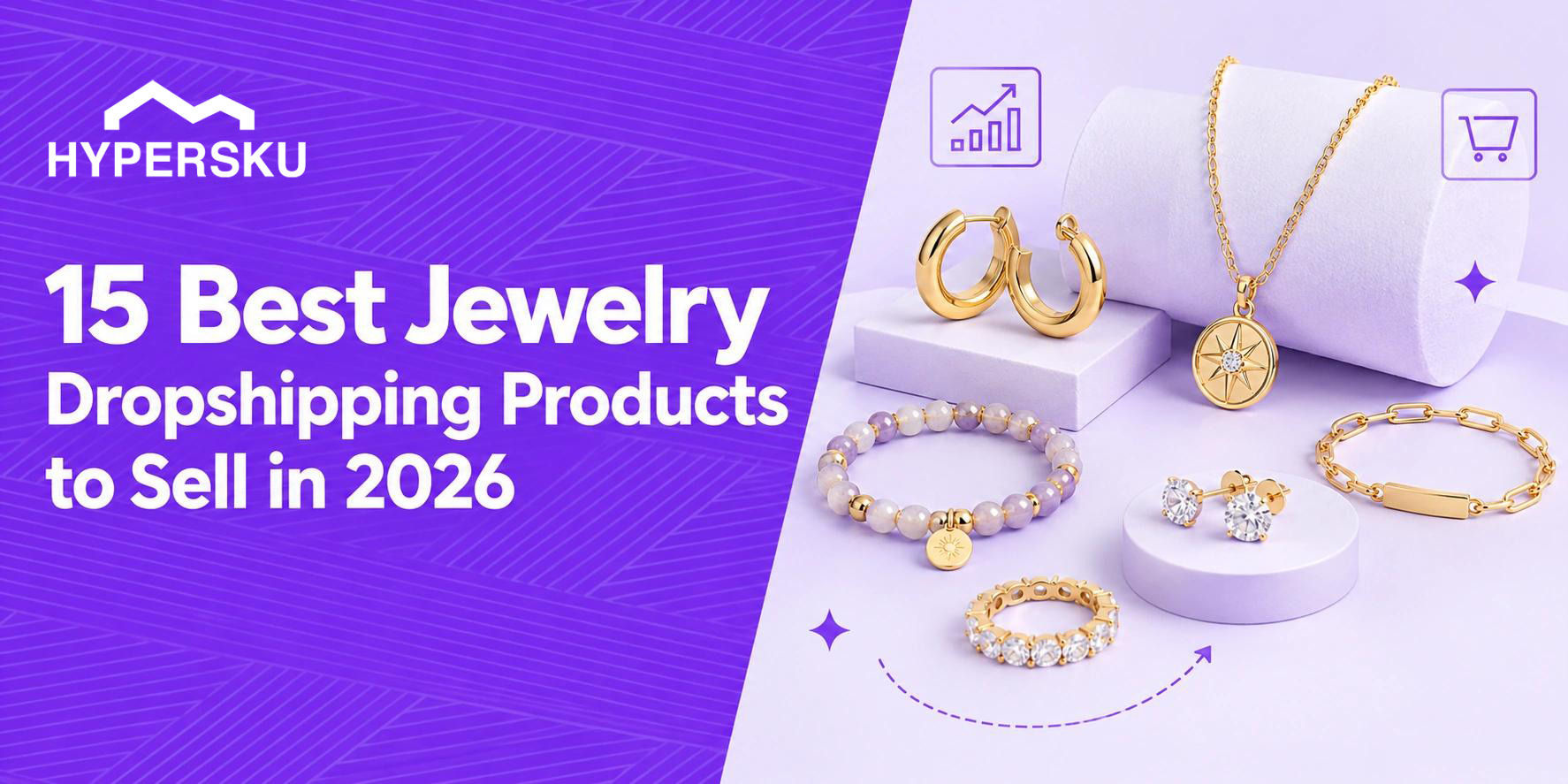
15 Best Jewelry Dropshipping Products to Sell in 2026
Discover the 15 best jewelry dropshipping products for 2026, with margins, materials to avoid, and tips to source and brand jewelry with HyperSKU.

HyperSKU
Posted on October 13, 2026
US online jewelry and watch sales reached an estimated $17.0 billion in 2025, up 11.7% from the year before, according to IBISWorld. For Shopify sellers and DTC founders, jewelry is one of the few categories where a product that costs a few dollars can retail for $30 or more, and where branding, personalization and packaging change what customers are willing to pay. It is also easy to get wrong. Plating that fades, skin reactions and sizing returns can erase your margin quickly.
This guide covers 20 jewelry dropshipping products worth selling in 2026, the criteria that separate profitable picks from return risks, and how to source and brand jewelry through HyperSKU. Costs and margins below are estimates based on typical supplier price ranges. They change with material, order volume and destination, so request quotes before you commit.
Is Selling Jewelry Still Profitable in 2026?
The numbers say the category is still growing. IBISWorld puts US online jewelry and watch sales at $17.0 billion in 2025, an 11.7% increase, with a 5.9% compound annual growth rate between 2020 and 2025.
Competition is real, though. IBISWorld counts 35,109 online jewelry and watch businesses in the US in 2025, up 9.8% from 2024, and describes market share concentration as low, with Amazon as the largest business. Low concentration cuts both ways. No single seller owns the category, so a small brand with a clear niche can win. But a store that lists the same generic necklace as everyone else will compete on price alone.
The practical takeaway is that jewelry rewards stores that pick a style, a customer and a story, then back it with materials that hold up. Margins are attractive because unit costs are low and perceived value is high. Returns, tarnish complaints and sizing problems are where that margin disappears.
What to Look for When Dropshipping Jewelry
Use these five criteria to decide whether a piece deserves space in your catalog.
Material and skin safety
Stainless steel, titanium and sterling silver cause fewer complaints than plain plated brass or alloy. Earrings sit in the body, so nickel-free materials matter most there. Ask suppliers for written material specifications, not just a product title.
Plating durability
Cheap plating wears off at contact points, especially on rings and bracelets. Products with PVD plating or solid materials cost more upfront and generate fewer refunds. Price the product for the version that lasts.
Size and fit risk
Products that need exact sizing, like standard rings, create exchanges. Adjustable designs, fixed-length chains with extenders, and one-size bracelets reduce returns.
Gifting and personalization potential
Jewelry is a gift category. Products that can be engraved, bundled, matched or sold by occasion give you pricing power and let you advertise around birthdays, weddings and holidays.
Margin after shipping
Small, flat items ship cheaply, which protects margin. Aim for at least 40% gross margin after product cost and shipping, before ad spend, and treat anything bulky with extra care.
Best Jewelry Dropshipping Products in 2026
1. Dainty Layered Necklace Sets
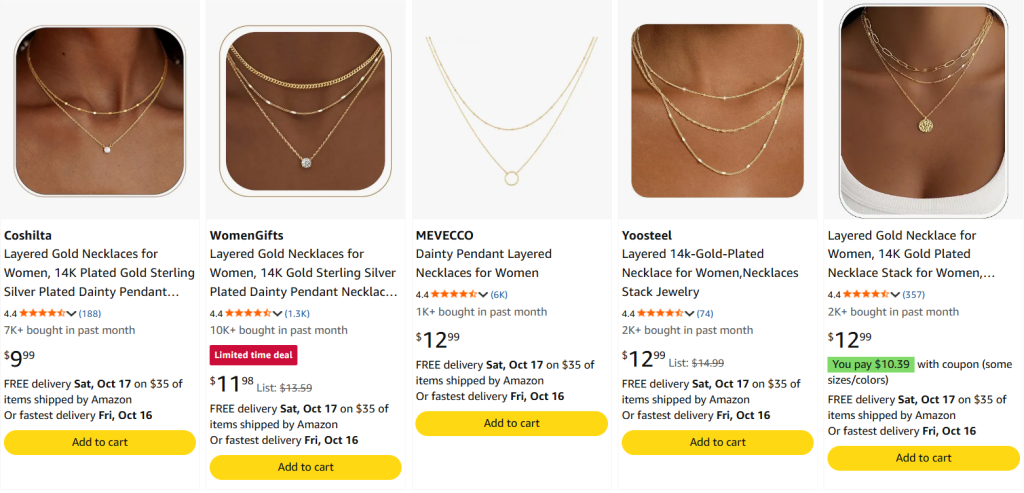
Why it sells: Layering is a styling habit, not a one-season trend, and a pre-matched set solves the problem of choosing chains that work together. Sets also raise order value without adding much shipping cost.
Use case: A buyer wears a short pendant chain with a longer thin chain for work, then adds a third layer for evenings out.
Target audience: Women aged 20-40 who buy accessories regularly and discover products on Instagram and TikTok. Strong gift potential.
Retail price range: $24-$42, with $28-$36 typical for sets of two or three chains.
Estimated margin: About 55-70% gross margin after product cost and shipping, based on sourcing at $4-$8 and shipping of $2-$3 per set.
Dropshipping fit: Light and flat, so it ships cheaply in a padded mailer. The main risk is tarnish, so choose stainless steel or PVD-plated chains over plain plated brass.
Competitive angle: Sell curated sets named for occasions (office, weekend, gift) instead of loose chains, and show the layering on several necklines.
Sourcing note: HyperSKU’s custom packaging options let you ship each set in a branded pouch or gift box, which is what makes a $30 necklace feel worth $30.
2. Personalized Name and Initial Necklaces
Why it sells: Personalization makes the piece feel made for the buyer and removes direct price comparison with identical listings. Birthdays, bridesmaid gifts and Mother’s Day drive steady orders.
Use case: A parent orders a name necklace for a daughter’s birthday, while a bride orders matching initial necklaces for her bridal party.
Target audience: Gift buyers aged 25-50, plus younger customers buying for themselves.
Retail price range: $29-$55, with $34-$44 typical.
Estimated margin: About 55-70% gross margin, based on sourcing at $6-$12 including engraving or lettering and shipping of $2-$3.
Dropshipping fit: Made-to-order pieces need extra production days, so show lead times on the product page and at checkout. Set a clear return policy for personalized items before you launch.
Competitive angle: Offer a font preview and a simple customizer, then advertise with delivery-by dates around gifting occasions.
Sourcing note: Confirm the engraving options and proofing process with the supplier before listing. HyperSKU’s sample coordination lets you check engraving quality before you scale ad spend.
3. Birthstone Pendants and Rings
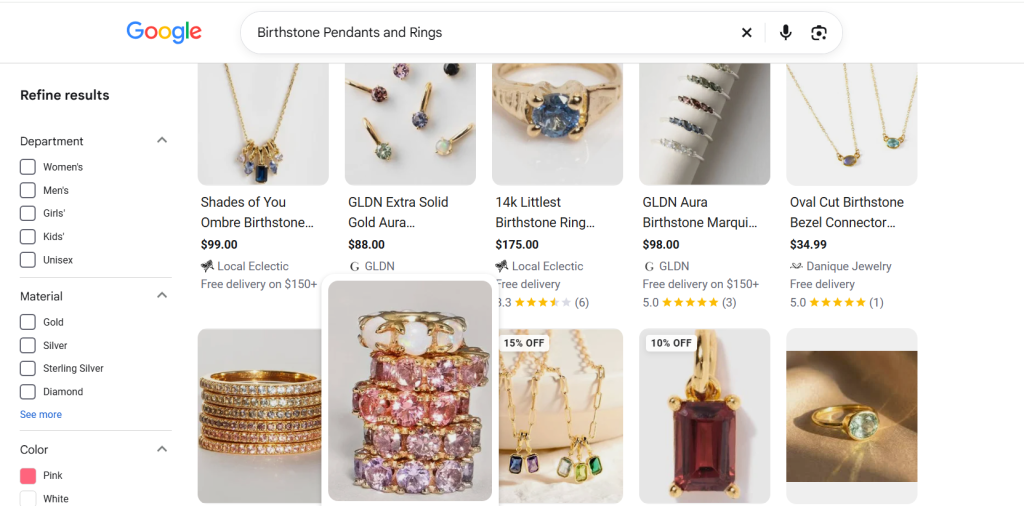
Why it sells: Every buyer has a fixed birth month, which gives you twelve natural variants and a reason to buy several pieces for family members.
Use case: A mother buys a pendant that holds her children’s birthstones, while a friend gives a single-stone ring as a birthday gift.
Target audience: Gift buyers aged 28-55, including mothers, grandmothers and partners.
Retail price range: $26-$48.
Estimated margin: About 55-70% gross margin, based on sourcing at $5-$10 and shipping of $2-$3.
Dropshipping fit: Twelve variants add catalog complexity. Launch with the months where your supplier has reliable stock, then expand. Describe stones accurately as glass, cubic zirconia or natural, and avoid the word genuine unless the supplier can document it.
Competitive angle: Build family bundles of two to five stones and offer a matching earring or bracelet as an add-on.
Sourcing note: Ask for material and stone-type documentation for each variant. HyperSKU’s quality inspection can catch loose stones and uneven plating before orders reach customers.
4. Huggie Hoops and Earring Stack Sets
Why it sells: Small hoops are everyday basics, and a set of three to six pairs lets a buyer change looks without buying again. The low price makes it a good first purchase for new customers.
Use case: A buyer wears huggies daily, then swaps in studs or charm hoops depending on the outfit or the number of piercings.
Target audience: Women aged 18-35, especially those with multiple piercings.
Retail price range: $18-$34 for multi-pair sets.
Estimated margin: About 55-70% gross margin, based on sourcing at $4-$9 per set and shipping of $2.
Dropshipping fit: Tiny items can be lost or damaged, so use sealed pouches or labeled display cards. Earrings touch the skin for hours, so nickel-free material is the most important spec on this list.
Competitive angle: Sell by piercing setup, such as a second-hole starter set, instead of a generic earring set.
Sourcing note: Request material test reports, and use HyperSKU’s custom packaging to put each set on a branded card that looks gift-ready.
5. Stackable Minimalist Rings
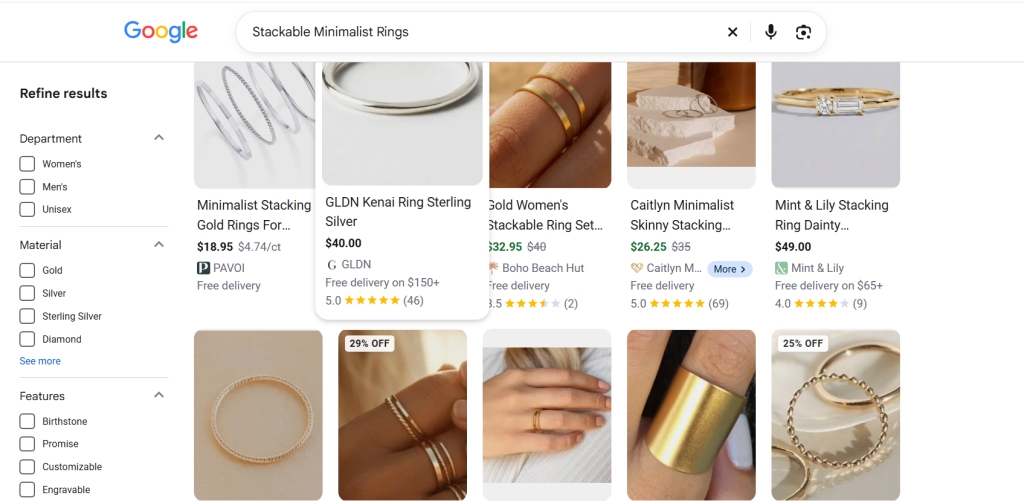
Why it sells: Rings are the hardest jewelry to sell online because of sizing. Adjustable open-band rings remove that barrier, and sets of thin bands encourage mixing and matching.
Use case: A buyer wears three thin bands on one hand, or gives the set as a gift without needing to know a ring size.
Target audience: Women aged 20-40 and gift buyers who do not know the recipient’s size.
Retail price range: $20-$36 for sets of three to five.
Estimated margin: About 55-70% gross margin, based on sourcing at $3-$7 and shipping of $2.
Dropshipping fit: An adjustable design cuts size-related returns. Rings take friction and water contact, so cheap plating can discolor fingers quickly. Specify stainless steel or sterling silver.
Competitive angle: Lead with “no sizing needed” in your ads and show the rings on a range of hands and skin tones.
Sourcing note: Order samples and test how the open band holds up to repeated adjustment. HyperSKU’s sample coordination makes this step simple.
6. Build-Your-Own Charm Bracelets
Why it sells: A customer buys a base bracelet, then returns to add charms for milestones and gifts. That makes one customer worth several orders.
Use case: A buyer starts with a bracelet and five charms, then adds a new charm after a trip, a birthday or a graduation.
Target audience: Women aged 18-45, gift buyers and collectors who like building a personal set.
Retail price range: $32-$68 for starter sets, with individual charms at $6-$14.
Estimated margin: About 55-68% on starter sets, based on sourcing at $6-$14 and shipping of $3.
Dropshipping fit: Repeat purchase potential is the strongest on this list, but only if charm sizing and clasp fit stay consistent between batches. Check this before you promote the charm range.
Competitive angle: Launch themed charm collections such as travel, pets or birth months, and email past buyers whenever a new collection drops.
Sourcing note: Work with a supplier who can hold dimensions steady across reorders. HyperSKU’s custom branding options help you keep one visual identity as the charm range grows.
7. Freshwater Pearl Necklaces and Earrings
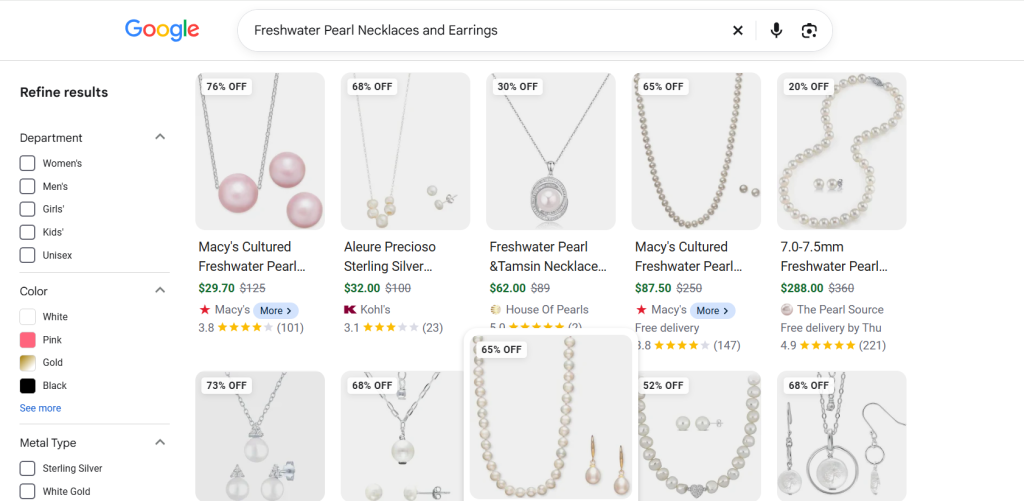
Why it sells: Pearls sit between everyday and occasion jewelry, which widens the audience. They are associated with weddings, graduations and gifts.
Use case: A bride gives matching pearl earrings to her bridesmaids, or a graduate wears a simple pearl strand to a first job interview.
Target audience: Women aged 25-60, bridal parties and gift buyers.
Retail price range: $38-$85.
Estimated margin: About 50-65% gross margin, based on sourcing at $8-$20 and shipping of $3.
Dropshipping fit: The higher order value supports advertising costs. Describe pearls accurately as cultured freshwater or imitation. Misdescribing pearls creates legal exposure and chargebacks.
Competitive angle: Sell bridal party bundles with quantity pricing and publish a short pearl care guide to build trust.
Sourcing note: Ask the supplier to document the pearl type, and use HyperSKU’s quality inspection to check luster and strand consistency before shipment.
8. Men’s Stainless Steel Chains and Bracelets
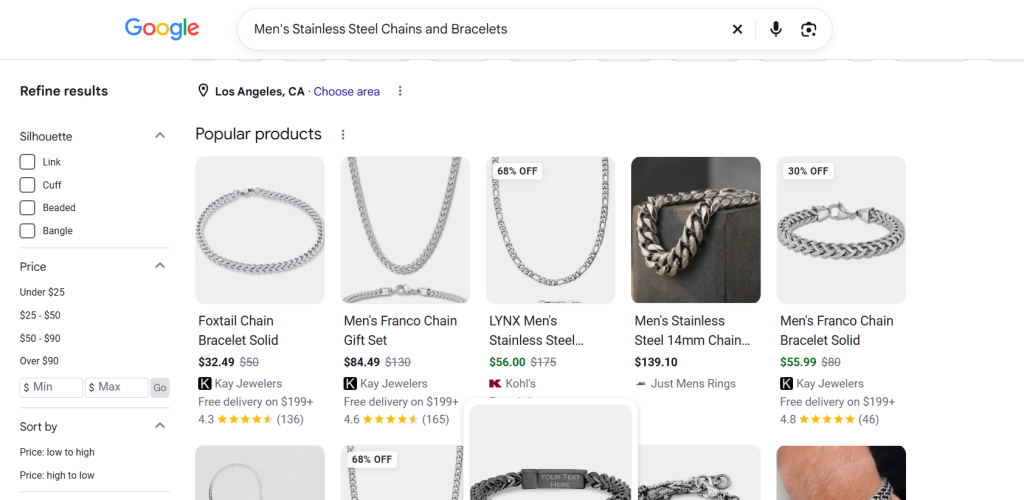
Why it sells: Many jewelry stores focus on women’s styles, which leaves room for a store built around men’s pieces. Stainless steel holds up to daily wear and does not tarnish, which keeps complaints low.
Use case: A buyer wears a chain every day, or a partner buys a bracelet for an anniversary.
Target audience: Men aged 20-45, plus women buying gifts for partners, fathers and sons.
Retail price range: $25-$50.
Estimated margin: About 50-65% gross margin, based on sourcing at $5-$12 and shipping of $3.
Dropshipping fit: Slightly heavier than fine chains but still small. Durable material means fewer refund requests.
Competitive angle: Aim at gift buyers around anniversaries and Father’s Day, and offer engraved tags as an upgrade.
Sourcing note: HyperSKU’s custom packaging options let you present a men’s chain in a clean branded box instead of a generic bag.
9. Matching Couples and Friendship Bracelets
Why it sells: Selling a pair doubles the order value, and matching pieces are a natural gift for couples, long-distance relationships and close friends.
Use case: Two partners wear matching bracelets, or best friends each keep one half of a set.
Target audience: Couples and friends aged 18-35, plus gift buyers.
Retail price range: $24-$45 per pair.
Estimated margin: About 55-68% gross margin, based on sourcing at $4-$9 per pair and shipping of $2-$3.
Dropshipping fit: Two pieces ship in one small parcel, so you collect a pair price on one shipping fee. Both pieces must match in finish and size, or the product loses its point.
Competitive angle: Use story-led copy about distance and milestones, and offer engraving for dates or coordinates.
Sourcing note: Ask suppliers how they match pairs, and rely on HyperSKU’s quality inspection to catch mismatched finishes before they ship.
10. Jewelry Organizers and Travel Cases
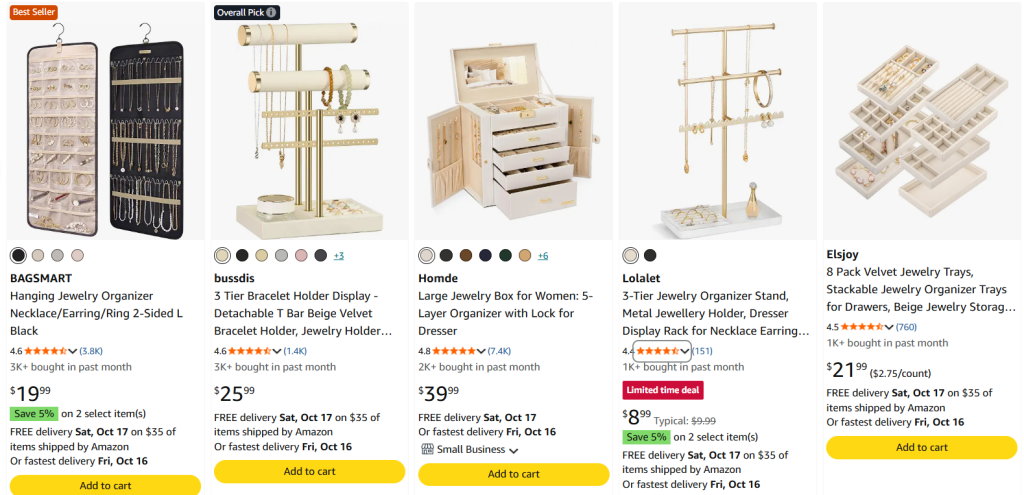
Why it sells: Every jewelry buyer needs somewhere to keep it. Organizers work as a checkout add-on, and they also sell on their own to travelers and gift buyers.
Use case: A traveler keeps necklaces untangled in a zip case, while someone else organizes a dresser drawer.
Target audience: Jewelry owners aged 22-50, frequent travelers and gift buyers.
Retail price range: $22-$40.
Estimated margin: About 45-58% gross margin, based on sourcing at $5-$12 and shipping of $3-$5.
Dropshipping fit: Bulkier than the jewelry itself, so margin is lower. It earns its place by lifting average order value when bundled with a necklace or bracelet set.
Competitive angle: Bundle a case with a jewelry set as a gift-ready package with branded lining.
Sourcing note: Custom logo printing or debossing on the case is where HyperSKU’s customization options help you turn a commodity item into part of your brand.
11. Dainty Anklets and Beach Jewelry
Why it sells: Anklets are a warm-weather accessory that buyers often add to an order of necklaces or earrings. They are cheap to produce, easy to bundle and photograph well at the beach and on vacation.
Use case: A buyer wears a thin chain anklet with sandals all summer and a second one with a shell charm on holiday.
Target audience: Women aged 18-40, vacation shoppers and gift buyers.
Retail price range: $16-$30.
Estimated margin: About 55-70% gross margin after product cost and shipping, based on sourcing at $2-$6 and shipping of $2.
Dropshipping fit: Flat and light. Demand is seasonal, so plan inventory and ad spend around spring and summer in your main market. Anklets sit near water and sand, so stainless steel holds up better than cheap plating.
Competitive angle: Sell vacation sets that pair an anklet with a matching bracelet, and promote them ahead of summer travel.
Sourcing note: Clasp strength is the common failure point. HyperSKU’s quality inspection can check clasps and chain joints before shipment.
12. Ear Cuffs and Climber Earrings
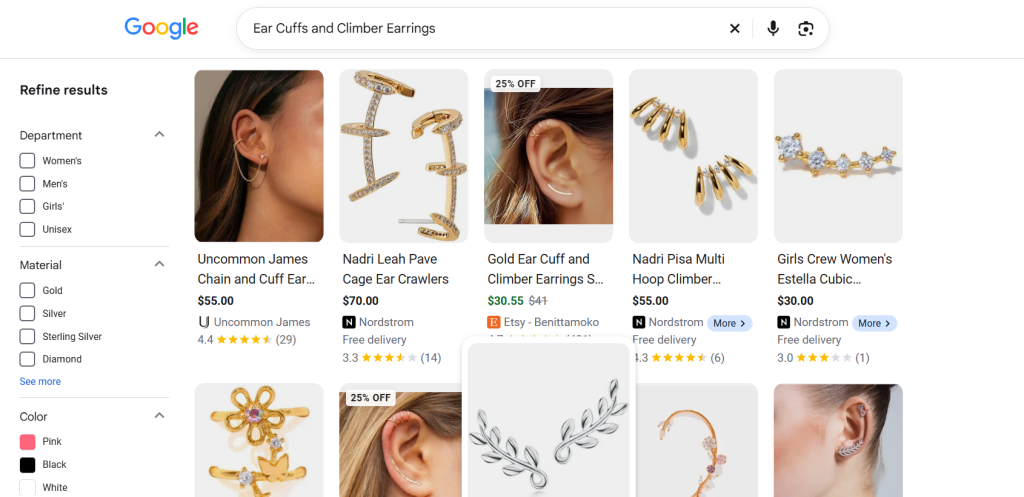
Why it sells: Ear cuffs give the look of extra piercings without more piercings, which widens the audience beyond people with several holes. Climber styles add visual impact with a small, cheap piece.
Use case: A buyer with one piercing per ear wears a cuff for a stacked look at a wedding, then removes it afterwards.
Target audience: Women aged 18-35, including buyers who do not want new piercings.
Retail price range: $16-$30.
Estimated margin: About 55-70% gross margin, based on sourcing at $2.50-$6 and shipping of $2.
Dropshipping fit: Small and light, so use sealed pouches or display cards. Fit varies with ear shape, so favor adjustable cuffs and show how to wear them in a short video or image.
Competitive angle: Sell “no piercing needed” stacks and show the look in a close-up of the ear.
Sourcing note: Request material specifications, especially for nickel. HyperSKU’s custom packaging options let you put each pair on a branded display card.
13. Zodiac and Celestial Pendants
Why it sells: Zodiac signs give you twelve natural variants, a built-in gift reason and easy social content. Moon, star and sun motifs extend the range beyond birthdays.
Use case: A buyer gives a zodiac pendant as a birthday gift, and a friend buys a matching moon charm.
Target audience: Women and gift buyers aged 18-40.
Retail price range: $22-$40.
Estimated margin: About 55-70% gross margin, based on sourcing at $4-$9 and shipping of $2-$3.
Dropshipping fit: Twelve variants add inventory complexity, so confirm supplier stock before you promote every sign and launch with a few. Fine engraved detail must stay clear at small sizes, so test samples first.
Competitive angle: Run a monthly campaign around each sign’s season, and bundle a pendant with a matching birthstone piece.
Sourcing note: HyperSKU’s sample coordination lets you check engraving crispness, and custom card packaging can carry a short description of each sign.
14. Beaded Gemstone Bracelets
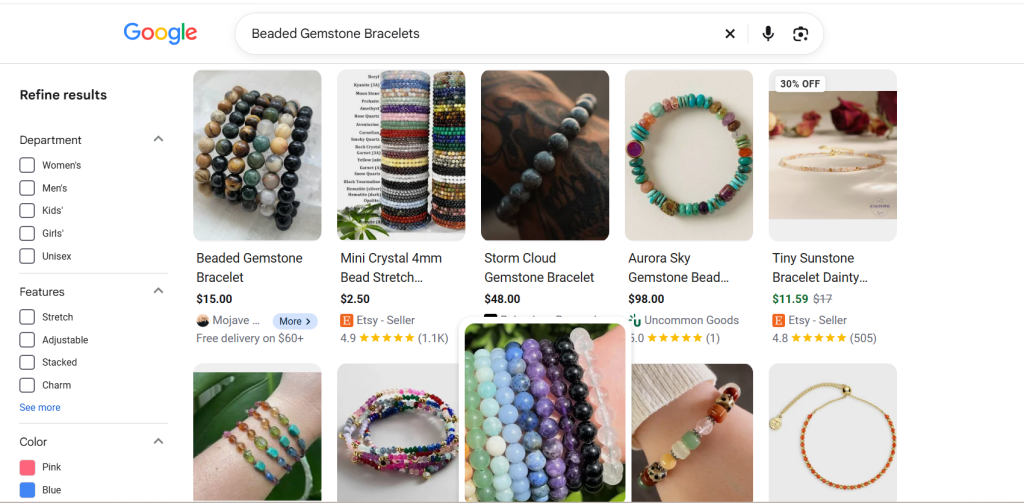
Why it sells: Stretch bracelets in amethyst, rose quartz and similar stones appeal to buyers who like natural textures and layered wrist stacks. Color variety makes bundles easy to sell.
Use case: A buyer stacks three stretch bracelets in coordinating colors for everyday wear.
Target audience: Women aged 20-45 who like natural looks, and gift buyers.
Retail price range: $20-$38.
Estimated margin: About 55-68% gross margin, based on sourcing at $3-$8 and shipping of $2-$3.
Dropshipping fit: Describe stones accurately as natural, dyed or imitation, and do not claim healing or medical benefits. Stretch cords wear out, so ask for quality elastic and include a care note to reduce complaints.
Competitive angle: Sell color-story stacks, such as calm, bold and neutral, instead of single stones.
Sourcing note: Ask suppliers to document stone type and any treatment. HyperSKU’s quality inspection can check bead consistency and cord strength.
15. Photo Lockets and Mini Pendant Lockets
Why it sells: Lockets are sentimental, and a photo or engraving adds meaning that buyers pay for. They sell strongly as gifts for mothers, grandparents and partners.
Use case: A buyer orders a locket with a child’s photo inside for Mother’s Day.
Target audience: Gift buyers aged 25-60.
Retail price range: $29-$55.
Estimated margin: About 55-68% gross margin, based on sourcing at $5-$12 and shipping of $2-$3.
Dropshipping fit: Hinge and closure quality matter, because a locket that will not stay closed generates returns. Photo-printed lockets are made to order, so show lead times and set a clear return policy.
Competitive angle: Offer photo and engraving options, and advertise with delivery-by dates before gifting holidays.
Sourcing note: Confirm engraving and photo printing options with the supplier. HyperSKU’s quality inspection can test hinges and closures before shipment.
How to Source Jewelry Dropshipping Products with HyperSKU
Jewelry quality is hard to judge from a product photo. Plating thickness, stone setting and finish vary widely between suppliers, and customers notice quickly. HyperSKU gives you access to more than 2,000 vetted suppliers, so you can compare options without testing each one yourself.
Custom branding and packaging is the biggest lever for jewelry. Branded pouches, gift boxes and display cards change how a $30 piece is perceived, and they separate your store from sellers shipping the same item in a plain bag.
Quality inspection before shipment helps catch the defects that cause jewelry returns: uneven plating, loose stones, mismatched pairs and weak clasps. Sample coordination lets you check a product in hand before you spend on ads.
Global warehousing across CN, EU and US locations helps shorten delivery times for gift purchases, where a late parcel often means a refund. Native integrations with Shopify, WooCommerce and TikTok Shop sync orders automatically, so fulfillment keeps pace as your store grows.
Final Thoughts
Jewelry rewards stores that choose a niche and a story, not stores that list every trending piece. The 20 products above cover different price points and customer types, from low-cost earring sets to higher-value pearl and personalized pieces. Pay attention to materials, sizing and presentation, because that is where margin is won or lost.
If you want to build a jewelry brand and not just a catalog, start with two or three products from this list, order samples, and put your own packaging on them before you scale.
Ready to Source Jewelry for Your Brand?
Connect with vetted suppliers, add your own branding and packaging, and start selling with HyperSKU’s end-to-end platform..
Sign Up FreeFAQs About Jewelry Dropshipping Products
Is jewelry a good product to dropship in 2026?
Yes, if you choose carefully. Online jewelry sales in the US reached an estimated $17.0 billion in 2025 and grew 11.7%, and low unit costs leave room for healthy margins. Profit depends on avoiding generic listings, choosing durable materials and presenting the product well.
Which jewelry materials cause the fewest tarnish complaints?
Stainless steel, titanium and sterling silver are safer choices than plain plated brass or alloys. PVD plating lasts longer than standard plating. Ask your supplier for a written material specification, and describe the product on your store exactly as the specification states.
How do I handle ring sizing and returns?
Choose adjustable rings where possible, add a clear size guide for fixed sizes, and write a return policy before you launch. Personalized items are usually made to order, so state your return terms for them clearly on the product page.
Can I dropship personalized jewelry?
Yes. Confirm the engraving options, proofing process and production time with your supplier, then show the lead time at checkout. A font preview or customizer on your product page reduces mistakes and support requests.
Do I need to worry about regulations when selling jewelry?
Yes. Metal content claims such as sterling silver must be accurate, and nickel restrictions apply in some markets, including the EU. Jewelry marketed to children can face stricter rules on lead and other metals. Ask suppliers for test reports for your target market, and check current rules for duties and import taxes. This is general information, not legal advice.