The primary difference between DailyFulfill and HyperSKU lies in the depth of supply chain control. While DailyFulfill acts as a traditional fulfillment agent that manages existing orders, HyperSKU serves as a comprehensive “Supply Chain Infrastructure” and Growth Partner. HyperSKU solves the two biggest bottlenecks for new sellers—sourcing uncertainty and product quality—by providing a vetted supplier network, automated fulfillment, and end-to-end quality control that legacy agents cannot match.
The Fulfillment Bottleneck: Why New Sellers Struggle to Scale
For new eCommerce entrepreneurs, scaling isn’t just about getting more clicks; it’s about ensuring that as orders increase, your reputation stays intact. Most sellers start by using basic dropshipping tools or agents like DailyFulfill. However, as volume grows, these “legacy” solutions often reveal a critical weakness: they lack direct control over the product source.
When you cannot control product quality or sourcing consistency, your scaling efforts are met with high refund rates and customer complaints. This is where the transition from a “tool” to a “growth partner” becomes essential.
DailyFulfill: A Legacy Fulfillment Solution
DailyFulfill is a well-known player in the dropshipping space, functioning primarily as a middleman that processes orders. While it offers basic shipping services, it often leaves the heavy lifting of supply chain management to the seller.
Key weaknesses for scaling sellers using DailyFulfill include:
Limited Sourcing Capability: Sellers often have to find their own products, leading to inconsistent quality between batches.
Lack of Quality Control (QC): Because they act as a pass-through for packages, they cannot guarantee the condition of the items inside.
Complexity Struggles: As orders become more complex—such as bundles or custom requests—legacy agents often lack the sophisticated backend to handle them without errors.
HyperSKU: Moving Beyond “Just a Tool” to Supply Chain Infrastructure
HyperSKU is built to be a Growth Partner. It doesn’t just ship boxes; it provides the entire infrastructure needed to run a professional eCommerce brand. By outsourcing the complexity of the supply chain to HyperSKU, sellers are free to focus entirely on marketing and brand building.
How HyperSKU Solves Sourcing and Quality Bottlenecks:
Vetted Suppliers: HyperSKU connects you with a curated network of reliable manufacturers, eliminating the “Russian Roulette” of random sourcing.
In-House Quality Control: Every product is inspected before it leaves the warehouse, ensuring your customers receive exactly what they paid for.
Global Shipping Infrastructure: HyperSKU offers lightning-fast shipping (7-12 days to the US and EU), which is critical for maintaining high customer satisfaction scores on platforms like Facebook and Google.
Comparison: HyperSKU vs. DailyFulfill
Feature
DailyFulfill
HyperSKU Infrastructure
Primary Role
Fulfillment Agent / Middleman
Supply Chain & Growth Partner
Sourcing
Seller must provide the source
Vetted, high-quality supplier network
Quality Control
Minimal to none
Dedicated QC and inspection process
Shipping Speed
Variable (often depends on the agent)
Express 7-12 day shipping to US/EU
Branding
Limited or basic
Custom packaging and private labeling
Automation
Basic CSV or app sync
Fully automated API/App integration
Support
Ticket-based or general
Dedicated Account Managers
Why Simplicity is the Key to Scaling
For a new seller, the goal is simplicity. Managing five different suppliers and a separate fulfillment agent is a recipe for burnout. HyperSKU streamlines this into a one-stop dropshipping solution:
Automated Order Fulfillment: Orders from your store sync automatically, removing the need for manual data entry.
Custom Packaging and Branding: Easily transition from a generic dropshipper to a recognized brand by adding custom cards, bags, or boxes.
Dedicated Account Managers: You aren’t just a number; you have a partner to help you navigate logistics and sourcing hurdles.
No Monthly Fees: Unlike many apps that charge just for access, HyperSKU’s model is built to grow with you.
Conclusion: Choosing the Right Foundation
If you are looking for a simple shipping agent, legacy options might suffice. However, if your goal is to build a sustainable, scalable eCommerce business, you need more than a tool—you need infrastructure.
HyperSKU removes the “supply chain complexity” that kills most new businesses. By ensuring product quality at the source and providing elite-level fulfillment, HyperSKU acts as the engine behind your growth.
Q1: How does HyperSKU differ from a standard dropshipping agent?
A: Unlike standard agents that only ship orders, HyperSKU provides a full supply chain infrastructure, including vetted sourcing, quality control, and automated systems to help sellers scale.
Q2: Can HyperSKU help with product quality issues?
A: Yes. HyperSKU works with vetted suppliers and performs quality control checks to ensure products meet standards before they are shipped to customers.
Q3: How fast is the shipping with HyperSKU?
A: HyperSKU offers express shipping options that typically deliver to major markets like the US and EU within 7 to 12 days.
Q4: Does HyperSKU support private labeling?
A: Yes, HyperSKU is a growth partner that helps sellers with custom packaging and branding to transform a dropshipping store into a unique brand.
Q5: Is HyperSKU suitable for beginners?
A: Absolutely. HyperSKU is designed to simplify the “supply chain complexity” for new sellers, offering a user-friendly platform and dedicated account managers to guide the process.
Print on Demand (POD) fulfillment is an eCommerce business model where products are manufactured, printed, and shipped to the end customer only after an order is placed. This eliminates the need for sellers to hold physical inventory, as the “fulfillment partner” handles the entire supply chain—from sourcing the blank product to printing the custom design and managing the final delivery.
For new sellers, the dream is simple: design a cool T-shirt or mug, post it online, and watch the profit roll in. However, the “fulfillment” part—the actual physics of getting that product to a customer’s doorstep—is where most beginners hit a wall.
While many are tempted to hire small-scale “private agents” to save a few pennies, this often leads to a scaling nightmare. Here is everything you need to know about POD fulfillment and why choosing a professional infrastructure over a solo agent is the key to your success.
How Print on Demand Fulfillment Works
In a traditional retail model, you buy 500 shirts, store them in a warehouse, and hope they sell. In Print on Demand fulfillment, the process is streamlined for the modern entrepreneur:
Integration: You connect your store (like Shopify or WooCommerce) to a fulfillment partner.
The Order: A customer buys a product from your store.
The “Trigger”: The fulfillment partner automatically receives the order details and the design file.
Production: The item is printed and quality-checked.
Fast Shipping: The product is packaged and shipped directly to the customer.
The Hidden Trap: Why New Sellers Struggle with “Private Agents”
When starting out, many sellers find “private agents” on social media or messaging apps. These are often individuals or very small teams who promise low prices and “personal service.”
However, for a new seller looking to build a long-term brand, these agents often represent a massive risk. Here is why they fail:
Lack of Systems: Most private agents use manual spreadsheets. As your orders grow from 5 to 50 a day, manual entry leads to wrong addresses, incorrect designs, and lost packages.
No Platform Integration: You have to manually send them every order. This is a time-sink that prevents you from focusing on marketing.
Scalability Bottlenecks: A solo agent cannot handle “massive quantity” or “complex requirements” during peak seasons like Black Friday.
The “Vanishing” Risk: Small-scale agents lack legal accountability. They can—and often do—disappear overnight, taking your money and leaving your customers without their orders.
Inconsistent Quality: Without a professional team and vetted factory relationships, the print quality of your POD items will vary wildly from one order to the next.
Comparison: HyperSKU vs. Private Agents
To succeed in eCommerce, you need to move away from “helpers” and toward infrastructure. Here is how HyperSKU compares to the legacy methods most beginners use:
Feature
Private Agents
HyperSKU
Sourcing Reliability
Hit-or-miss; often uses unvetted middlemen.
Vetted suppliers and strict quality control.
Shipping Speed
20-40 days via slow, untracked methods.
Express shipping (7-12 days to US/EU).
Automation
Manual CSV uploads or buggy plugins.
Fully automated store platform integration.
Branding Support
Basic or non-existent.
Custom packaging and private labeling.
Accountability
Solo agents can disappear; apps have no “human” support.
Dedicated account managers & professional team.
Scalability
Fails under the weight of high volume.
Built for massive scale and complex needs.
Why HyperSKU is Your “Growth Partner,” Not Just a Tool
HyperSKU is more than just a fulfillment app; it is a cross-border eCommerce supply chain infrastructure. For new sellers, HyperSKU simplifies the “messy” parts of the business so you can focus on creativity and sales.
1. Vetted Suppliers & Quality Control
We don’t just connect you to any factory. We work with a curated network of suppliers to ensure that your Print on Demand designs look exactly as they do on your screen.
2. Fast, Global Shipping (7-12 Days)
Shipping is the biggest pain point in POD. HyperSKU offers premium logistics that get your products to customers in the US and EU within 7-12 days, complete with tracking numbers that sync automatically to your store.
3. Automated Order Fulfillment
Once you connect your store to HyperSKU, the “work” stops. Orders flow into our system, are processed by our professional team, and shipped out without you having to lift a finger.
4. Custom Packaging and Branding
In the POD world, your brand is everything. HyperSKU helps you stand out by offering custom packaging and marketing inserts, making your business look like a major global brand from day one.
5. A Dedicated Account Manager
Unlike a private agent who might ignore your messages, HyperSKU provides a dedicated partner to help you navigate supply chain complexities. Think of us as your outsourced operations department.
Conclusion: Outsourcing Complexity to Focus on Growth
Fulfillment is the biggest bottleneck in scaling an eCommerce business. If you spend your day chasing down a private agent or fixing shipping errors, you aren’t growing your brand.
By utilizing HyperSKU, you are plugging your store into a professional supply chain infrastructure. We handle the sourcing, the printing, the quality control, and the shipping, allowing you to act as the CEO while we act as your powerhouse fulfillment engine.
Ready to scale your Print on Demand business with a partner you can trust?
Q1: What is the main difference between a private agent and HyperSKU? A: A private agent is usually an individual working manually, whereas HyperSKU is a professional supply chain infrastructure with automated systems, vetted suppliers, and a global team.
Q2: How fast is shipping with HyperSKU for POD products? A: HyperSKU offers express shipping that typically reaches customers in the US and Europe within 7 to 12 days.
Q3: Can HyperSKU help with branding? A: Yes, HyperSKU provides custom packaging, marketing inserts, and private labeling to help you build a unique brand identity.
Q4: Does HyperSKU integrate with my online store? A: Yes, HyperSKU offers seamless automation and integration with major platforms like Shopify and WooCommerce.
Q5: Is Print on Demand fulfillment risky for beginners? A: It is low-risk because you don’t buy inventory upfront, but it becomes risky if you use unreliable “private agents” instead of a professional fulfillment partner.
A fulfillment solution is an end-to-end supply chain service that handles product sourcing, quality inspection, warehousing, and global shipping. For eCommerce sellers, a high-quality fulfillment solution acts as the “back office” infrastructure, removing the complexity of logistics so the business owner can focus exclusively on marketing and growth. It is the bridge between a factory and the customer’s doorstep.
What is a Fulfillment Solution?
In the world of eCommerce, a fulfillment solution is much more than just a shipping service. It is a comprehensive supply chain infrastructure designed to manage the physical journey of a product.
For a new seller, fulfillment involves three core pillars:
Sourcing: Finding reliable factories to produce high-quality goods.
Quality Control: Ensuring the product matches the description before it leaves the warehouse.
Logistics: Moving the product across borders and delivering it to the end consumer in a timely manner.
When a fulfillment solution works correctly, it transforms your business from a “side hustle” into a professional brand by ensuring customers receive the right products, on time, every time.
Why “Legacy” Dropshipping Tools Are No Longer Enough?
Most new sellers start with basic dropshipping apps. While these tools are easy to install, they often leave the seller with three massive “scaling killers”:
Slow Shipping: Waiting 30+ days for a package from China is no longer acceptable to modern consumers.
Inconsistent Quality: Since you never see the product, you are at the mercy of random suppliers who may send low-quality items.
Lack of Support: When a package goes missing, basic apps offer no human support to help you track it down.
To fix these problems, you need to stop looking for a “tool” and start looking for infrastructure.
Comparison: HyperSKU vs. Legacy Dropshipping Competitors
Choosing the right partner is the difference between a failing store and a scaling brand. Here is how HyperSKU compares to traditional legacy apps (like DSers or AliDropship).
Feature
Legacy Dropshipping Apps
HyperSKU Infrastructure
Shipping Speed
15–40 days (unpredictable)
7–12 days to US/EU
Sourcing Method
Scraping random AliExpress links
Vetted direct-from-factory suppliers
Quality Control
None (Supplier ships directly)
Mandatory warehouse inspection
Branding
Standard white mailers
Custom packaging & private labeling
Support
Bot-based or slow email
Dedicated 1-on-1 Account Manager
Order Processing
Manual or semi-automated
Fully automated sync & fulfillment
Business Role
Software Tool
Growth Partner & Infrastructure
5 Signs a Fulfillment Solution Will Actually Help You Scale
If you are a new seller, look for these five features to ensure your fulfillment solution will solve your problems rather than create new ones.
1. Fast, Global Shipping (7-12 Days)
The “Amazon Prime” effect has changed customer expectations. To stay competitive, you need a partner that offers express shipping. HyperSKU provides 7-12 day shipping to the US and Europe, using premium liquid-friendly and electronics-friendly lines that legacy apps often cannot access.
2. Vetted Suppliers and Quality Control
You cannot build a brand on refunds. A true fulfillment solution acts as your “eyes” in the warehouse. HyperSKU vets every supplier and performs rigorous quality control, ensuring that the product your customer receives is exactly what they saw in your ads.
3. Automated Order Fulfillment
As you scale from 1 order a day to 100, you cannot spend all day clicking “order” in an app. You need a system that automatically syncs with your Shopify or WooCommerce store. HyperSKU automates the entire process: when a customer buys from you, the order is sent, tracked, and fulfilled without you lifting a finger.
4. Custom Packaging and Branding
To move away from “cheap dropshipping” and toward a real eCommerce brand, you need custom packaging. HyperSKU allows you to add thank-you notes, custom boxes, and branded inserts, which increases customer loyalty and allows you to charge higher prices.
5. A Dedicated Growth Partner
New sellers often feel alone when things go wrong. A high-quality fulfillment solution provides a Dedicated Account Manager. This isn’t just a support agent; it’s a partner who helps you find better products, optimize your shipping costs, and navigate the complexities of cross-border trade.
Summary: From Tool to Infrastructure
Most sellers fail because they treat their supply chain as an afterthought. They use simple tools and hope for the best.
To truly fix your shipping and sourcing problems, you must treat fulfillment as your Supply Chain Infrastructure. By partnering with a solution like HyperSKU, you aren’t just buying a tool—you are hiring an entire global logistics team. This allows you to outsource the “complexity” of the supply chain so you can focus on what you do best: finding customers and growing your brand.
Q1: What is a fulfillment solution? A: It is an end-to-end service that manages sourcing, quality control, warehousing, and shipping for eCommerce businesses.
Q2: How fast is shipping with HyperSKU? A: HyperSKU offers express shipping that typically reaches customers in the US and EU within 7 to 12 days.
Q3: Can I brand my products when using a fulfillment partner? A: Yes, professional solutions like HyperSKU offer custom packaging, inserts, and private labeling to help you build a unique brand.
Q4: What is the difference between a dropshipping app and a fulfillment partner? A: An app is a software tool for importing products, while a fulfillment partner (like HyperSKU) provides the physical infrastructure, quality checks, and human support to manage your entire supply chain.
Q5: Why is quality control important for new sellers? A: Quality control prevents defective products from reaching customers, which reduces refund rates, protects your payment processors (like PayPal/Stripe), and ensures positive reviews.
The EU €3 customs duty is a fixed import charge applied to all parcels valued under €150 entering the European Union starting July 1, 2026.
This regulation removes the previous low-value customs exemption and introduces a standardized duty on small parcels entering EU member states.
According to the Council of the European Union, this reform is part of a broader customs modernization package aimed at simplifying and standardizing customs procedures for low-value imports across the EU.
This guide explains what the €3 duty is, how it works, who pays it, and how cross-border e-commerce sellers can adapt their operations.
What the EU €3 Customs Duty Means
The EU €3 customs duty is a fixed per-parcel import fee applied to all commercial goods valued under €150 entering the European Union from non-EU origins.
Unlike VAT, this duty is not calculated as a percentage of product value. Instead, it is a flat fee applied per eligible shipment, replacing the previous duty-free exemption for low-value consignments.
Key facts
Effective date: July 1, 2026
Scope: All commercial goods under €150 entering the EU from non-EU origins
Fee structure: Fixed €3 per parcel
Tax distinction: Separate from and additional to import VAT
Geographic coverage: Applies across all EU member states
How the duty is applied
Duties are assessed based on Harmonized System (HS) codes, which classify goods for customs purposes.
Accurate classification is critical. Incorrect or incomplete HS codes can result in:
Businesses have a limited transition window to optimize:
pricing models
fulfillment structure
compliance workflows
Common Seller Mistakes Under the New Regulation
As the €3 customs duty comes into effect, many sellers won’t struggle because of the rule itself—but because of how they respond to it. These are some of the most common mistakes dropshippers are likely to make.
Ignoring HS Code Classification
HS codes are no longer something you can afford to treat casually. Since the €3 duty is charged per tariff heading, incorrect or vague classification can lead to unexpected extra charges, delayed parcels, or even customs disputes. What looks like a small mistake on paper can quickly add up across hundreds of orders.
Not Clearly Declaring the Duty Method
When sellers don’t define whether duties are prepaid or collected at delivery, the cost often falls on the customer at the worst possible moment—when the parcel arrives. Surprise fees are one of the fastest ways to trigger refunds, chargebacks, and negative reviews. Under the new rules, unclear duty handling directly hurts the customer experience.
Continuing to Sell Low-Margin SKUs Without Adjustments
Many dropshippers will try to “wait it out” and keep selling low-priced, low-margin products without changing prices or bundling. In most cases, this quietly drains profits with every order. The €3 duty turns previously viable SKUs into loss-makers if pricing and product strategy aren’t updated.
Avoiding these mistakes doesn’t require complex systems—just early awareness, clear pricing decisions, and basic compliance discipline. Sellers who adapt quickly will be far better positioned than those who react only after margins start disappearing.
Strategies to Protect Margins Under the €3 Duty
The €3 customs duty introduces a fixed-cost layer that changes the unit economics of cross-border e-commerce.
However, profitability can be maintained by optimizing three key areas: fulfillment structure, product and pricing strategy, and operational efficiency.
These strategies are widely used by EU-focused sellers to reduce cost pressure while maintaining conversion performance.
Key takeaway:
Fixed €3 duties increase pressure on low-value orders
Fulfillment structure and routing logic directly affect cost exposure
Higher-AOV strategies, such as bundling, improve margin resilience
High-income EU markets are more tolerant of price adjustments
Transparent pricing is essential for maintaining conversion rates
Optimize fulfillment structure to reduce customs exposure
Fulfillment structure determines how directly each order is exposed to customs processing and per-parcel duties.
Shipping every order cross-border increases both cost variability and delivery uncertainty. In contrast, positioning inventory closer to the end market can reduce customs touchpoints and improve fulfillment efficiency.
Why this works
Fewer cross-border parcels reduce duty exposure at the order level
Sellers typically rely on fulfillment orchestration systems that:
allocate inventory across multiple regions
route orders dynamically based on destination
optimize shipping methods and carrier selection
manage SKU-level fulfillment configuration
Platforms such as HyperSKU support these workflows by helping sellers streamline sourcing and fulfillment decisions across different stages of the supply chain.
Smaller-volume orders can benefit from consolidated production, where demand is grouped to achieve more competitive unit pricing. This enables sellers with lower order volumes to access cost efficiencies that are typically available at a larger scale.
At the fulfillment level, orders are routed through optimized logistics paths based on destination, reducing unnecessary cross-border shipments and improving delivery consistency.
By coordinating sourcing, inventory flow, and order fulfillment in a more structured way, sellers can reduce overall cost pressure while maintaining a more stable delivery experience in EU markets.
Optimize product mix and pricing strategy
The €3 duty affects products unevenly, making SKU-level optimization critical.
Because the duty is fixed, its relative impact is highest on low-priced items and lower on higher-value products.
Key actions
Evaluate each SKU based on total landed cost (product, shipping, VAT, duty)
Prioritize higher-margin or higher-AOV products
Reduce reliance on ultra-low-ticket items
Apply DDP (duty-inclusive) pricing to improve transparency
Adjust pricing strategically to absorb part of the cost increase
Why this works
Higher-margin products are less sensitive to fixed cost increases
DDP pricing reduces checkout friction and unexpected delivery fees
Controlled price adjustments help maintain competitiveness without eroding margins
Strengthen logistics and compliance systems
Operational execution directly affects cost predictability under the new duty structure.
Errors in classification, tax handling, or documentation can quickly increase costs and delay deliveries.
Key actions
Ensure correct IOSS registration for VAT reporting
Maintain accurate HS code classification at SKU level
Standardize customs documentation processes
Use bundling to increase order value and reduce per-unit cost pressure
Why this works
Accurate classification prevents unexpected duty charges
IOSS simplifies VAT handling across EU markets
Bundling spreads fixed costs across multiple items
Increase order value to offset fixed duty impact
Fixed duties disproportionately affect low-value orders. Increasing average order value (AOV) is one of the most effective ways to improve margin resilience.
How to apply
Bundle complementary products into a single purchase
Use volume-based offers (e.g., buy 2, get 1)
Encourage multi-item carts through upsells
Spreading the €3 duty across multiple items reduces its relative cost per unit and improves overall profitability.
Prioritize high-purchasing-power EU markets
Not all EU markets respond equally to price increases.
Higher-income markets tend to absorb moderate price adjustments more effectively due to stronger purchasing power and stable consumption patterns.
Lower price sensitivity in many e-commerce categories
These markets are more resilient to incremental cost increases from customs duties.
Use transparent duty-inclusive pricing
Unexpected charges at delivery are a major source of customer dissatisfaction.
Clear, all-inclusive pricing improves both conversion and post-purchase experience.
Display pricing using a duty-inclusive (DDP) model where:
All duties and taxes are included at checkout
Customers see the final price upfront
No additional fees are charged upon delivery
Impact
Reduces cart abandonment
Improves trust and transparency
Lowers refund and dispute rates
Conclusion
The EU €3 customs duty introduces a structural shift in cross-border e-commerce by replacing the previous low-value duty exemption with a fixed per-parcel import fee.
This change increases cost pressure on low-value imports and strengthens the importance of fulfillment optimization, pricing strategy, and compliance accuracy.
Sellers who adapt early by restructuring fulfillment, optimizing SKU selection, and implementing transparent pricing models will be better positioned for long-term stability in EU markets.
As EU customs systems continue evolving toward full automation by 2028, operational efficiency and system-level logistics design will become core competitive advantages in cross-border commerce.
FAQ
Q1:What is the EU €3 customs duty? A fixed €3 import fee applies to parcels under €150 entering the EU starting July 1, 2026.
Q2:Does the €3 duty replace VAT? No. VAT remains a separate tax applied to imported goods.
Q3:Who pays the €3 duty? The importer is responsible, but costs are typically passed to the end customer unless DDP is used.
Q4:Can fulfillment optimization reduce customs impact? Yes. Structured fulfillment systems reduce cross-border friction and improve delivery efficiency.
[hurrytimer id=”8590″]
Black Friday and Cyber Monday are coming fast — and for online sellers, Q4 can make or break your year. Preparing now isn’t just about trending products; it’s about stable fulfillment, smart inventory management, and smooth operations during peak demand. This guide will show you how to navigate the 2025 holiday season with smart strategies—from planning your stock to optimizing your store and boosting conversions.
We’ll also share practical tips to streamline fulfillment and inventory management, and show how HyperSKU’s US warehouses and end-to-end services can help you keep orders moving smoothly, reduce shipping delays, and maintain a reliable experience for your customers.
Focus on selling — HyperSKU handles logistics, support, and operations, so you can scale confidently during the holiday rush.
When Is BFCM in 2025?
Black Friday 2025 lands on November 28.
Cyber Monday 2025 follows on December 1.
Yes, those are the anchor days. But here’s what many brands do now: extend the hype period. Think “Black Week,” “Cyber Week,” or early access deals for loyal customers. So while Nov 28–Dec 1 are the core, your campaign timeline should stretch beyond that.
Why BFCM Matters for Sellers
We can’t ignore what’s already been proven. Here’s what the 2024 holiday season taught us:
Online retail spending from Nov 1 to Dec 31, 2024 hit $241.4 billion, up 8.7% over the previous year.
During that season, mobile transactions accounted for 54.5%of online purchases. In other words, more than half of shoppers were on phones.
The holiday season is a goldmine — the bulk of online spending is concentrated in these 2 months.
Mobile is no longer optional — if your mobile experience stinks, you lose more than half your potential sales.
What to Watch for 2025 (Forecasts & Trends)
Now, let’s peek into 2025: what are the analysts and reports saying might happen?
Deloitte projects that U.S. holiday retail sales (Nov–Jan) will land between $1.61 to $1.62 trillion, with e-commerce expected to grow 7% to 9% to roughly $305 billion.
Many brands are preparing for more early shopping behavior (shoppers jump in before Nov), and stretched discount periods.
What This Means for Your Online Business
So, putting the past + predictions together, here’s what you, as a store owner, should take away:
The scale is still there. Even if growth moderates, online sales will remain huge — your competitors are going after the same pie.
Mobile-first is mandatory. The fact that 54.5% of 2024 purchases came via mobile means you can’t skimp there. One slow-loading mobile page or clunky checkout, and you lose the sale.
AI, personalization, and smart offers will be expected. As data tools become more accessible, customers will expect that your deals feel “for them,” not just “for everyone.”
Margin pressure is real. With some forecasts being cautious, discounts will be more competitive. So you’ll need smarter bundling, upsells, and back-end efficiencies.
8 Smart BFCM Tips for 2025
1. Use AI to predict demand & plan inventory
Leverage AI tools to spot bestsellers and forecast Q4 spikes. Smart predictions help you avoid overstocking or running out of hot items.
2. Pre-stock inventory strategically
Keep key products close to your main markets so customers get their orders fast. Pre-stocking ensures you avoid last-minute shipping headaches.
Optimize your layout, include AI-powered search, and make product recommendations seamless. Fast-loading pages and clear CTAs turn browsers into buyers, especially on mobile.
4. Automate orders & store operations
Sync your store with Shopify, WooCommerce, Etsy, or other platforms to cut down on manual work. Automation keeps things running smoothly even during the busiest days.
5. Offer bundles & upsells pricing
Smart product bundles and dynamic pricing encourage shoppers to spend more without feeling pushed.
6. Strengthen customer support
Quick, helpful responses prevent abandoned carts. Make sure your team is ready to answer questions promptly, especially during peak hours.
7. Enhance brand image
Custom packaging, POD products, or a thoughtful thank-you note can make unboxing memorable and encourage positive reviews.
8. Retain customers with reviews & post-purchase engagement
Follow up after purchase, collect feedback, and share social proof. Small touches go a long way in turning first-time buyers into repeat customers.
How HyperSKU Supports You During Q4 Rush
1. Streamline Fulfillment with Strategic Warehousing
Q4 is all about speed and reliability. Efficient warehousing can be the difference between a satisfied customer and a missed sale. HyperSKU’s US warehouses bring inventory closer to your buyers, helping you shorten delivery times and reduce shipping headaches during peak season.
HyperSKU operates two strategically located US warehouses (Los Angeles & California), enabling US-to-US delivery in as fast as 2–5 days.
Pre-stocking your inventory locally helps:
Avoid international shipping delays during peak congestion
Reduce air freight costs by shipping in bulk ahead of time
Secure stock for key dates like Black Friday & Christmas
Maintain high on-time delivery during the busiest weeks
US warehouse access is limited and available upon request. Please speak with your dedicated agent for details.
During the holiday rush, slow responses can mean lost sales. That’s why HyperSKU offers 24/7 live chat support. With real humans on rotating shifts, you get help exactly when you need it.
Our dedicated agents can assist with:
Real-time sourcing & price checks
Stock monitoring & replenishment suggestions
Quick resolution of fulfillment or logistics issues
Faster escalation during peak hours
This ensures your operations stay smooth even during the busiest days, so you can focus on selling.
3. Make Your Brand Stand Out with BrandLift Services
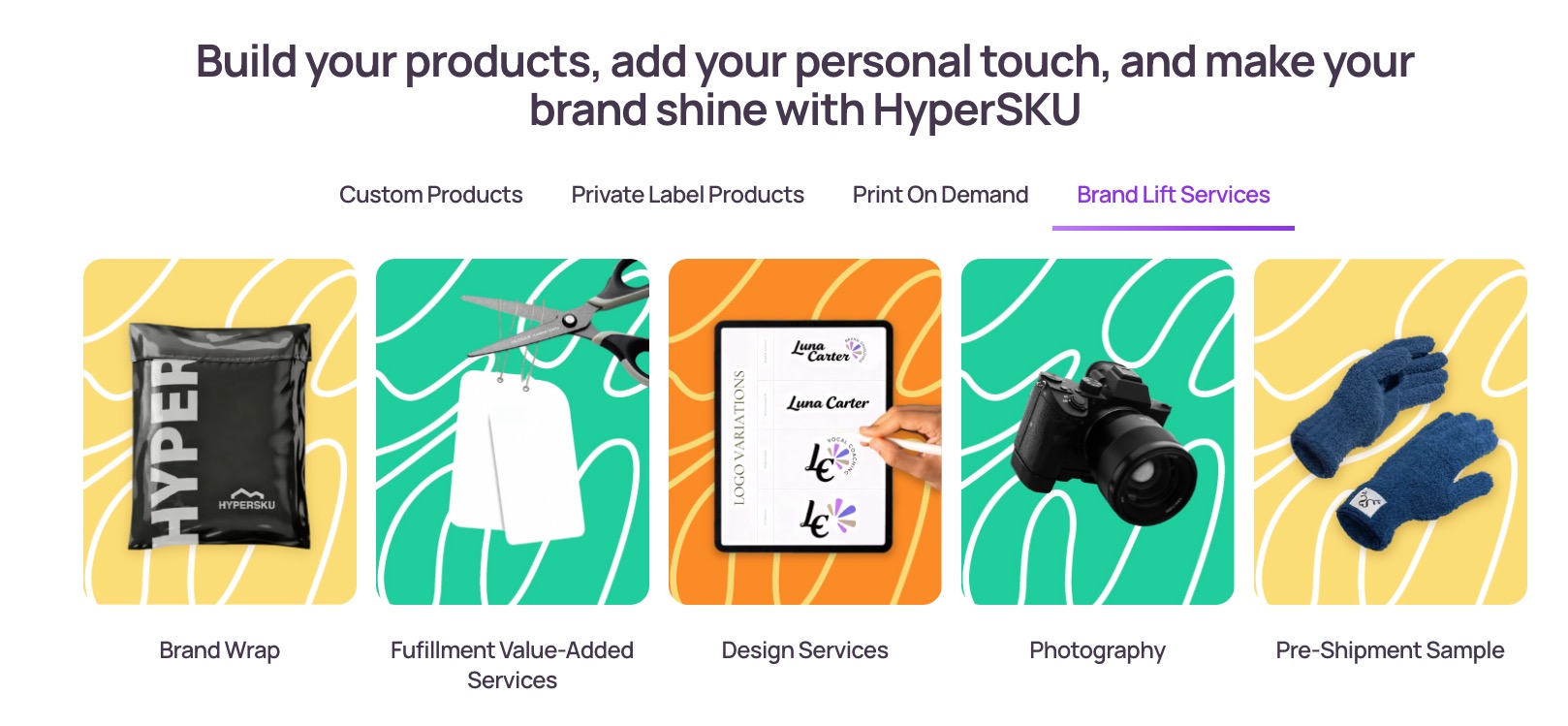
A strong brand experience can turn one-time buyers into loyal customers. HyperSKU’s BrandLift services help you deliver consistent quality while enhancing the unboxing experience.
Quality checks & reinforced packaging reduce the chance of damaged goods
Customized thank-you cards and brand wrap make unboxing feel special
POD & private label options allow you to stand out during holidays
These services are designed to make your products and brand memorable, driving positive reviews and repeat sales.
4. Seamless System Integration & Order Automation
Q4 order spikes can be overwhelming—but with HyperSKU, syncing your store with Shopify, WooCommerce, BigCommerce, Etsy, TikTok Shop, and others is seamless, letting you focus on selling while your operations stay on track.
Orders sync automatically from your store
Fulfillment handled end-to-end (pick, pack, ship)
Tracking updates push back to your store
Manual workload is significantly reduced
This smooth integration ensures your store remains smooth and stable, even on the biggest sales days.
From warehousing to dedicated support, enhanced brand experiences, and automated order handling, HyperSKU helps sellers prepare early, ship faster, and scale confidently during Q4. Focus on selling — HyperSKU takes care of the rest.
5 Best Products to Dropship During BFCM 2025
If you’re thinking about starting an online business from scratch, BFCM is one of the best times to give it a try. Dropshipping makes it possible to test products without the headache of stocking inventory—your supplier takes care of the storage, packing, and shipping, and you only buy after a customer orders. In other words, you can move fast, ride the holiday shopping wave, and see which products actually sell.
Here are some categories that tend to shine during BFCM:
1. Print-on-Demand Products
Shoppers love giving gifts that feel personal. A custom mug with a name, a holiday hoodie with a funny slogan, or a phone case designed for a specific vibe—these little touches make products feel one-of-a-kind.
Great picks: custom T-shirts, mugs, phone cases, and tote bags.
People are on the hunt for thoughtful gifts, and personalized items hit the sweet spot between unique and affordable. HyperSKU POD helps sellers launch custom products without worrying about inventory or logistics.
Curious about the possibilities? Check out Rachel’s success story, where she turned her online influence into a fast-growing fashion line.
If T-shirts are on your list, you may also find our Shirt Printing Guide useful—it breaks down the most popular printing techniques.
2. Health & Beauty
The holiday season is when people want to look and feel their best—or gift self-care products to loved ones. Plus, the “new year, new me” mindset kicks in right after.
Great picks: Skincare kits, facial rollers, mini massage devices, blue-light glasses, essential oil diffusers.
These items make great gift sets, and they’re lightweight enough to ship quickly during peak season.
3. Home & Office Essentials
With remote and hybrid work still shaping lifestyles, home and office upgrades are in demand. BFCM shoppers also look for practical buys alongside splurge items.
Great picks: Air purifiers, ergonomic desk gear, smart home gadgets, organizers.
These are higher-ticket items that people often wait to buy until discounts hit.
4. Pet Products
Let’s be honest—many people spend as much on their pets as they do on family. And holiday-themed pet items? They sell fast.
Great picks: Festive pet outfits, interactive toys, grooming kits, feeding accessories.
Pet owners love spoiling their pets, and seasonal products bring out the impulse buyers. If you want more inspiration, check out our 2025 guide on dropshipping pet products for trending items and tips on selling them online.
5. Electronics Accessories
Electronics are BFCM bestsellers every year, but accessories are the hidden gems. They’re cheaper, giftable, and perfect as last-minute add-ons.
Great picks: Wireless earbuds, charging stations, phone stands, smartwatch bands, portable power banks.
Small tech gadgets are classic stocking stuffers, and everyone’s upgrading devices around this time.
💡 Quick tip: Look for products that are lightweight, durable, and gift-ready. Those are the items that ship smoothly, survive the holiday rush, and actually convert during the busiest shopping weekend of the year.
5 Common Mistakes to Avoid During BFCM
Black Friday and Cyber Monday are massive opportunities, but they come with their own set of challenges. Knowing what to avoid can save you a lot of headaches—and lost revenue.
1. Mismanaging Inventory
Underestimating demand can lead to stockouts, while overestimating can leave you with unsold inventory. One seller shared their experience of losing $15K in profit last BFCM due to overstocking and poor preparation (source:Reddit). Tip:Base your inventory on realistic sales forecasts and keep a buffer for unexpected demand. For a deeper dive into best practices, check out our guide to dropshipping inventory management.
2. Ignoring Customer Support
More traffic usually means more questions. Ignoring customer inquiries can result in negative reviews and lost sales. Tip: Make sure your support team is ready, or set up auto-responses for common questions.
3. Running Untested Promotions
Launching discounts or ads without testing can waste your budget. Tip: Try small campaigns first, analyze results, then scale the ones that work.
4. Overcomplicating Checkout
Lengthy forms, forced account creation, or limited payment options can kill conversions. Tip: Keep checkout simple with guest options and popular payment methods like PayPal or Apple Pay.
5. Neglecting Mobile Optimization
A large portion of shoppers will be on mobile. Poor mobile experience means lost sales. Tip: Test your store on multiple devices, make buttons easy to tap, and avoid excessive pop-ups.
Final Thoughts
Black Friday and Cyber Monday are your chance to make the most of the busiest shopping days of the year—but preparation is everything. From optimizing your store for speed and mobile, to planning inventory, running tested promotions, and avoiding common pitfalls, every step counts. The stores that plan ahead not only boost sales during BFCM, but also build trust and loyalty that lasts well beyond the holidays.
If you’re ready to kick off your BFCM preparations, HyperSKU provides support to help sellers launch products quickly and streamline their operations. Register today to get started and access everything you need to sell confidently this holiday season.
Frequently Asked Questions
1. When is BFCM in 2025?
Black Friday 2025 falls on November 28, and Cyber Monday follows on December 1. Planning early is key to capturing the holiday rush.
2. Do I need to hold inventory for BFCM?
Not necessarily. Many sellers use dropshipping or print-on-demand to test products without upfront inventory costs.
3. How can I optimize my store for BFCM traffic?
Focus on site speed, mobile responsiveness, simplified checkout, and tested promotions. These factors help reduce cart abandonment and improve conversions.
4. Which products sell best during BFCM?
Trending categories include print-on-demand items, health & beauty, home & office essentials, pet products, and electronics accessories. Lightweight, giftable, and unique items often perform best.
5. How do I avoid common mistakes during BFCM?
Plan inventory carefully, test your promotions, provide strong customer support, and make sure your website can handle traffic surges. Also, optimize for mobile and simplify checkout.
Last updated: September 2025
In 2025, TikTok continues to dominate headlines — as both a cultural powerhouse and a booming ecommerce hub. Earlier this year, U.S. President Donald Trump reignited the conversation about banning TikTok in the United States, citing concerns over national security and data privacy. While the political future of TikTok remains uncertain, its current influence on eCommerce is undeniable.
In this article, we cover:
Why choose to sell on TikTok in 2025
20 TikTok trending products across 5 viral categories — with hashtags you can use to explore their traction
Tips for selling more effectively on TikTok Shop
Why TikTok Shop? Is social commerce still worth it?
Despite ongoing regulatory debates, TikTok continues to thrive as one of the most influential platforms in global social commerce. Its personalized algorithm, seamless in-app shopping experience, and viral product culture have made TikTok Shop a standout channel for eCommerce growth.
Let’s take a look at the numbers:
TikTok Shop’s GMV exceeded $33.2 billion globally in 2024, more than double from 2023, showing strong momentum for continued growth in 2025
Global social commerce sales are expected to reach $2.9 trillion by 2026
36% of Gen Z shoppers in the U.S. shop on TikTok at least once a month
TikTok’s ability to merge content, entertainment, and commerce remains unmatched. For brands and sellers, it’s not just a trend — it’s a rapidly evolving ecosystem that rewards creativity, speed, and authenticity.
20 Trending TikTok Products to Sell in 2025 (5 Top Performing Categories)
Category 1: Beauty & Skincare
1. Perfume
TikTokers call it “the scent everyone’s wearing”—often sweet, gourmand, or vanilla-based.
TikTok features over 75,000 posts with the hashtag #viralperfume, and over 1.1 million posts under #perfumetok — showing massive engagement and trend momentum.
Search tip:#viralperfume, #perfumetok
2. Peel-Off Lip Stain
A color-reactive peel-off lip mask that leaves a long-lasting tint.
TikTok videos showing the peel-off reveal get millions of views due to the satisfying transition and lasting payoff—and frequently appear in “TikTok made me buy it” montages.
Search tip:#peelliplipstain, #viralliptint
3. Self-Tanning Drops or Lotion
Lightweight tanning products (drops or lotion) mixed with moisturizer to deliver a natural-looking golden glow.
TikTok is full of “summer glow hacks” using self-tanners, with creators sharing “just spent five days in Hawaii” routines that got massive traction.
Hair-styling devices that add body, smooth frizz, and create salon-like blowouts at home.
These tools drive millions of views under hashtags like #hairtools; the Dyson Airwrap and similar devices have generated over 9.5 billion hashtag views and remain TikTok favorites.
Search tip:#hairtools, #blowouthairtool
Why These Work So Well on TikTok
Feature
TikTok Effectiveness
High visual impact
Perfume unboxing, peel-offs, and hair transformations make compelling short-form visuals.
A TikTok darling for “romantic” and “clean girl” fashion content.
Frequently featured in #GRWM and “styling soft outfits” clips.
Search tip: #balletcore, #balletflats, #cleanfit
Why These Work So Well on TikTok
Feature
TikTok Effectiveness
Trend-driven appeal
Aligns with real-time fashion microtrends like balletcore, retro suede, and soft glam.
Transformation-friendly
Accessories like belts and earrings help shift outfits dramatically in GRWM and styling content.
Visual texture
Materials like suede or bold jewelry offer rich visual elements in short-form video.
Tips for Selling Successfully on TikTok Shop
TikTok isn’t just another social media app — it’s a full-fledged product discovery engine. But going viral doesn’t always translate into conversions or smooth fulfillment. Here are three essential tips to make your TikTok Shop operation seamless:
1. Know Your Target Audience
TikTok is a UGC-driven platform where authenticity beats perfection. The most successful sellers understand their niche and tailor their content accordingly.
Study what your audience is already engaging with — GRWM videos, ASMR demos, or “TikTok made me buy it” hauls.
Use TikTok features like sounds, trending hashtags, and creator collabs to stay relevant.
Remember: you’re not just selling a product; you’re selling a vibe, a lifestyle, a story.
2. Speed and Availability Matter
Consumer expectations are higher than ever. With same-day and next-day delivery becoming the norm, slow shipping can break trust.
Choose suppliers and fulfillment partners that offer real-time inventory visibility.
Keep your product pages updated to avoid cancellations and negative reviews.
Make sure you’re prepared to restock quickly when a product goes viral.
3. Work with Reliable Suppliers
A viral product means nothing if your supply chain can’t keep up. On TikTok Shop, seller ratings and delivery speed can make or break your momentum — especially when customers expect fast, consistent service.
HyperSKU is built for TikTok sellers who want to scale fast without compromising on quality or customer satisfaction.
4. Set a Clear After-Sales Policy and Keep Customers Coming Back
Retention matters just as much as acquisition. Satisfied buyers become repeat customers and brand advocates.
Clearly communicate your return, exchange, and refund policies to reduce disputes.
Consider follow-up messages, loyalty perks, or personalized thank-you notes to build long-term trust.
Encourage happy customers to share UGC — real testimonials fuel more sales on TikTok than any ad.
Final Thoughts
TikTok Shop isn’t just a trend — it’s where eCommerce is happening right now. With the right products, storytelling, and fulfillment partner, your store can go viral faster than you think.
From beauty to home gadgets, we’ve shown you real TikTok-proven product ideas and smart tips to set you apart. But having the right supplier makes all the difference — and that’s why thousands of sellers choose HyperSKU.
Can I start selling on TikTok Shop even if I don’t have a big following?
Yes. TikTok’s algorithm promotes engaging content, not just accounts with a large follower base. Many new sellers go viral with the right product and creative video strategy.
How do I know which products are trending?
Use hashtags like #TikTokMadeMeBuyIt or explore the “Shop” tab within TikTok. In this guide, we’ve provided tailored hashtag tips under each product category to help you research effectively.
Do I need to keep inventory?
Not necessarily. With HyperSKU, you can operate a dropshipping or stock-on-demand model. We handle product sourcing, order fulfillment, and fast global delivery for you.
What’s the average delivery time with HyperSKU?
Most global orders are delivered in 5–12 days, thanks to our optimized logistics network and address validation system.
Is HyperSKU only for TikTok sellers?
No. HyperSKU also integrates with Shopify, WooCommerce, and other eCommerce platforms. However, we’re especially optimized for TikTok Shop — making us a strong partner for creators and social commerce sellers.
No one starts an e-commerce business thinking about the end. But whether you’re running a dropshipping store or building a DTC brand, having a clear business exit strategy is just as important as your growth plan.
People exit their businesses for many reasons:
Maybe your store has hit a plateau or you’re burnt out from handling daily orders, customer support, and ad campaigns.
Maybe it’s simply time to cash out on the value you’ve built.
Recent data shows this lack of preparation is common—and risky:
In 2023, 48% of business owners who want to sell had no formal exit strategy
That same report found only 17% had a written exit plan
These statistics paint a clear picture: many owners aren’t planning ahead—and without a solid strategy, even profitable stores can fail to sell, or worse, fail altogether.
That’s why a business exit strategy isn’t a luxury—it’s a necessity. It turns your hard work into a real financial outcome, rather than letting it fade away.
In this guide, we’ll walk you through the essentials of a smart e-commerce exit:
What a business exit strategy actually means
Where to sell your dropshipping or DTC brand
How to maximize your store’s value before the sale
Let’s get started — and make your business exit a profitable one.
What Is a Business Exit Strategy?
A business exit strategy is a planned approach for transitioning out of business ownership. It outlines how you intend to either sell, merge, close, or otherwise transfer your business when the time comes.
For dropshipping and DTC (direct-to-consumer) brands, this often means selling the entire business as a packaged asset—this may include:
Standard operating procedures (SOPs), automations, and staff (if applicable)
An exit strategy is not simply about shutting down—it’s about capturing the value of the business you’ve built and transitioning it in a way that aligns with your long-term goals.
Why Exit Strategy Matters for Dropshipping/DTC Sellers
Compared to traditional retail businesses, e-commerce brands—especially dropshipping operations—tend to be:
Scalable and relatively low overhead
Fast to build, but highly dependent on traffic sources (especially paid ads)
Easier to transfer to a new owner due to the digital nature of assets
However, they also come with challenges that can complicate a potential exit:
Operations may lack documentation or structure
Margins can be thin and depend heavily on ad efficiency
Buyers may hesitate if customer relationships and brand equity aren’t strong
Planning your exit early gives you time to stabilize operations, document processes, and improve your financial performance, so when the time comes, you’re ready to sell at a fair (or premium) valuation.
Common Exit Options for E-Commerce Sellers
When planning to exit your dropshipping or DTC business, choosing the right platform to sell your store is crucial. Each marketplace or broker offers different benefits depending on the size of your business, your timeline, and your specific needs. Below is a comparison of five leading platforms, followed by detailed descriptions to help you decide which one suits your exit strategy best.
Here are more details & breakdowns about the platforms mentioned above.
Empire Flippers
Empire Flippers is a leading curated marketplace for online business acquisitions. They require sellers to show at least $2,000/month in average net profit over a 12-month period. Ideal for mid-sized DTC or dropshipping businesses with stable earnings and clean operations.
Pros:
Rigorous buyer vetting ensures quality offers
Hands-on sales process with support from advisors
Offers a valuation tool and migration assistance
Cons:
High commission rates (up to 15%)
Lengthy vetting period before listing approval
Flippa
Flippa is the most accessible platform on this list, with no minimum revenue or profit requirement. It’s ideal for early-stage or small e-commerce entrepreneurs looking for fast listing and exposure.
Pros:
Open to all business sizes
Large volume of daily buyers and listings
Transparent pricing and flexible process
Cons:
Less curation—buyer quality can vary
Sellers must manage their own negotiation and vetting
Acquire.com
Acquire.com, best known for SaaS and e-commerce acquisitions, requires a minimum of $100,000 in trailing-twelve-month (TTM) revenue, though most listed businesses exceed $5 million in TTM revenue.
Pros:
Attractive to professional buyers and institutional investors
Clean, modern UI and strong deal flow
Supports quick, discreet transactions
Cons:
Not suitable for businesses below $100K revenue
Limited support for small, non-SaaS dropshipping stores
FE International
While FE International is best known for high-value deals, it accepts businesses with at least $500/month in profit and 12 months of operating history. However, their sweet spot lies in deals valued over $100,000.
Pros:
Personalized, full-service M&A advisory
High success rate and strong buyer pool
Ideal for sellers looking for hands-off exit
Cons:
Higher fees due to advisory nature
Selective listing acceptance
ShopBroker / Other Brokers
This category includes smaller, regional brokers or niche specialists. These platforms or consultants typically operate on a case-by-case basis, offering project-based or customized fees, making them a good option for stores with unique market needs or local assets.
Pros:
Flexible terms and personalized service
Good for niche, local, or cross-border e-commerce businesses
Human-centered support during transfer
Cons:
Harder to verify credibility
May not have wide buyer reach
How to Maximize Your Store’s Value Before the Sale
When buyers evaluate your e-commerce business, they’re not just looking at profit—they’re also assessing operational reliability, scalability, and risk factors. The more streamlined and future-proof your business appears, the higher your valuation will likely be.
Let’s walk through four key areas that directly impact your business’s value—and how optimizing fulfillment and logistics can make a measurable difference.
1. Build a Reliable Fulfillment System That Can Scale
One of the most common deal-breakers in e-commerce business acquisitions is an unreliable fulfillment process. Manual order processing, inconsistent delivery times, and high dispute rates make your business look fragile.
By contrast, a stable, tech-enabled fulfillment workflow increases buyer confidence.
For example, working with a platform like HyperSKU gives you access to:
Smart order routing & automatic syncing with your store
Real-time tracking, fewer lost packages and delays
A professional team handling quality checks and shipping coordination
These features not only save you time but also reduce refund rates and customer complaints—factors that can significantly impact business valuation.
2. Centralize and Document Your Operations
A buyer wants to know: If I take over tomorrow, can I run this business without the current owner? The answer starts with documentation and systems.
SOPs for order management, returns, and customer communication
Clear fulfillment workflows (including how inventory is stored, picked, and shipped)
Supplier and logistics partner contacts
Performance reports and cost structures
With a logistics partner like HyperSKU, you already benefit from centralized dashboards and communication. This simplifies documentation and makes your business more “plug-and-play” for the next owner.
Your revenue numbers matter—but net profit margins and operational efficiency matter even more. Buyers want businesses with lean, optimized operations.
Here’s how streamlined logistics can help:
Lower shipping costs through bulk rates and local delivery options
Reduced product damage or delivery errors, leading to fewer disputes
Improved inventory turnover, thanks to data-backed insights
Platforms like HyperSKU offer real-time inventory data, product bundling options, and integration with multiple selling channels—helping you boost margins while maintaining performance.
4. Make Your Business Less Dependent on You
The less involved you are in the day-to-day, the more transferable—and valuable—your business becomes.
Start by automating:
Order fulfillment and tracking updates
Inventory restocking alerts
Dispute resolution workflows with logistics providers
With HyperSKU, once an order is placed, the rest—from fulfillment to tracking—is handled seamlessly. This removes friction, saves time, and gives buyers confidence that they’re buying a scalable system, not just a job.
Enhancing your fulfillment and logistics operations is one of the smartest ways to prepare for a successful business exit. Whether it’s faster delivery, lower refund rates, or easier process handover—solutions like HyperSKU help you build a business that buyers want to own.
Final Thoughts
Exiting your dropshipping or DTC business is more than just finding a buyer—it’s about building a brand that others want to own. A well-prepared store with solid operational foundations, clean financials, and scalable systems can significantly increase your chances of a smooth, profitable sale.
Whether you’re aiming to sell in the next few months or simply laying the groundwork, the right partners and infrastructure can make all the difference. From fulfillment to shipping, buyers are looking for reliability—and that’s where services like HyperSKU come in.
Reduce refund/dispute rates HyperSKU not only improves your day-to-day operations—it also helps you present a more valuable, buyer-ready business.
Thinking about your own exit strategy? Start streamlining today—and when the time is right, you’ll be ready to sell with confidence.
FAQ: Business Exit Strategy for E-commerce Sellers
1. What is a business exit strategy?
A business exit strategy is a planned approach to selling or transferring ownership of your company. For e-commerce sellers, this means preparing your store, operations, and financials to make it attractive to potential buyers.
2. When is the right time to sell my dropshipping or DTC brand?
There’s no one-size-fits-all answer, but ideal timing often includes:
Consistent profitability (3–12 months minimum)
Streamlined operations and low dependency on you
Strong product-market fit and repeat customers
You’ve hit a personal or strategic milestone
3. How much can I sell my e-commerce business for?
Valuation typically depends on your monthly net profit, business model, growth trends, and operational risk. Multiples range from 2x to 4x your annual net profit, though high-performing stores can go higher.
4. Do I need to prepare anything before listing my business?
Yes—buyers will want:
Clean, accurate financial records
Access to operational documentation
Fulfillment and supplier details
Store performance data (traffic, reviews, repeat rate)
5. How does fulfillment affect my business valuation?
A lot. Poor fulfillment leads to high refund rates and negative reviews—big red flags for buyers. A smooth, automated fulfillment process (e.g., through HyperSKU) shows stability and scalability, which can increase your valuation and reduce buyer concerns.
Temu USA’s Sudden 52% User Drop: What’s Behind the Sharp Decline?
Temu was once a major disruptor in the U.S. eCommerce market, attracting millions of shoppers with unbeatable deals and free shipping. But in 2025, the platform faced a sharp drop in user activity that caught many by surprise.
But by mid-2025, that momentum has started to fade.
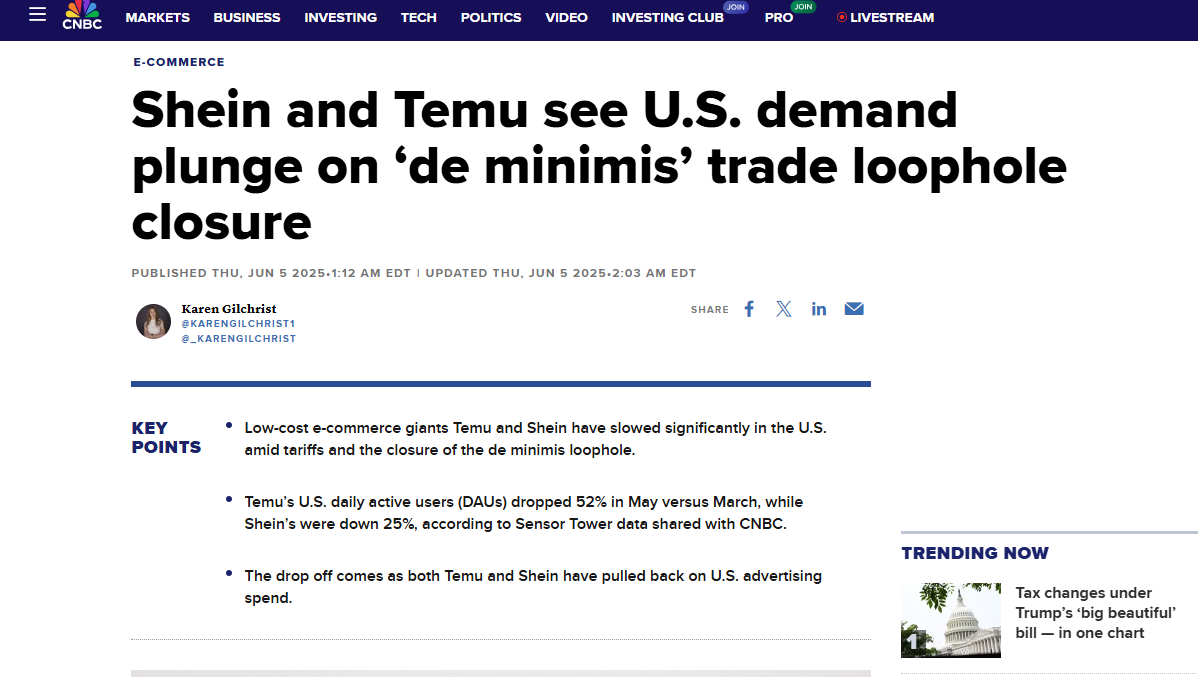
According to Sensor Tower data shared via CNBC, Temu’s U.S. daily active users dropped52% in May compared to March. The decline comes amid rising political pressure to eliminate the “de minimis” loophole—a trade rule that allowed low-value imports (under $800) to enter the U.S. duty-free and with minimal customs oversight.
As Temu cuts back on advertising and faces growing scrutiny over its logistics and compliance, uncertainty rises—especially for sellers who rely on the platform. Yet amid the disruption lies opportunity. With less noise from platform-driven promotions and shifting buyer expectations, independent merchants have a chance to regain trust, speed, and transparency.
In this article, we explore how the Temu USA downturn is reshaping eCommerce—and how agile sellers can adapt. We’ll also show how HyperSKU helps merchants stay competitive with flexible sourcing, fast fulfillment, and localized strategies.
Quick Takeaways
Temu’s U.S. user base dropped by 52% in May 2025 (Sensor Tower via CNBC)
Lawmakers are targeting the “de minimis” loophole, raising costs for Chinese eCom platforms
Temu has reduced Meta ads, hidden listings from China, and faces declining consumer trust
U.S. sellers now have a window to win back market share through speed, transparency, and local fulfillment
Brands must adapt logistics, diversify sourcing, and focus on long-term trust over short-term pricing
What Is the De Minimis Rule—And Why It Matters Now
One of the core reasons platforms like Temu have been able to offer such low prices in the U.S. is a little-known trade rule: the de minimis threshold.
In short, this rule allows imports valued under $800 to enter the U.S. without duties or detailed customs checks. Originally intended to reduce administrative burdens for low-value parcels, it wasn’t built for today’s high-volume eCommerce giants.
However, platforms like Temu and SHEIN built their models around it—shipping millions of low-cost parcels directly to U.S. consumers, tax-free.
Critics now call this the “de minimis loophole.” It gives foreign sellers an unfair edge and raises concerns about product safety, labor standards, and transparency.
In 2025, the rule is firmly in the political spotlight. Lawmakers from both parties are pushing for reform, aiming to protect domestic retailers and restore trade balance. Headlines like “Trump tariffs target loophole used by Chinese online retailers” highlight the urgency.
As the rules tighten, platforms like Temu will face higher compliance costs, longer shipping times, and fundamental changes to their U.S. operations.
How the De Minimis Loophole Crackdown Affects Temu’s Operations in the U.S.
The U.S. government’s renewed focus on the de minimis loophole is forcing significant changes in how Temu USA operates. What began as a political debate has quickly turned into tangible disruptions for the platform—impacting everything from product visibility to advertising and consumer trust.
Temu Blocks U.S. Shoppers From Seeing Products Shipped From China
One of the most immediate effects of the crackdown has been a dramatic shift in how Temu displays its product listings. As reported byWIRED, Temu recently began blocking U.S. users from viewing items that ship directly from China, signaling a transition toward relying more on local warehouses. This shift is widely seen as a response to pressure from U.S. Customs and the risk of delays or tariffs under the new trade scrutiny.
While this may streamline compliance, it fundamentally alters Temu’s operational model and may limit the breadth of products available to American shoppers.
Temu Pulls Back on U.S. Meta Advertising
As part of a broader slowdown, Temu has cut back its advertising spending on platforms like Facebook and Instagram, according toCNBC. The company’s U.S. app store rankings have also slipped, suggesting reduced user acquisition and retention.
This pullback reflects growing uncertainty around profitability in the U.S. market and raises questions about how Temu will continue to grow amid regulatory headwinds.
Rising Operating Costs and Supply Chain Stress
Temu’s original advantage came from shipping low-cost goods directly to consumers without duties, thanks to the de minimis loophole. Now, with increased inspections and the potential for new tariff applications, Temu faces higher fulfillment costs, warehousing fees, and compliance risks.
If stricter rules are passed or enforcement continues to tighten, Temu could see its cost structure fundamentally shift, making it harder to maintain its “ultra-low price” brand promise.
Consumer Trust and Declining User Base
Public sentiment toward Temu is also shifting.With growing media coverage of counterfeit products, privacy issues, and labor practices, the platform is experiencing a trust gap that is becoming harder to repair.
Shoppers are beginning to ask: Is it worth saving a few dollars if the delivery is unreliable or if the product’s origin is unclear?
Impact on Small Businesses and U.S. Sellers
While the crackdown poses challenges for platforms like Temu, it also opens the door for small businesses and U.S.-based sellers to regain competitive ground. For years, American entrepreneurs have struggled to compete with ultra-low prices and duty-free imports from Chinese platforms operating under the de minimis rule.
Now, as enforcement tightens and costs rise for overseas competitors, domestic sellers can differentiate through faster shipping, better quality control, and transparent customer service. The shift may also encourage more consumers to support local or near-shore sellers, especially as trust in ultra-budget platforms continues to erode.
Additionally, this regulatory reset could level the playing field on major marketplaces like Amazon, Etsy, and TikTok Shop, making 2025 a pivotal year for U.S. eCommerce innovation and repositioning.
Why This Crackdown Creates Opportunities for U.S. eCommerce Sellers
While the de minimis crackdown presents serious challenges for platforms like Temu and SHEIN, it may become a turning point for American and global sellers looking to build sustainable eCommerce brands in the U.S. market.
A Leveling of the Playing Field
For years, sellers shipping from within the U.S. have faced a cost disadvantage when competing with platforms like Temu and SHEIN, which avoided tariffs and taxes under the de minimis rule. With this loophole now under intense regulatory pressure, all sellers may soon be subject to the same cost structures, giving U.S.-based businesses a better chance to compete on product quality, customer experience, and brand trust.
Consumers Are Rethinking “Cheapest Wins”
Shoppers are increasingly aware that ultra-low prices often come with trade-offs—slower delivery, inconsistent product quality, and limited customer service. As platforms like Temu begin to lose their shine, consumers are shifting toward sellers that offer reliability, transparency, and locally stored inventory. This presents a prime opportunity for independent brands and DTC stores to win over price-fatigued buyers with speed and service.
More Demand for Domestic and Near-Shore Fulfillment
As delivery delays from China grow more frequent due to customs scrutiny, fast and consistent fulfillment becomes a powerful selling point. U.S. sellers who already use domestic 3PLs or work with near-shore suppliers (in Mexico, Canada, or Southeast Asia) will be well-positioned to capture demand from frustrated cross-border shoppers.
In fact, offering 2–5 day delivery and clear return policies may now be more valuable than undercutting prices.
Better Margins for Branded Sellers
With platforms like Temu pulling back on ad spending and experiencing declining user trust, competition in digital ad spaces is cooling slightly. U.S. sellers may now enjoy lower CPMs and better ROAS on platforms like Facebook, TikTok, and Google—especially if they emphasize product trust, origin transparency, and fast shipping in their messaging.
Brands that build a loyal customer base and optimize for LTV (lifetime value) rather than volume will likely see stronger, more profitable growth in 2025.
Time to Build a Brand, Not Just a Store
Temu and similar platforms have normalized a “lowest-price-wins” culture. But in a post-de minimis world, brands with identity, values, and customer trust will take center stage. For U.S. sellers, this is a chance to shift the narrative—from racing to the bottom, to building long-term businesses.
As the market corrects and regulatory balance is restored, 2025 may prove to be the year independent sellers finally get a fair shot.
How Sellers Can Adapt — and Thrive — in 2025
The de minimis crackdown has created serious operational challenges for platforms like Temu and SHEIN—disrupting their logistics models and advertising strategies across the U.S. However, as explored earlier in this article, the shifting landscape also presents a window of opportunity for independent and mid-sized eCommerce sellers.
That said, this is not the time for complacency.
Even as Temu loses some of its pricing edge, U.S.-China tariff policy continues to evolve, adding new layers of complexity for global sellers. From potential increases in import duties to heightened customs enforcement, sellers must stay informed and agile to avoid margin loss or fulfillment delays.
To survive—and thrive—in this new landscape, here’s how forward-thinking eCommerce brands can take action:
Understand the Policy Shifts (and Stay Updated)
First and foremost, sellers must educate themselves on current and upcoming changes to import duties, customs enforcement, and de minimis regulations. Many sellers are still unaware of how these changes impact cross-border shipments, product pricing, and platform eligibility.
Relying on a single cross-border route—especially one vulnerable to increased customs scrutiny—is no longer sustainable. Sellers should diversify their sourcing and consider near-shore or domestic fulfillment options to maintain speed and reliability.
This is where agile fulfillment solutions make a difference.
HyperSKU, for example, empowers sellers to fulfill orders from China with a faster delivery time. With deep experience navigating cross-border logistics and platform integrations, HyperSKU gives sellers a flexible foundation to adapt.
Reposition Your Brand Around Trust and Transparency
With platforms like Temu losing consumer trust, now is the time for independent sellers to stand out through authenticity and reliability. That means clear shipping times, honest product descriptions, and open communication with buyers.
Leverage New Advertising Gaps
As Chinese platforms reduce their ad spending due to rising costs and political pressure, U.S.-based brands may see lower ad competition on platforms like Meta, TikTok, and Google. Sellers who focus on real value propositions (such as local fulfillment, customer service, and return policies) can optimize ROAS and gain market share in 2025.
Partner with Smart, Scalable Tools
Agility is everything. Whether you’re testing new SKUs or scaling a TikTok Shop, sellers need tools that match their growth. HyperSKU offers:
Reliable supplier access with vetted quality
Smart sourcing based on demand trends
Fast fulfillment from China
Easy Platform integrations (Shopify, WooCommerce, TikTok Shop, and more)
In short, 2025 is not the end of lean eCommerce—it’s the reinvention of it. With the right partnerships and strategy, sellers can turn regulatory risk into long-term resilience.
Final Thoughts:
Temu’s explosive growth in the U.S. market has shown just how powerful low-cost, cross-border eCommerce can be. But with the de minimis loophole under fire, the current tariff policy remains uncertain and subject to rapid changes, and consumer sentiment shifting, 2025 marks a turning point for global online retail.
For large platforms like Temu and SHEIN, increased scrutiny brings rising costs and shrinking trust. For independent sellers and emerging brands, however, it opens a door.
Now is the time to rethink logistics, strengthen your brand positioning, and prepare for long-term scalability. Whether that means optimizing fulfillment, tapping into more transparent sourcing, or diversifying your sales channels—adaptability is the only sustainable strategy.
If you’re ready to future-proof your eCommerce business, working with a flexible fulfillment partner like HyperSKU can help you stay competitive, compliant, and customer-focused in this new environment.
The disruption is real. So are the opportunities. What you do next will define your success in the post-de minimis era.