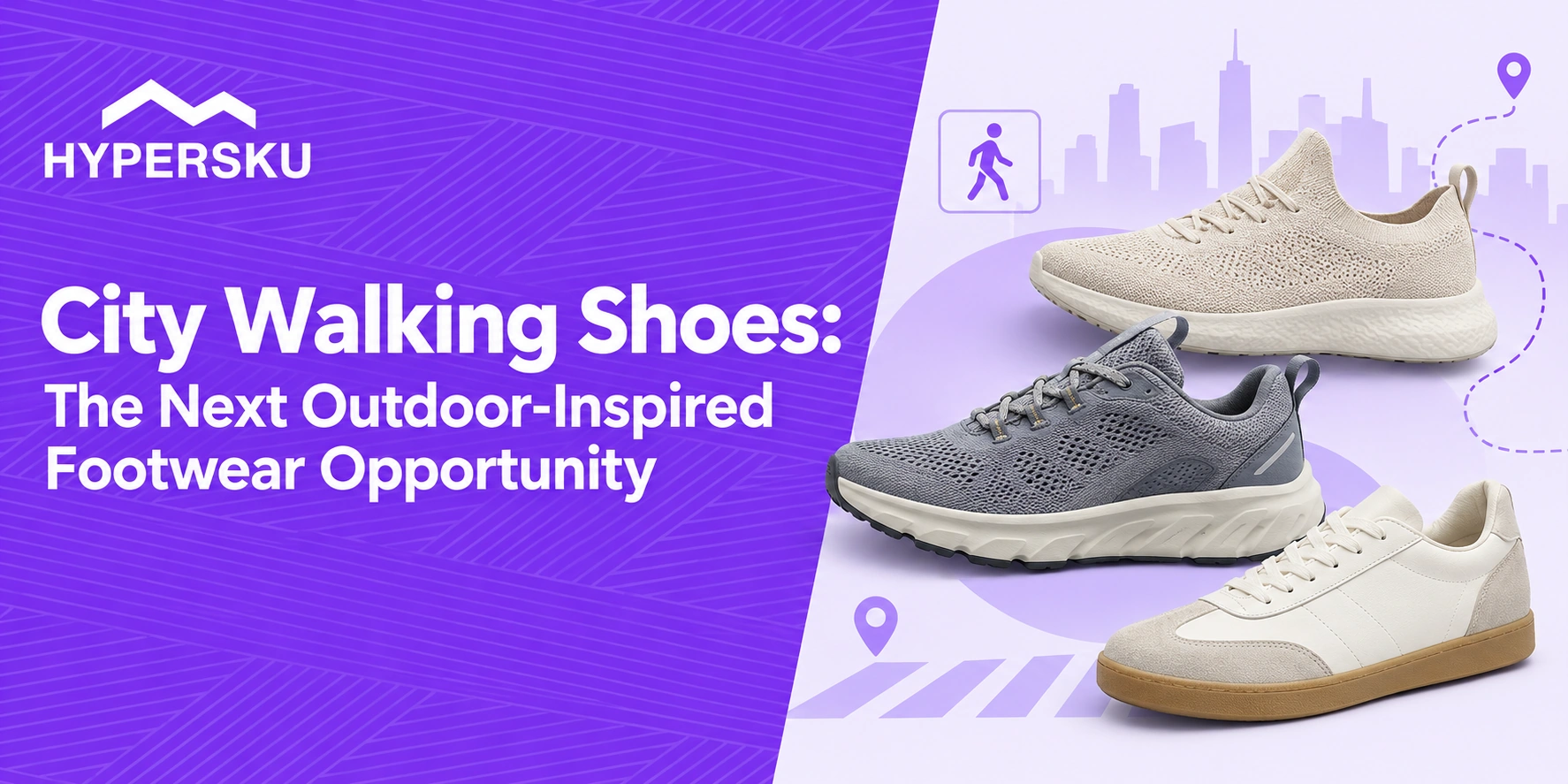
City Walking Shoes: The Next Outdoor-Inspired Footwear Opportunity
City walking shoes are moving from trail to town. See three product directions, materials worth testing, and how to validate a footwear capsule.

HyperSKU
Posted on October 08, 2026
Outdoor footwear has been showing up on city streets for years, but the look is changing. The loud, high-tech trail aesthetic is giving way to something quieter: shoes that borrow durability, grip, and stability from the outdoors, then wrap them in clean, wearable shapes. Shoppers want one pair that can handle a commute, a travel day, and a weekend walk without looking like gear.
For ecommerce brands, city walking shoes are an attractive opportunity, but also an easy category to get wrong. A technical look is not the same as technical proof, and the claims brands are tempted to make (waterproof, anti-slip, all-day comfort) are exactly the ones that drive returns and complaints. This guide covers what is behind the trend, three product directions worth testing, the features to evaluate, and how to validate a small capsule before you scale.
Why trail-inspired footwear is moving into the city
The clearest signal is the rise of the approach shoe, a hybrid between a sneaker and a hiking boot. In its 2026 coverage, MR PORTER’s editors describe the approach shoe as a style that has moved well beyond its original job of getting climbers to the rock face, appealing because it adds a practical edge without overwhelming an outfit. Their wider sneaker trend roundup also points to growing demand for hybrid sneakers, from approach shoes to hiking sneakers, and notes that trail runners have become a regular sight in cities.
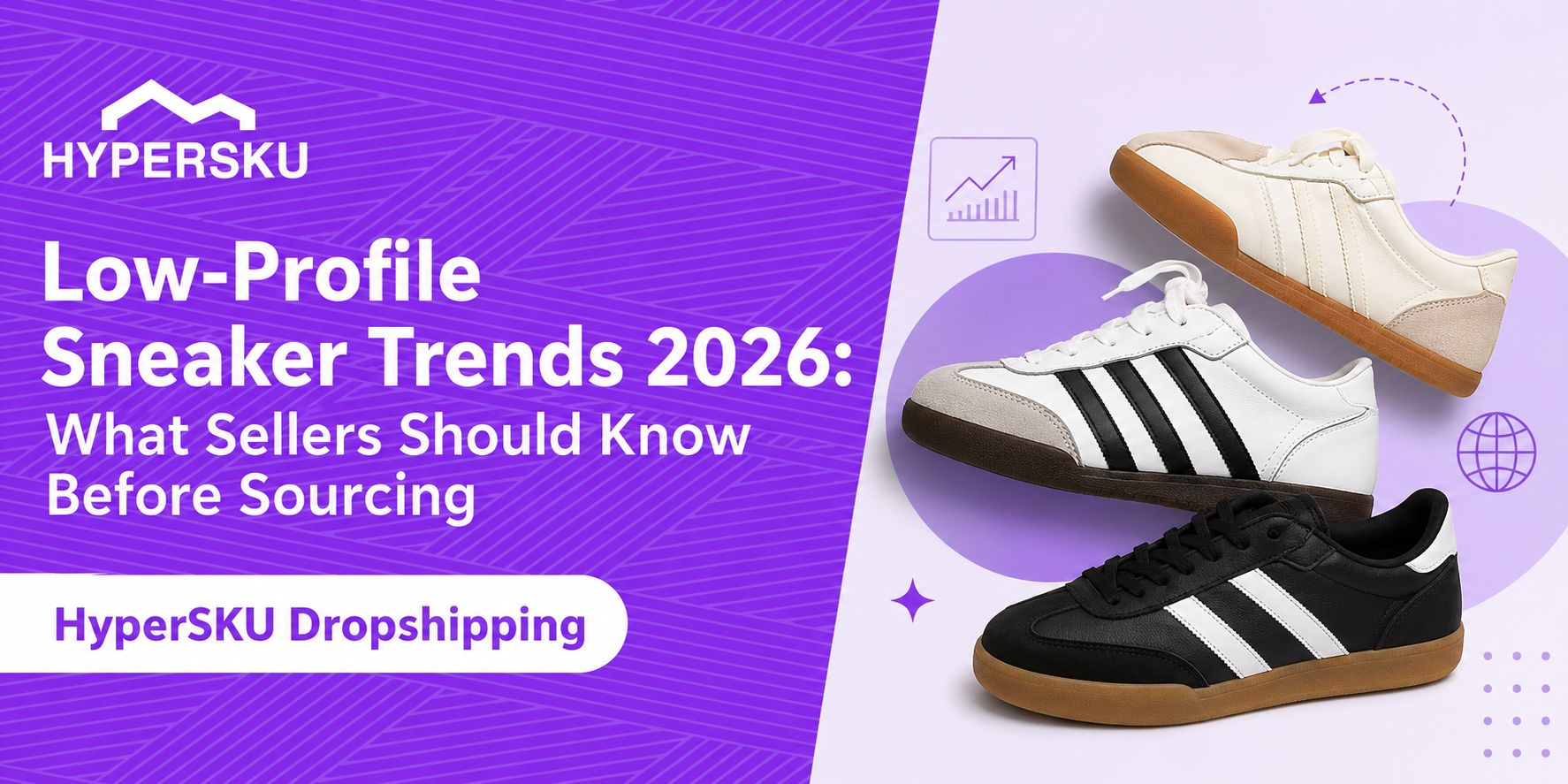
Style coverage of the category frames the timing as a crossover between gorpcore and the low-profile sneaker trend, which helps explain why slimmer, quieter outdoor-inspired shapes are gaining ground over bulky trail looks. If you want the other half of that story, our guide to low-profile sneaker trends breaks it down.
The practical read for brands: this is a style and use-case signal, not proof of sales volume. Shoppers are not asking for summit-ready performance. They are buying the idea of a shoe that feels prepared for the day, which is a much easier promise to deliver honestly.
What are city walking shoes, and how do they differ from hiking shoes?
City walking shoes are lifestyle shoes designed for pavement first. They take the durability, stability, and protective cues of outdoor footwear and pair them with the lightweight, clean look of a casual sneaker or business-casual shoe. They are not hiking boots, safety shoes, or medical and orthopedic footwear, and they are not waterproof by default.
A note on weather language
For general editorial and product copy, “weather-ready” is the safer phrase. It describes intent, such as a water-repellent finish, quick-drying materials, or a grippy sole, without promising a tested result.
Waterproof has a specific meaning. As retail footwear guides explain, a waterproof shoe relies on a sealed membrane that blocks liquid water, usually only up to the ankle collar, while a water-resistant shoe simply slows water down in light rain and splashes. That membrane also cuts breathability, which matters for a shoe worn all day. Use “weatherproof” or “waterproof” only when the specification has been verified for the exact product you are selling.
Three city walking shoe directions brands can explore
Rather than launching a broad technical range, start with a focused capsule. If you are still working out how to turn a direction into a real product, our guide on custom shoes for your brand walks through the options.
1. Urban everyday base
Source:Rei
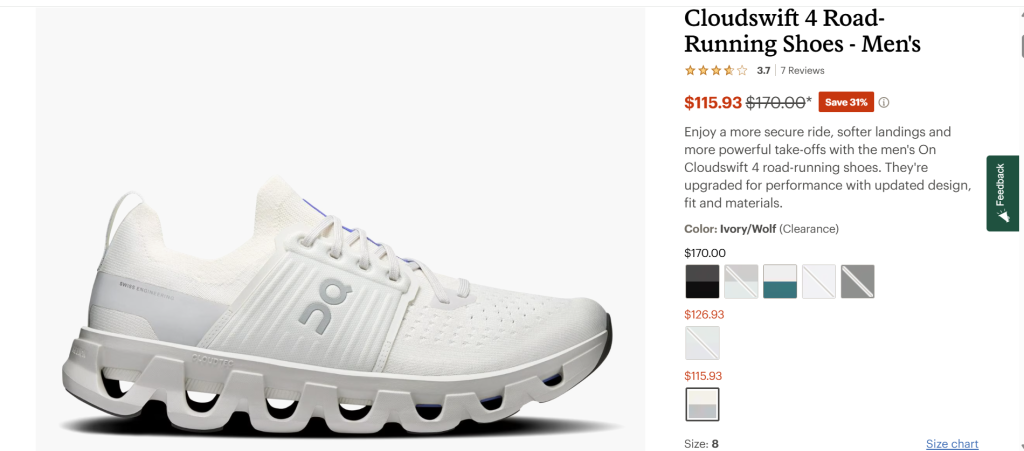
This is the most practical starting point. Think a low-cut, lace-up shoe with a leather, suede, or synthetic upper, breathable textile panels, a lightly tapered waist, and a shallow-pattern rubber outsole. It reads as business-casual enough for the office and sturdy enough for travel days.
- Materials: leather, suede, or synthetic combined with breathable textile zones
- Colors: black, charcoal, deep brown, and olive; avoid loud outdoor color blocking
- Best for: commuters and frequent travelers who want one shoe for most of the week
- Watch out for: sameness with existing products, and overpromising “technical” features you cannot prove
2. Lightweight commuter
Source: Vessi
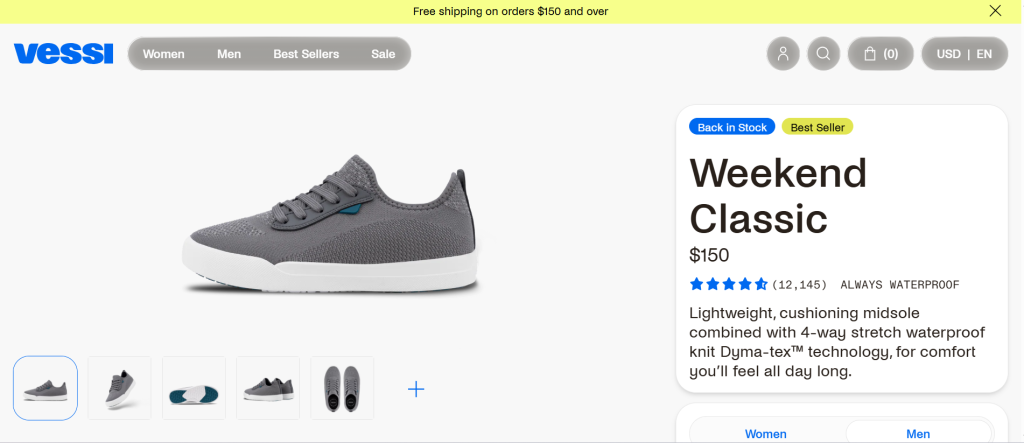
A lighter, more athletic take: engineered mesh upper, lightweight midsole, and rubber patches placed where the shoe wears fastest. It suits warm climates, long walking days, and shoppers who prioritize low weight over a structured look.
- Materials: engineered mesh or knit, with rubber reinforcements at the toe and heel
- Colors: neutral base with one restrained accent
- Best for: younger shoppers and warm-weather markets
- Watch out for: foam midsoles that wear quickly if left exposed, thin support, and “breathable” claims that the full construction does not back up
3. Seasonal material capsule
Source: Trendxparc
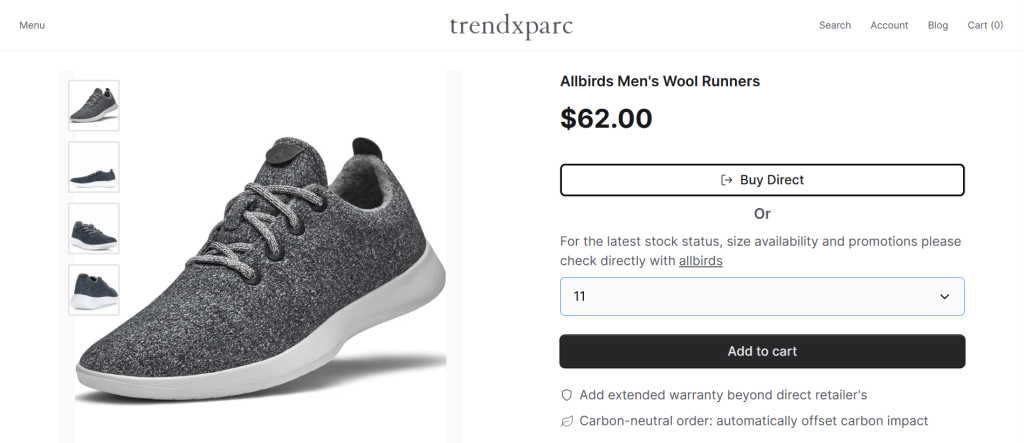
Once the first shape is proven, the same sole can carry different uppers: water-repellent textile, synthetic leather, reflective trims, or a thin protective layer for colder months. It extends one proven platform across seasons without a new sole.
- Materials: water-repellent fabrics, synthetic leather, reflective or taped details
- Colors: dark, practical shades for fall and winter
- Best for: brands with a validated base shoe looking for a second drop
- Watch out for: color variation between fabric batches, and the trade-off between water protection and breathability
What features matter most in city walking shoes?
Because city walking shoes sell on practical promises, the details underneath the look matter more than in a purely fashion-led sneaker. Use this table as a supplier checklist when you review samples.
One practical tip: ask suppliers to break the upper and the sole into layers instead of naming a single material. A mesh panel that is laminated to a film and backed by thick foam will not breathe the way the product page implies, and “rubber sole” alone says very little about weight, wear, or grip.
Claims boundary: what you can say and what needs proof
Safe without test reports: breathable mesh panels, removable insole, lightweight upper, rubber at key wear zones, weather-ready styling.
Needs evidence first: waterproof or breathable-membrane performance, slip resistance, abrasion life, orthopedic or arch-correction benefits, “all-day comfort” for everyone.
Common footwear development risks
Most problems in this category are quiet at the sampling stage and expensive after launch. These are the ones to plan for.
- Fit and sizing returns: Toe room, heel hold, and instep pressure vary widely between lasts. Arch position that suits one size can feel wrong in another. Provide foot length and width guidance, not just a size conversion chart.
- Sole separation: Weak bonding between upper and sole shows up after weeks of wear, not in a fresh sample. Ask how the bond is tested and whether aging conditions are included.
- Breathability complaints: If copy says “breathable” but the layers underneath trap heat, reviews will say so.
- Batch inconsistency: Reorders can drift when materials are swapped or colors shift. Lock the material specification, keep a color standard, and retain a reference sample from the first batch.
- Look-alike risk: Copying a known brand’s outsole pattern, silhouette details, or technology names invites trouble. Take the functional principles and keep your own design identity.
- Moisture and odor in transit: Shoes packed while damp can arrive with odor or mildew. Ask about drying, ventilation, and packing before shipping.
This is the stage where an independent check pays for itself, which is why a pre-shipment quality check is worth considering for any footwear order you plan to repeat.
How to test a footwear capsule before expanding
Footwear gets expensive quickly once tooling and minimum quantities enter the picture, so sequence your spending around evidence.
Step 1: Match the development path to your confidence. There are three broad routes. A ready-made style is the fastest and cheapest, with limited changes. Light customization covers colors, material swaps, logos, insoles, and packaging. A deeper rebuild, such as a new upper pattern or a new sole, carries the highest cost, the longest lead time, and the largest minimums. Start on the first two and move to the third only after demand is proven.
Step 2: Judge samples on feet, not photos. Compare the same size across several samples, ideally with testers who have different foot shapes. Walk stairs, ramps, and a few kilometers. Check heel hold, toe room, flex point, and whether the insole shifts. Film it, because real walking footage doubles as product page content.
Step 3: Test the story, not just the shoe. Run content around real use cases: the commute, the travel day, the weekend errand run. Watch click-through, saves, and the language in comments, then compare it with early return reasons. Words like “too stiff,” “runs narrow,” or “heel slips” tell you what to fix before you invest in anything bigger.
Only after you see a clear signal should you commit to custom materials, a private-label build, or new tooling.
How HyperSKU supports footwear development and fulfillment
A good capsule test needs a supply chain that can move at the same pace as your content. HyperSKU supports the path from first idea to repeat order.

1. Footwear sourcing and customization If your chosen direction needs material swaps, a different colorway, or small design changes, our team can help you plan how to customize shoes for your brand without jumping straight to expensive tooling.
2. Private-label product sourcing Once a style is validated, private-label product sourcing lets you put your own branding, labels, and details on a proven base, which helps you stand out in a category where many shoes look alike.
3. Product quality inspection Fit consistency, sole bonding, and finishing are exactly where footwear orders go wrong. Quality checks are part of the BrandLift package, a value-added paid service for brands that want extra assurance before products ship.
4. Custom packaging Packaging matters for shoes more than most categories, from keeping the shape during shipping to the unboxing moment. Custom packaging is also offered through the same BrandLift package as a value-added paid service.
5. Global warehousing and fulfillment When a style moves from test to steady sales, delivery speed and reliability become part of the product. Regional warehousing and order fulfillment keep orders moving without you handling stock yourself.
6. Start with a sourcing request If you already know what you want to test, you can submit a sourcing request and take it from there.
Final thoughts
City walking shoes work because they promise something specific: a shoe that looks composed and feels prepared for a full day in the city. That promise is also the risk. The closer a brand gets to claims about waterproofing, grip, or all-day comfort, the more the shoe has to prove, and the more a weak batch costs in returns and reviews.
The smarter path is to start with an urban everyday base, describe it in honest, weather-ready language, and let fit tests and early customer feedback decide what comes next. Prove the shape and the use case first, then invest in materials, customization, and tooling. That order keeps the trend working for you instead of against you.
Ready to test your first city walking shoe?
HyperSKU helps you source, customize, inspect, and fulfill footwear so you can move from concept to product with confidence.
Get Started with HyperSKUFAQs About City Walking Shoes
What are city walking shoes? City walking shoes are lifestyle shoes built for pavement and daily routines. They borrow durability, stability, and protective details from outdoor footwear but stay lightweight and clean enough for commuting, travel, and casual wear.
Can trail-inspired sneakers work for everyday city wear? Yes. Fashion editors report that approach shoes, hiking sneakers, and trail runners have moved into everyday wardrobes. The key is a lighter, quieter shape and a sole designed for pavement rather than rough terrain.
Are city walking shoes waterproof? Not by default. Waterproof shoes rely on a sealed membrane, which can reduce breathability, while many city walking shoes use water-repellent finishes that handle light rain and splashes. Brands should call a shoe waterproof only after verifying that specification.
What features matter most in a walking shoe for daily commuting? Fit comes first: a rounded forefoot, a secure heel, and a comfortable midfoot. Beyond that, look for a breathable upper, a removable insole, a supportive midsole, rubber at the main wear zones, and a sole bond that holds up over time.
What should brands test before launching a footwear capsule? Start with a ready-made or lightly customized style and judge same-size samples on real feet. Then test use-case content, track engagement and return reasons, and commit to custom materials or new tooling only after the signal is clear.