
The Challenge – Hitting a Growth Ceiling with His Fulfillment Agent
Warren, an experienced eCommerce seller, managed a steady 3,000 monthly order volume. But as he planned to build a stronger brand and expand further, he faced a tough decision: his long-term fulfillment agent offered loyalty, but not the scalability, transparency, or branding capabilities he needed to grow. Shipping times were slow, and his options limited.

The Turning Point – Choosing Growth Over Comfort
Although initially hesitant to switch, Warren stayed in contact with HyperSKU. Over the course of a year, he saw how we supported high-volume sellers—offering scalable fulfillment, faster shipping, and custom branding solutions. When the moment was right, HyperSKU’s team—including senior leadership—personally stepped in to handle the supplier transition smoothly and set up tailored support.
The Solution – Professional Fulfillment Built for Scaling
HyperSKU provided:
-
Fast & consistent shipping upgrades
-
Flexible branding services (thank you cards, packaging, etc.)
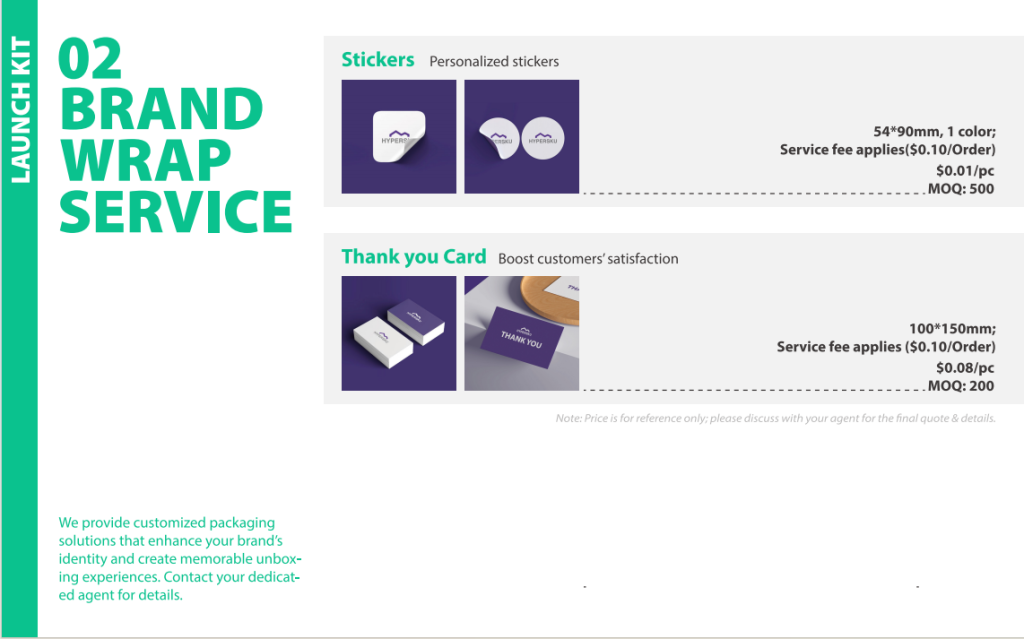
Wanna see how HyperSKU Brandlift Package can empower your business? Get more info
-
Active communication & issue resolution
-
Supplier alternatives to prevent negative reviews
-
Seamless after-sales support
The Result – 6X Monthly Order Volume in Under a Year
By partnering with HyperSKU, Warren grew his monthly volume from 3,000 to over 18,000 orders—a 6X increase driven by efficient operations and reliable support. Trust, transparency, and scalability turned a loyal seller into a long-term HyperSKU advocate.

Inspired by This Story?
Already working with HyperSKU?
Let HyperSKU Fashion help you scale your apparel brand with faster launches, deeper supplier collaboration, and elevated brand fulfillment.
New to HyperSKU?
Explore HyperSKU Fashion’s flexible solutions—from sourcing to branded delivery—and unlock growth for your online business.
Reach out to HyperSKU and start your journey.
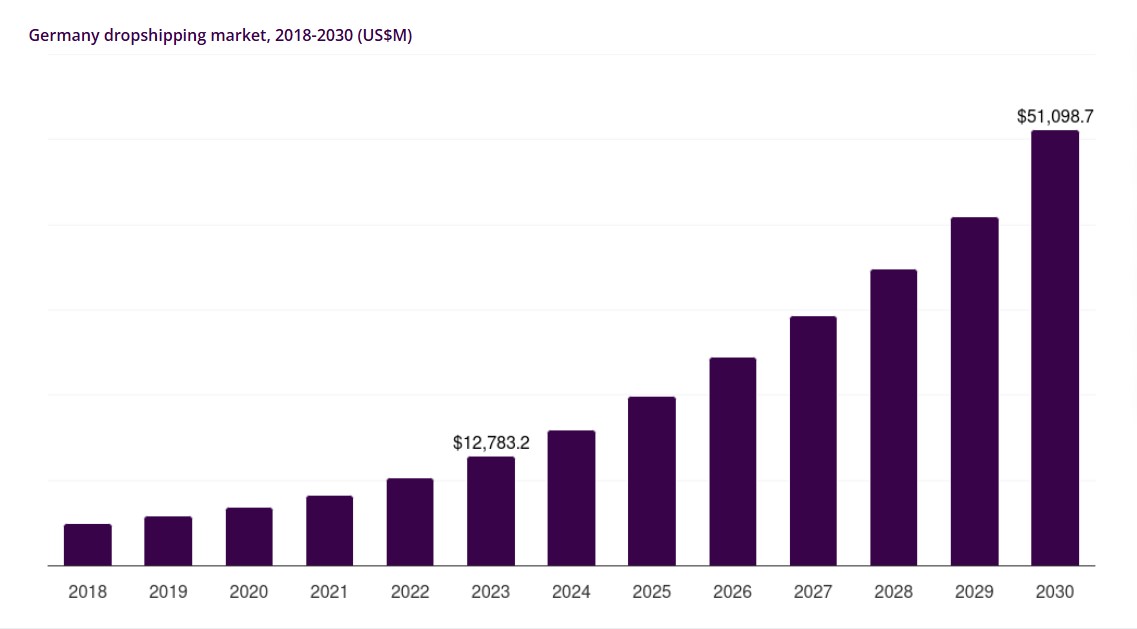
Der deutsche Dropshipping-Markt erzielte im Jahr 2023 einen Umsatz von 12.783,2 Millionen USD und wird voraussichtlich bis 2030 auf 51.098,7 Millionen USD anwachsen – ein klarer Beleg für das starke Wachstum dieses Geschäftsmodells.
mmer mehr E-Commerce-Unternehmer möchten deshalb mit dropshipping anfangen und vom lukrativen deutschen Markt profitieren. Doch wie funktioniert das Modell genau – und worauf musst du achten, wenn du in Deutschland einsteigen willst?
In diesem Artikel erfährst du:
- Was Dropshipping ist und wie es funktioniert
- Was Sie wissen müssen, bevor Sie starten
- Wie HyperSKU Ihnen dabei hilft, Ihr Business in Deutschland und der EU effizient aufzubauen und zu skalieren
Was ist Dropshipping?

Dropshipping ist ein Geschäftsmodell im E-Commerce, bei dem Produkte verkauft werden, ohne dass der Händler diese selbst lagert. Sobald ein Kunde eine Bestellung aufgibt, wird diese direkt an einen Lieferanten weitergeleitet, der das Produkt im Namen des Händlers an den Kunden versendet. Lagerhaltung, Verpackung und Versand übernimmt somit der Lieferant – nicht der Händler.
Für Einsteiger im Onlinehandel oder kleinere Unternehmen bietet Dropshipping eine einfache und risikoarme Möglichkeit, in den E-Commerce einzusteigen.
Wie funktioniert Dropshipping?
Das Prinzip hinter Dropshipping ist einfach:
- Sie erstellen einen Online-Shop, z. B. mit Shopify oder WooCommerce.
- Sie wählen Produkte aus, die Sie über einen Drittanbieter verkaufen möchten.
- Ein Kunde bestellt ein Produkt in Ihrem Shop und zahlt den Verkaufspreis.
- Sie leiten die Bestellung an den Lieferanten weiter und zahlen den Einkaufspreis.
- Der Lieferant verpackt und versendet das Produkt direkt an den Kunden.
- Sie behalten die Gewinnmarge zwischen Verkaufs- und Einkaufspreis.
Als Händler kümmern Sie sich um den Online-Auftritt, das Marketing und die Kundenbetreuung, während der Lieferant für Lagerung und Logistik verantwortlich ist.
Warum ist Dropshipping so beliebt?
Dropshipping hat sich in den letzten Jahren zu einem beliebten Geschäftsmodell entwickelt – aus gutem Grund:
- Geringe Einstiegskosten: Keine Vorabinvestitionen in Lagerbestand nötig.
- Kein eigenes Lager erforderlich: Der Versand erfolgt direkt über den Lieferanten.
- Hohe Skalierbarkeit: Produkte können flexibel hinzugefügt oder entfernt werden.
- Ortsunabhängigkeit: Ihr Geschäft kann von überall aus betrieben werden.
- Produkttests ohne Risiko: Neue Nischen können getestet werden, ohne Kapital zu binden.
Wie funktioniert Dropshipping?
Auf den ersten Blick wirkt Dropshipping unkompliziert – doch um langfristig erfolgreich zu sein, ist es wichtig, den dahinterliegenden Ablauf genau zu verstehen. Im Gegensatz zum klassischen Einzelhandel kaufen oder lagern Sie die Produkte nicht im Voraus. Stattdessen agieren Sie als Vermittler zwischen Kunde und Lieferant.
Die Dropshipping-Lieferkette besteht aus drei Hauptakteuren: dem Kunden, dem Händler (also Ihnen) und dem Lieferanten. Der Prozess läuft wie folgt ab:
- Ein Kunde bestellt ein Produkt in Ihrem Online-Shop.
- Sie erhalten die Bestellung und leiten sie an Ihren Lieferanten weiter.
- Der Lieferant verpackt und versendet die Ware direkt an den Kunden.
Obwohl Sie das Produkt nie selbst in die Hand nehmen, sind Sie für das gesamte Kundenerlebnis verantwortlich – von der Vermarktung bis hin zu Support und Retouren.
Was Sie über die Herausforderungen und Vorschriften beim Dropshipping in Deutschland wissen müssen
Obwohl Dropshipping Unternehmern einen einfachen Einstieg in den E-Commerce bietet, bringt die Ausübung dieses Geschäftsmodells auf dem deutschen Markt eine Reihe komplexer rechtlicher, steuerlicher und operativer Herausforderungen mit sich. Das Verständnis dieser wichtigen Aspekte ist entscheidend, um rechtliche Risiken zu vermeiden, Geschäftsabläufe zu optimieren und in einem stark umkämpften Markt erfolgreich zu sein.
Rechtliche und steuerliche Überlegungen
Deutschland verfügt über strenge Verbraucher- und Produkthaftungsgesetze. Nach dem Produkthaftungsgesetz haften Verkäufer direkt für Produktmängel, selbst wenn die Produkte aus dem Ausland versendet werden. Es ist essenziell, dass Produkte den EU-Standards entsprechen, wie z. B. einer gültigen CE-Kennzeichnung – was jedoch aufgrund gefälschter Zertifikate eine Herausforderung darstellt.
Dropshipping erfordert eine schnelle Unternehmensanmeldung, um hohe Strafen wegen Steuerhinterziehung zu vermeiden. Einzelunternehmer haften mit ihrem gesamten Privatvermögen. Um das persönliche Risiko zu begrenzen, gründen viele Verkäufer haftungsbeschränkte Gesellschaften wie eine GmbH, die ein Mindestkapital von 25.000 € erfordert, oder eine UG (haftungsbeschränkt), die mit geringerem Kapital auskommt, aber laufende Kosten verursacht.
Der Import von Produkten ist mit komplexen Mehrwertsteuervorschriften verbunden, darunter das EU-IOSS-System. Viele ausländische Lieferanten erfüllen diese Anforderungen nicht, was die Steuer- und Zollabwicklung erschwert.
Quellen:
Operative Herausforderungen
Deutsche Konsumenten erwarten schnelle, zuverlässige Lieferungen sowie Unterstützung in deutscher Sprache. Laut dem UPS-Bericht von 2023 hat eine termingerechte Lieferung einen großen Einfluss auf die Kundenzufriedenheit (UPS Pulse of the Online Shopper).
Lange Lieferzeiten sowie komplizierte Mehrwertsteuer- und Zollbestimmungen stellen operative Herausforderungen dar. Viele Verkäufer konzentrieren sich zunächst nur auf den deutschen Markt, um die Logistik zu vereinfachen.
Ein deutschsprachiger Kundenservice und unkomplizierte Rückgabemöglichkeiten sind unerlässlich, um Erwartungen zu erfüllen und gesetzliche Vorgaben einzuhalten.
Kundenerwartungen und Marktwettbewerb
Der deutsche Dropshipping-Markt ist stark umkämpft. Einzigartige, qualitativ hochwertige Produkte zu finden, gestaltet sich schwierig. Deutsche Kunden legen großen Wert auf Produktqualität und Service – mehr als auf den Preis.
Erfolgreiche Verkäufer differenzieren sich durch starke Markenbildung, klare Kommunikation und exzellenten Kundenservice.
Mit HyperSKU Dropshipping anfangen
Dropshipping bleibt ein zugängliches und skalierbares Geschäftsmodell, doch der Erfolg auf dem deutschen Markt erfordert mehr als nur ein grundlegendes Verständnis des E-Commerce. Strenge Verbraucherschutzgesetze, komplexe steuerliche Anforderungen und hohe Kundenerwartungen machen die Wahl des richtigen Liefer- und Fulfillment-Partners entscheidend.
Genau hier setzt HyperSKU an – eine Plattform, die speziell entwickelt wurde, um deutsche Verkäufer mit den richtigen Tools, der passenden Infrastruktur und lokalem Know-how zu unterstützen.
Globales Team mit lokalem Know-how – Wir überbrücken die Lücke
Bei HyperSKU sind wir überzeugt: Globale Lösungen brauchen lokales Verständnis. Mit einem internationalen Team aus erfahrenen Vertriebsprofis in verschiedenen Regionen stellen wir sicher, dass Verkäufer aus unterschiedlichen Märkten genau die Unterstützung erhalten, die sie benötigen.
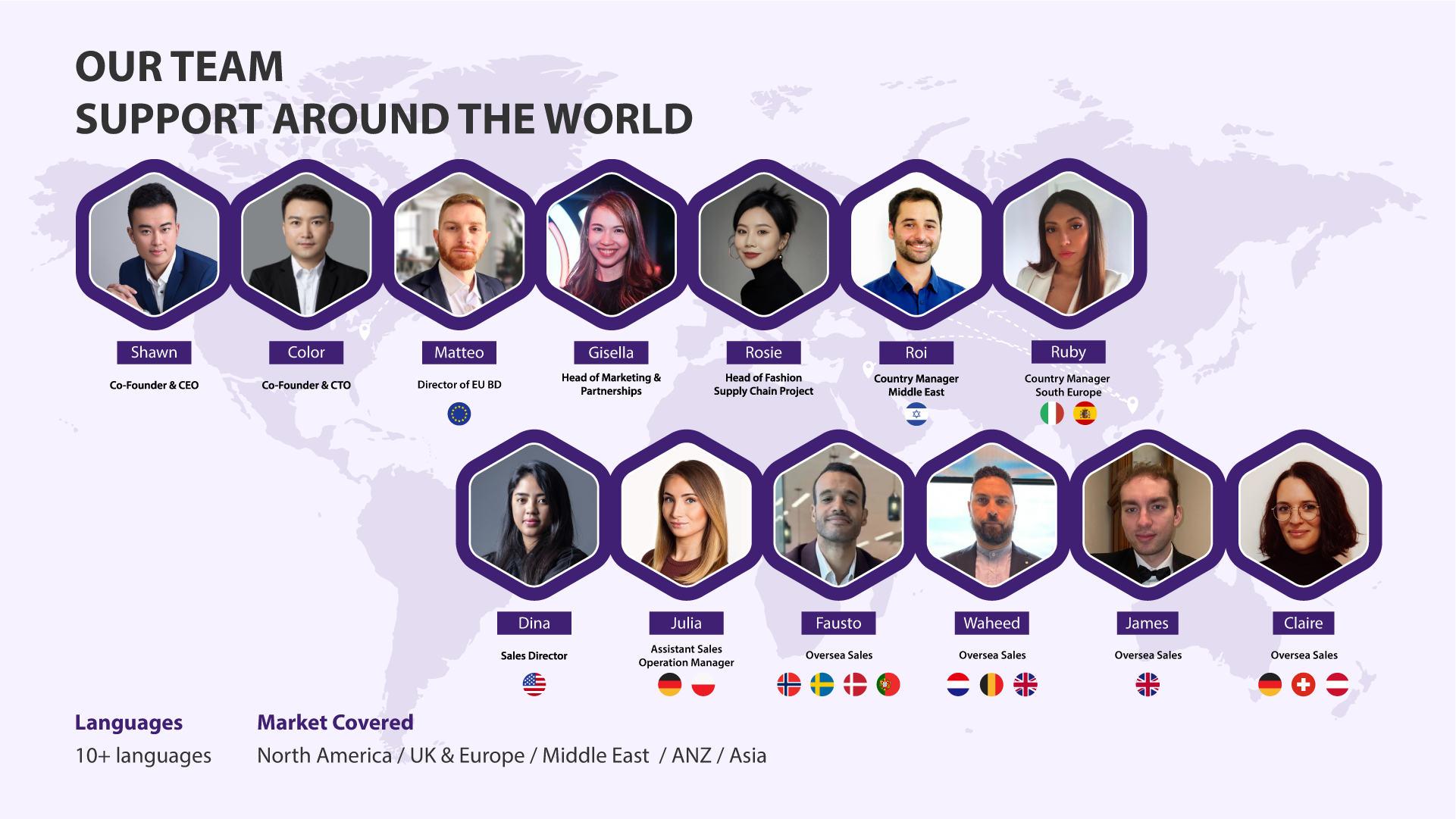
Für deutsche Händler bedeutet das: Unsere deutschsprachigen Vertriebs- und Kundenbetreuungsspezialisten kennen nicht nur die Sprache, sondern auch die geschäftlichen Anforderungen und Besonderheiten des lokalen Markts. Dadurch wird die Kommunikation mit unserer Plattform nahtlos – sei es bei der Klärung von Produktfragen, der Optimierung der Lieferkette oder der Einhaltung lokaler Standards.
Manche argumentieren, dass die Zusammenarbeit mit lokalen Lieferanten sicherer sei – sei es wegen regulatorischer Vorgaben oder Sprachbarrieren. Doch mit HyperSKU entfallen diese Sorgen. Wir fungieren als Brücke zu geprüften chinesischen Lieferanten mit wettbewerbsfähigen Preisen. So profitieren Sie von der Kosteneffizienz chinesischer Produktion – ohne Missverständnisse oder Qualitätsrisiken.
Schnelles und zuverlässiges Fulfillment in der EU – Erwartungen erfüllen
Deutsche Verbraucher haben hohe Erwartungen an die Liefergeschwindigkeit. Diese zu erfüllen, kann eine Herausforderung sein – insbesondere bei der Beschaffung von internationalen Lieferanten. Genau hier kommt HyperSKU ins Spiel.
Mit unserem zuverlässigen Lagernetzwerk und schnellen Fulfillment-Services ermöglicht HyperSKU eine zügige Lieferung innerhalb Deutschlands und in benachbarte Länder.
In China betreiben wir mehrere Lager in der Nähe wichtiger Hafenstädte, um die Auftragsabwicklung zu beschleunigen und einen schnellen internationalen Versand zu ermöglichen. Die Lieferung von China nach Deutschland kann je nach gewählter Versandlinie bereits in 4 bis 8 Tagen erfolgen.
Dieses System hilft dabei, Lieferzeiten und Versandkosten zu reduzieren, zollbedingte Verzögerungen zu minimieren und gleichzeitig volle Transparenz und Kontrolle über den Fulfillment-Prozess zu gewährleisten.
Intelligente Supply-Chain-Unterstützung – Von der Fabrik bis zur Haustür
Ein zuverlässiges Dropshipping-Geschäft besteht aus mehr als nur dem Einkauf von Produkten. Sie brauchen einen Partner, der den gesamten Prozess versteht – von der Herstellung über Qualitätskontrolle und Compliance bis hin zu Fulfillment und After-Sales-Support.
Mit HyperSKU erhalten Sie:
- Direkte Anbindung an geprüfte Fabriken in China
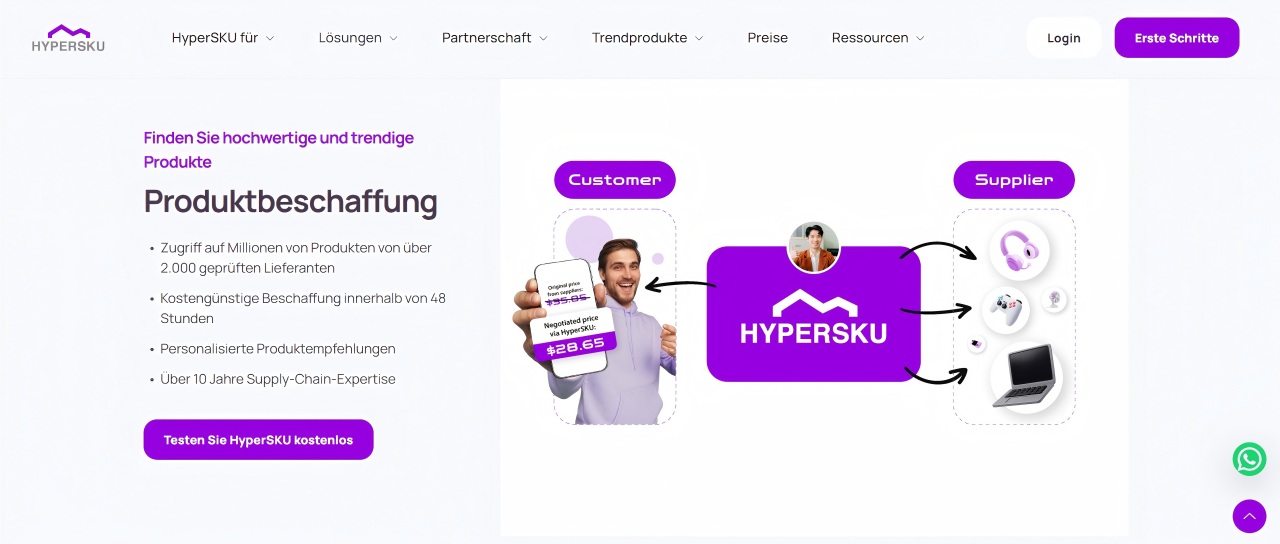
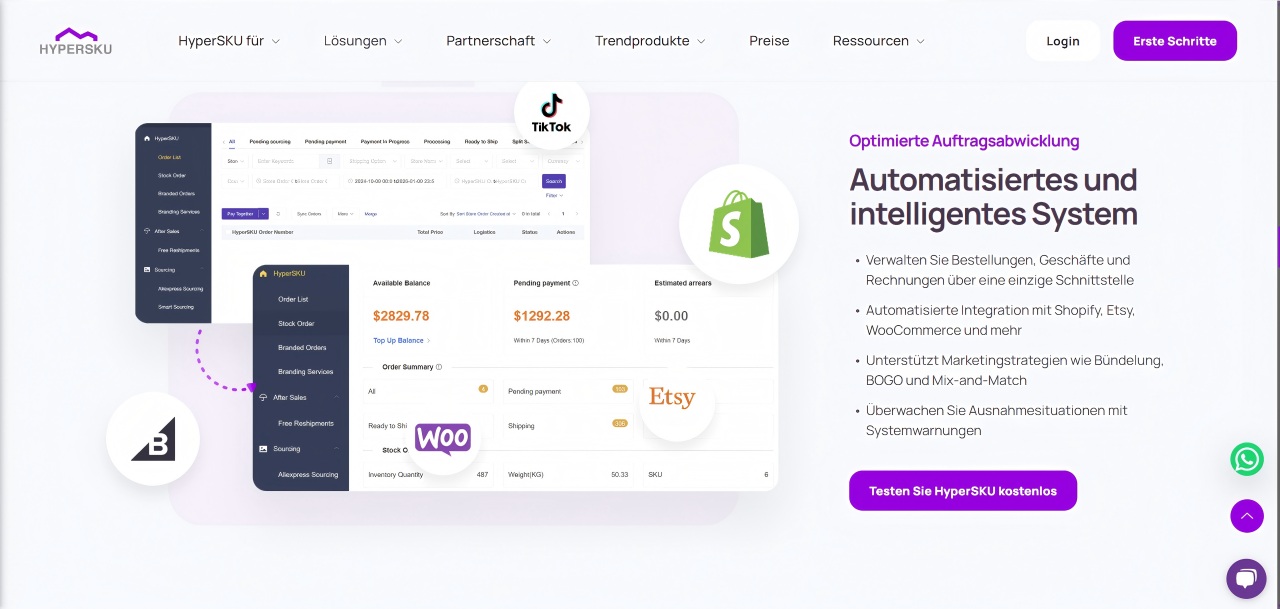
- Automatisierte Bestellabwicklung und Sendungsverfolgung in Echtzeit
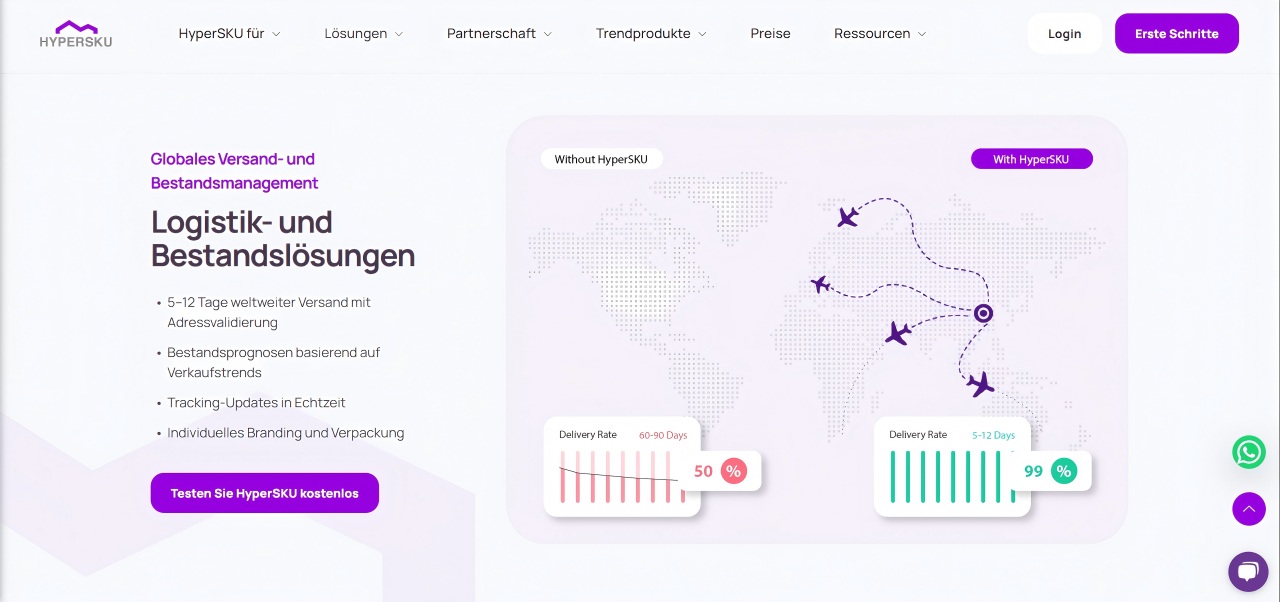
- Schnelle Lieferung – nach Deutschland bereits in 4–8 Tagen mit Adressvalidierung
- Lokalisierter After-Sales-Support für einen reibungslosen Betrieb in Europa
- Ein-Klick-Bundling und individuelle Verpackungsoptionen für Ihre Marke
Wir kümmern uns um Ihre Backend-Prozesse, damit Sie sich voll auf das Wachstum Ihres Geschäfts konzentrieren können – statt sich mit Lieferkettenproblemen aufzuhalten.
Tiefer Fokus auf den deutschen Markt – Erfolgreiche Kunden & lokale Präsenz
Bei HyperSKU sind wir nicht nur mit dem deutschen Markt vertraut – wir investieren gezielt in ihn. Im Mai 2025 haben wir in Deutschland ein Mastermind-Event veranstaltet, bei dem unser Team, erfolgreiche lokale Dropshipper und Branchenexperten zusammenkamen.
Im Mittelpunkt der Veranstaltung standen praxisnahe Herausforderungen wie Kundenbindung, Marketingstrategien und die Optimierung von Fulfillment-Lösungen innerhalb der EU – alles speziell auf die Anforderungen des deutschen Marktes zugeschnitten.
Das Event war mehr als nur eine Networking-Veranstaltung: Es bot einen direkten Austausch von Erfahrungen und Einblicken zwischen Verkäufern und dem HyperSKU-Team – und half uns dabei, unsere Services noch besser an Ihre Erwartungen anzupassen.

Unser kontinuierliches Engagement für die DACH-Region zeigt: Wir verstehen Ihre Anforderungen – und helfen Ihnen, sie zu erfüllen. Mit der passenden Infrastruktur, exzellentem Service und tiefem Marktverständnis unterstützen wir Ihr nachhaltiges Wachstum.
Dropshipping in Deutschland zu starten ist nicht nur möglich – es ist eine kluge Entscheidung
Mit einem wachsenden E-Commerce-Markt, hoher Kaufkraft und Verbrauchern, die Geschwindigkeit, Transparenz und Zuverlässigkeit schätzen, gehört Deutschland zu den attraktivsten Dropshipping-Märkten in Europa. Der Erfolg hängt jedoch stark davon ab, die richtigen Partner, Plattformen und Logistikstrategien zu wählen.
Hier kommt HyperSKU ins Spiel: Von der Produktbeschaffung über die Lagerung in EU-Lagern bis hin zur schnellen Zustellung bietet HyperSKU alles, was du brauchst, um dein Dropshipping-Business in Deutschland erfolgreich und stressfrei aufzubauen.
Bereit zum Durchstarten? Erstelle jetzt dein HyperSKU-Konto und entdecke dein Potenzial.
FAQ Abschnitt
- Ist Dropshipping in Deutschland legal?
Ja, Dropshipping ist in Deutschland zu 100 % legal – solange du alle geltenden Gesetze und Vorschriften einhältst. Dazu gehören die Gewerbeanmeldung, die korrekte Erhebung und Meldung der Mehrwertsteuer, die Einhaltung von Produktsicherheits- und Kennzeichnungspflichten sowie die Befolgung der EU-Verbraucherschutzgesetze (z. B. klare Rückgaberichtlinien und vollständige Kontaktinformationen). - Muss ich ein Unternehmen registrieren, um mit Dropshipping in Deutschland zu starten?
Ja. Um in Deutschland legal zu handeln, musst du ein Gewerbe anmelden (Gewerbeanmeldung) und gegebenenfalls eine Umsatzsteuer-Identifikationsnummer (USt-ID) beantragen. Ein Geschäft ohne Registrierung zu betreiben kann zu Bußgeldern oder rechtlichen Konsequenzen führen. - Kann ich in Deutschland mit Dropshipping starten, auch wenn ich in einem anderen Land lebe?
Ja. Viele internationale Verkäufer betreiben erfolgreich Dropshipping-Geschäfte, die sich an den deutschen Markt richten. Du musst jedoch sicherstellen, dass Logistik, Fulfillment und Kundenservice den lokalen Anforderungen entsprechen. - Welche Plattformen eignen sich am besten für Dropshipping in Deutschland?
Beliebte Plattformen sind Shopify, WooCommerce und Wix. Diese ermöglichen individuelle Gestaltung und die Integration verschiedenster Tools – ideal, um einen professionellen, markenbasierten Onlineshop für deutsche Kunden aufzubauen. - Wie gehe ich mit Umsatzsteuer und Steuern beim Dropshipping in Deutschland um?
Du musst die Mehrwertsteuer gemäß den deutschen und EU-weiten Steuervorschriften korrekt berechnen und abführen – insbesondere seit der EU-Mehrwertsteuerreform. Es ist ratsam, mit einem Steuerberater zusammenzuarbeiten oder Tools wie Taxdoo oder Hellotax zu nutzen.
Running a dropshipping or online business is exciting — but it’s not without its challenges. From unreliable suppliers and delayed shipping to product quality issues and customer complaints, eCommerce sellers are constantly juggling tasks to keep their business afloat.

Among all these challenges, poor inventory management stands out as one of the most frustrating — and costly — problems. When your store runs out of stock, you lose sales. When inventory data isn’t synced, your customers may buy items that aren’t actually available. When restocking isn’t timely, it disrupts your entire fulfillment chain.
That’s why effective dropshipping inventory management is not just a “nice-to-have” — it’s a core foundation for sustainable growth.
In this blog, we’ll break down how HyperSKU Dropshipping helps sellers take control of their inventory with real-time tools, smart automation, and cross-platform visibility — so you can focus on scaling your business, not chasing stock updates.
Why Inventory Management Matters in Dropshipping
In the dynamic world of eCommerce, efficient inventory management is not just a backend operation—it’s a critical component that directly influences customer satisfaction, revenue, and overall business sustainability. For dropshipping businesses, where products are often sourced from multiple suppliers and shipped directly to customers, the stakes are even higher.
The High Cost of Stockouts and Overstocking
- Revenue Loss from Stockouts: Poor inventory management leads to significant financial losses. On average, businesses lose up to 11% of their annual revenue due to stockouts and overstocking.
- Customer Abandonment: Approximately 69% of online shoppers will abandon their purchase and shop with a competitor if their desired item is out of stock, leading to missed sales opportunities.
- Global Impact: Stockouts are responsible for $1 trillion in missed sales each year across the retail sector, with eCommerce businesses heavily impacted.
Source:firework
Operational Challenges in Dropshipping
- Manual Tracking Pitfalls: A significant number of small businesses—43%—do not track their inventory or use outdated manual systems, leading to inefficiencies and lost revenue.
- Inventory Visibility: Approximately 34% of eCommerce businesses find it challenging to manage inventory across multiple sales channels, leading to stock discrepancies and fulfillment delays.
Source:firework
The Role of Automation and Predictive Analytics
- Automation Benefits: Businesses that use automated inventory management systems reduce stockouts by 30%, as real-time tracking helps maintain optimal stock levels.
- Predictive Analytics: Research shows that companies adopting advanced forecasting methods can cut their inventory-related expenses by as much as 20%, resulting in improved cash flow and more efficient inventory management.
- AI Integration: Companies using AI for inventory management report a 20-50% reduction in forecasting errors, enhancing decision-making and operational efficiency.
Consumer Expectations and Delivery Efficiency
- Delivery Speed: 85% of online shoppers consider delivery options and speed crucial to their purchase decisions, emphasizing the need for efficient inventory management to meet these expectations.
- Order Fulfillment: Well-managed inventory systems reduce fulfillment times by 23%, leading to faster delivery and better customer satisfaction.
In conclusion, effective inventory management is paramount in the dropshipping model. It not only prevents revenue loss due to stockouts and overstocking but also enhances customer satisfaction through timely deliveries. Leveraging automation and predictive analytics can significantly mitigate operational challenges, ensuring a seamless shopping experience for customers.
What Makes Inventory Management So Difficult in Dropshipping?
While inventory management is vital for any eCommerce business, it presents unique challenges for dropshipping businesses due to the very nature of the model. In traditional retail, sellers have physical control over their stock. In dropshipping, however, products are typically sourced from third-party suppliers, often overseas, making inventory visibility and control much more complicated.
Lack of Real-Time Inventory Sync
Most dropshippers rely on suppliers to provide inventory updates, but these updates are often delayed or inaccurate. Without real-time synchronization, it’s easy to list products as “in stock” that are actually sold out—leading to customer dissatisfaction and canceled orders.
A 2024 PYMNTS Intelligence report reveals that 73% of U.S. consumers expect real-time inventory updates when making retail purchases, highlighting the critical importance of inventory transparency in omnichannel commerce.
Multiple Suppliers, Multiple Systems
Dropshippers often work with multiple suppliers, each using different inventory systems, formats, and communication protocols. This fragmented ecosystem creates operational inefficiencies, increases the risk of errors, and makes it harder to maintain consistency in product availability across platforms.
No Control Over Supplier Stock Policies
Suppliers may change stock policies without notice, including minimum order quantities, pricing, or SKUs. Since the seller is not directly notified, the mismatch between the supplier’s actual stock and the store’s product listings can cause serious fulfillment issues.
No Physical Access to Verify Stock
Unlike traditional retail or in-house fulfillment models, dropshipping sellers don’t see or handle the products themselves. This makes it nearly impossible to verify whether items are in good condition, properly labeled, or even correctly stocked—leading to return disputes, negative reviews, and refund claims.
Inventory Doesn’t Scale with Sales
A growing business needs a scalable backend. However, many dropshippers run into inventory bottlenecks during peak seasons or promotions because their suppliers aren’t equipped to handle volume spikes—or may prioritize bigger clients.
According to a 2025 survey conducted by Deposco and Supply Chain Dive, 58% of organizations struggled with delivery timing and order accuracy during the 2024 peak season, despite 93% entering the season confident in meeting customer expectations.
HyperSKU Dropshipping: Inventory Management Made Easy
At HyperSKU, we understand that inventory issues can make or break a dropshipping business. That’s why we’ve built solutions that don’t just manage stock—but optimize and simplify the entire process.
Real-Time Inventory Sync Across Platforms
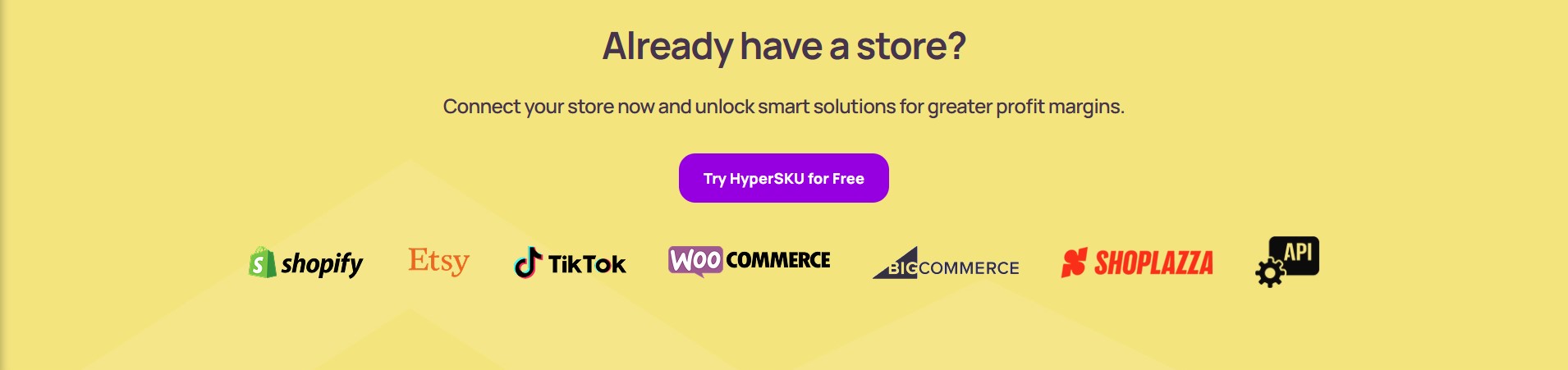
HyperSKU’s system integrates directly with Shopify, WooCommerce, TikTok Shop, and other major platforms, allowing merchants to sync product listings and inventory in real time. No more overselling or disappointing customers due to inaccurate stock information.
Learn more: HyperSKU Platform Integrations
Centralized Inventory for Multi-Supplier Sourcing
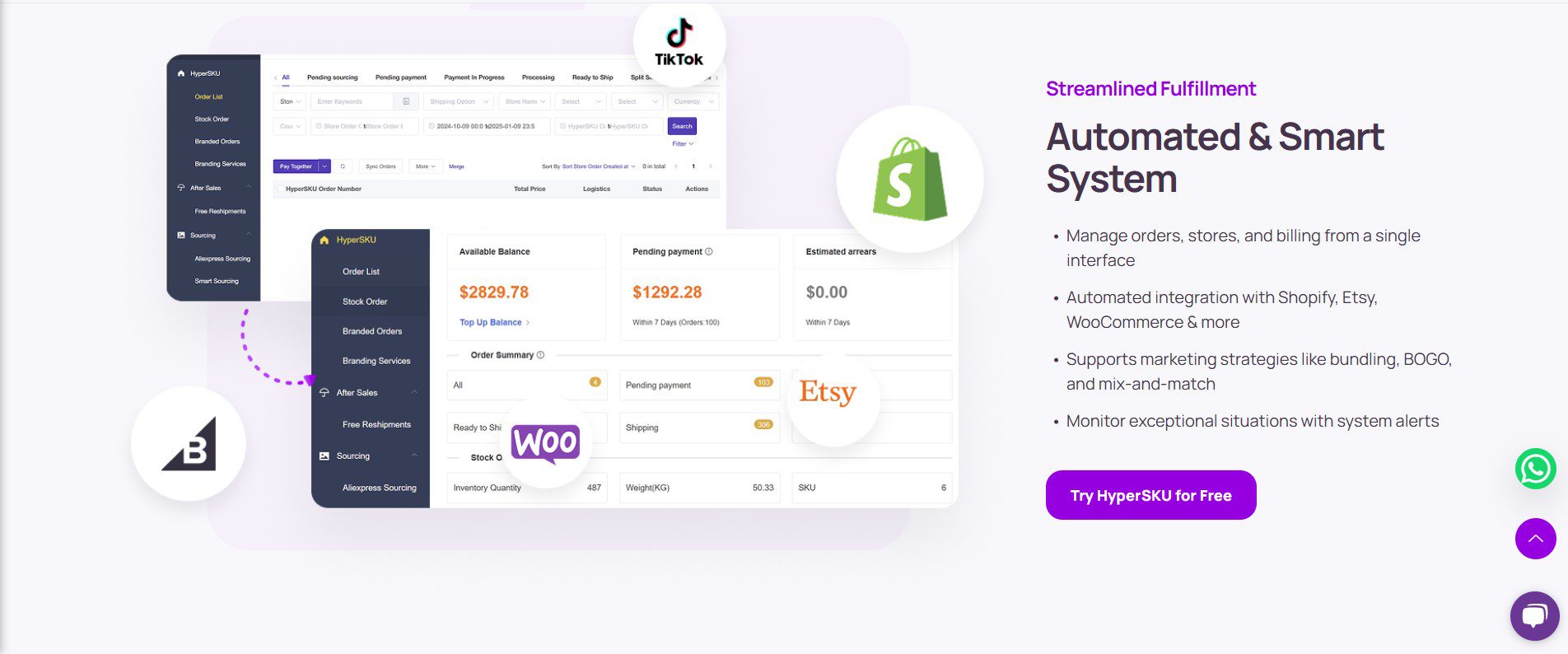
With HyperSKU, you can source products from multiple suppliers while managing all inventory through one centralized dashboard. This eliminates inconsistencies and simplifies backend operations, especially if you’re scaling or diversifying your product lines.
Smart Stock Forecasting with Agent Support
Our dedicated agents work closely with you to anticipate inventory needs based on your historical order data and upcoming campaigns. This ensures you’re always stocked at optimal levels—without overcommitting cash.
Local Warehouse Storage and Fast Restocking
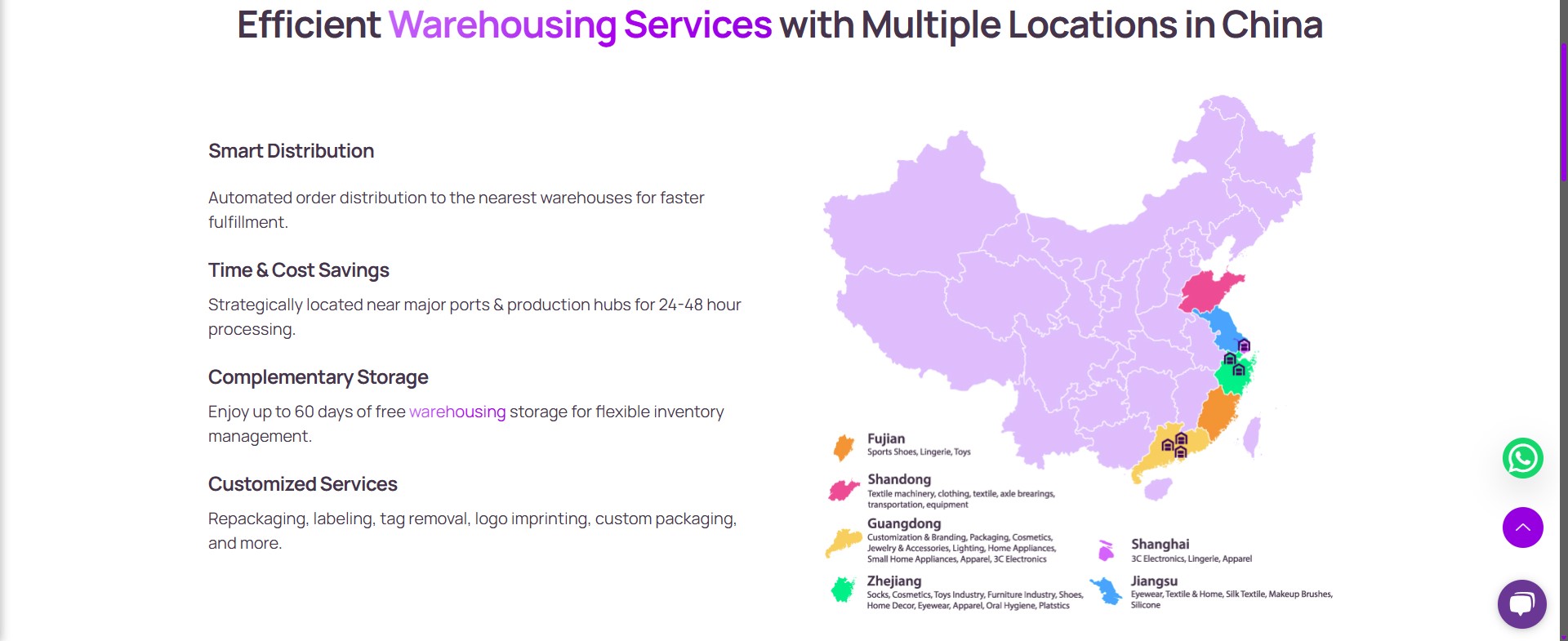
Need more control? HyperSKU offers local warehouse storage options in China and other regions, letting you pre-stock bestsellers and restock fast when demand spikes. This helps avoid missed sales during seasonal surges or supplier delays.
Dedicated Quality Control for Every Order
HyperSKU provides value-added services like:
- Pre-shipment quality checks (color, size, function)
- Label & packaging inspection
- Removal of all Chinese labels and branding, ideal for branded dropshippers
These services significantly reduce disputes and enhance the overall customer experience.
To learn more about our value-added services, contact your HyperSKU agent or visit our Help Center.
Auto-Fulfillment and Multi-Channel Order Management
Once an order is placed, HyperSKU handles fulfillment automatically, including order picking, packaging, and global shipping. You can manage all your channels and SKUs from a single interface, freeing you from the burden of micromanagement.
Through a combination of tech automation, human support, and value-added logistics services, HyperSKU takes the complexity out of inventory management—so you can focus on marketing, brand-building, and growth.
Final Thoughts
In the fast-paced world of dropshipping, poor inventory management can quietly undermine your business, from delayed shipments and stockouts to unhappy customers and lost sales.
HyperSKU empowers online sellers to gain full control over their supply chain by offering real-time visibility, smart forecasting, and value-added services that streamline fulfillment. Whether you’re scaling your business or looking to improve your operations, an optimized inventory system is no longer optional—it’s a competitive necessity.
With HyperSKU, managing your dropshipping inventory becomes smarter, faster, and easier.
FAQ: Dropshipping Inventory Management with HyperSKU
Q1: Does HyperSKU offer real-time inventory tracking?
A: Yes. HyperSKU’s system updates inventory levels in real time, helping you avoid overselling and stockouts across all your connected platforms.
Q2: Can I manage inventory for multiple stores on HyperSKU?
A: Absolutely. HyperSKU supports integration with multiple eCommerce platforms and stores, allowing you to monitor and manage your inventory from one centralized dashboard.
Q3: What kind of quality control does HyperSKU provide?
A: Product inspection is one of HyperSKU’s core Value-Added Services. Before any order is shipped, we check for the correct color, size, and general product condition to ensure your customers receive exactly what they ordered.
Want to know more about our Value-Added Services? Contact your dedicated sales agent for full details.
Q4: What if my customer receives a defective or wrong product?
A: HyperSKU offers a comprehensive after-sales policy that supports reshipments, replacements, or (partial) refunds depending on the case. Please refer to our Help Center article or contact your agent for more information.
Why Facebook Business Manager & Ad Bans Hurt—and How Your Supplier Can Help
Getting your Facebook Ad Account or Business Manager banned is one of the most frustrating things that can happen to an eCommerce business owner.
You’ve spent time and money crafting the perfect creative, testing audiences, and setting up campaigns—only to wake up one morning and see everything paused, rejected, or worse: permanently banned. No clear reason. No easy appeal. Just silence from Meta support and a sinking feeling in your gut.
While most sellers immediately look inward—at their ad strategy, website, or product page—what many overlook is the role your supplier or fulfillment agent plays in this risk.
In fact, issues like shipping delays, quality complaints, tracking problems, or suspicious packaging can trigger disputes and chargebacks—all of which hurt your customer feedback score and raise red flags with Meta.
The good news? A proactive supplier can help prevent that.
In this blog, we’ll break down the exact ways your supplier or agent can actively reduce your risk of account bans, and how HyperSKU works with sellers to stay compliant, trustworthy, and in Meta’s good graces.
Why Do Facebook Business Manager & Ad Accounts Get Banned?
Facebook (Meta) doesn’t always provide clear reasons when ad accounts are banned, but several common factors contribute to these restrictions. Understanding these can help eCommerce sellers take proactive measures to maintain account integrity.

1. Violations of Advertising Policies
Meta enforces strict advertising standards to ensure a safe and trustworthy environment for users. Common violations include:
- Misleading or sensational content: Ads that exaggerate product capabilities or make unsubstantiated claims.
- Prohibited products or services: Promoting items like counterfeit goods, adult products, or weapons.
- Inappropriate targeting: Ads that imply personal attributes such as race, religion, or health conditions.
For a comprehensive list of prohibited content, refer to Meta’s Common Examples of Advertising Policy Violations.
2. Unusual Account Activity
Meta monitors accounts for patterns that may indicate suspicious behavior, such as:
- Frequent changes in payment methods.
- Accessing the account from multiple IP addresses or locations.
- Rapid scaling of ad spend without a history of consistent activity.
Such activities can trigger automated systems to flag and restrict accounts. More details can be found in Meta’s Troubleshoot a Disabled or Restricted Account guide.
3. Association with Restricted or Banned Entities
Accounts linked to previously banned profiles, pages, or business managers can inherit restrictions. This includes:
- Shared payment methods.
- Administrative access overlaps.
- Using assets (like pixels or catalogs) associated with banned accounts.
Meta’s Account Integrity policy outlines how associations can impact account status.
4. Poor Customer Feedback and High Dispute Rates
Customer dissatisfaction can indirectly lead to account restrictions. Factors contributing to negative feedback include:
- Delayed shipping or delivery failures.
- Product quality issues.
- Inaccurate product descriptions.
High dispute rates on platforms like PayPal or negative reviews can signal to Meta that a business is not meeting customer expectations, leading to potential ad account bans.
What Can You (as a Seller) Do to Prevent Your Facebook Ad Account From Being Banned?
While not every ban is preventable, there are many things you can do as a seller to minimize risk:
1. Know and Follow Meta’s Ad Policies
Before running any campaign, thoroughly review Meta’s Advertising Policies. Make sure your creatives, landing pages, and product descriptions comply with the rules.
Tip: Always avoid exaggerated claims like “guaranteed weight loss” or “only today, 99% off!”—these are red flags for Meta.
2. Use a Verified Business Manager & Domain
Verify your domain, connect it to your Business Manager, and ensure all ad assets (Pixel, Catalog, etc.) are properly linked. This adds credibility and helps prevent random bans.
3. Build a Healthy Account History
Avoid scaling ads too quickly. Start small, get engagement and conversions, and scale gradually. A well-behaved account with a strong payment and delivery record is less likely to be banned.
4. Maintain Excellent Customer Experience
Keep customer complaints and refund rates low by:
- Delivering high-quality products.
- Providing accurate descriptions.
- Responding quickly to inquiries.
Meta uses user feedback surveys to score your page; a low score increases your ban risk.
5. Avoid Suspicious Patterns
Don’t frequently switch payment methods, add new users from untrusted IPs, or run your business from unsecured networks.
But There’s More: What Your Supplier Can Do to Help
Even if you’re doing everything right on the front end, issues with product quality, fulfillment, or shipping visibility can still hurt your Facebook credibility. That’s where your supplier or agent plays a crucial role.
Next up, we’ll break down what proactive suppliers like HyperSKU can do to help protect your ad account and brand reputation.
The Overlooked Factor: How Your Supplier Can Help Prevent Facebook Ad Account Bans
A great supplier does more than just ship products—they play a key role in protecting your business and brand reputation on platforms like Facebook. Here are some ways suppliers can help you avoid Facebook ad account or business manager bans:
- Pre-check Shipping Addresses
Incorrect or undeliverable addresses lead to failed deliveries, unhappy customers, disputes, and eventually Meta red flags. Suppliers can verify and format shipping addresses upfront to reduce delivery errors. - Fast Order Processing and Real-Time Tracking
Delays in order fulfillment cause frustration and may lead to payment disputes, which raise the risk of account suspension. Prompt generation of tracking numbers and syncing them to your sales channels helps maintain transparency and customer trust. - Product Sampling and Ongoing Quality Checks
Shipping low-quality or inconsistent products results in chargebacks, negative reviews, and policy violations. Reliable suppliers sample products before purchase and conduct regular quality inspections to ensure consistency. - Brand-Safe Packaging Without Chinese Labels
Labels, packaging, or shipping documents showing Chinese characters or “ship from China” can trigger Facebook’s automatic risk detection. Removing all Chinese text and using white-label or custom branded packaging helps avoid these flags. - Product Bundles and Small Gifts to Enhance Experience
An underwhelming unboxing experience often leads to refund requests and complaints. Suppliers who support customized bundles or include small gifts can increase customer satisfaction and reduce disputes. - Friendly After-Sales Support
Mistakes happen in logistics and fulfillment. Good suppliers provide easy solutions like reshipping, refunds, or partial compensation to resolve issues quickly and prevent escalation.
How HyperSKU Helps You Stay Compliant and Protect Your Ad Accounts
At HyperSKU, we go beyond just order fulfillment—we actively help sellers reduce risk and stay in Meta’s good graces. Here’s how:
Smart Address Verification to Reduce Delivery Failures
Our smart system checks the formatting and deliverability of each address before fulfillment. This helps lower the chance of packages being lost or returned, and reduces customer complaints that Meta could flag.
Fast Fulfillment & Real-Time Tracking Sync Across Platforms
Your supplier should ensure that tracking numbers are generated as soon as an order is processed and automatically synced with your sales channels (like Shopify) and payment platforms (such as PayPal). HyperSKU‘s real-time sync helps reduce customer disputes and chargebacks caused by delayed shipping updates, one of the key triggers for Meta account bans.
Pre-Sampling and Ongoing Quality Checks (HyperSKU Value-Added Service)
Consistent product quality is critical—not only for customer satisfaction but also to prevent disputes and refund requests that can raise red flags on your Meta account. HyperSKU offers pre-sampling and regular quality inspections as part of our value-added services to help you ensure that what your customers receive matches what you advertise.
Want to know more? Contact our dedicated agents to learn how HyperSKU’s value-added services can support your brand.
Removing All Chinese Labels and Packaging (HyperSKU Value-Added Service)
If you’re sourcing from Chinese suppliers, having packaging that shows Chinese characters, “Shipped from China,” or similar labels can lead to negative customer experiences and disputes—which Meta may flag. HyperSKU helps you prevent this with localized packaging, clean labeling, and branded inserts.
Talk to a HyperSKU agent today to explore how we can customize your packaging to fit your market.
Custom Bundling and Free Gift Options
We support kitting and bundling to increase average order value and improve unboxing experiences. Want to include a small gift to surprise your customers? We can help with that too.
After-Sales Support That Puts Customers First
Whether it’s a lost parcel, delayed shipment, or damaged item, our support team is ready to arrange reshipments or partial refunds quickly—keeping your buyers happy and your dispute rate low.
Final Thoughts
Getting your Facebook Business Manager or ad account banned can be one of the most frustrating—and costly—experiences for any eCommerce seller. While it’s important to follow Meta’s policies and optimize your ad performance, don’t overlook the crucial role your supplier or agent plays behind the scenes.
From packaging and fulfillment to quality control and dispute prevention, your supplier can either raise red flags—or help you build a compliant, trustworthy brand.
At HyperSKU, we go beyond standard dropshipping. With our value-added services, fast fulfillment, localized packaging, and proactive support, we work alongside you to protect your business and unlock long-term growth.
Looking to build a more stable and Meta-compliant eCommerce operation?
Contact our team today and discover what HyperSKU can do for your business.
Frequently Asked Questions About Preventing Facebook Ad Account Bans
Q1: Can packaging and shipping details really affect my Facebook ad account status?
A: Yes. If customers receive packages with inconsistent or foreign-language labeling (e.g., Chinese characters, “Shipped from China”), they may feel misled and file complaints or request refunds. Meta monitors this behavior, which can lead to account bans.
Q2: What kind of quality control does HyperSKU provide?
A: Before your product ever reaches your customer, HyperSKU checks key quality indicators—such as correct size, color, and specifications—to make sure what you listed is exactly what your customer receives. This helps reduce complaints and builds long-term trust.
Q3: What kind of after-sales policy does HyperSKU offer?
A: HyperSKU provides a comprehensive after-sales solution, including support for reshipments, replacements, and partial refunds when appropriate. For details, please check our Help Center article or contact your dedicated agent directly.
US China Tariffs have long created uncertainty for global trade, especially since the start of the Trump-era policies. Over the years, businesses have dealt with shifting regulations, retaliations, and rising costs. But now, it seems we’re finally hitting the pause button.
On May 14, the US and China jointly announced a new trade agreement that temporarily eases some of the steepest tariffs imposed in recent years—offering a rare window of relief for eCommerce businesses relying on Chinese suppliers.
Here’s what the agreement says, and more importantly, what it means for your store.
Key Takeaways of This Article
-
Both the US and China agreed to suspend the previous tariffs for 90 days.
-
10% duties remain on selected items.
-
Non-tariff retaliations may be paused or canceled.
-
A long-term trade coordination group has been formed.
-
Use HS code tools to check if your products qualify for tariff relief.
Highlights of the US China Tariffs Agreement
This bilateral agreement focuses on reducing tariff pressure, pausing certain retaliatory measures, and laying the groundwork for continued cooperation. Here’s a quick breakdown:
1. Tariff Adjustments
-
United States:
-
Overall tariffs on Chinese goods will be temporarily reduced from 145% to 30%.
-
Applies selectively and will remain in effect for 90 days, subject to further negotiations.
-
-
China:
-
Tariffs on American imports will be reduced from 125% to 10%.
-
Mirrors the US’s 90-day suspension and is contingent on continued progress.
-
2. Tariff Rollbacks
-
Both sides will cancel two sets of previously imposed tariffs, announced through administrative orders.
3. Non-Tariff Measures
-
China will pause or cancel anti-dumping and countervailing duty measures on certain US products, offering relief for American exporters.
4. Bilateral Dialogue Mechanism
-
A regular negotiation mechanism will be established to avoid future escalations.
5. Timeline
-
All commitments are expected to be fully implemented by May 14, 2025.
What This Means for Your eCommerce Business
For dropshippers and eCommerce sellers working with Chinese suppliers, this temporary easing could mean:
-
Lower import costs for selected products.
-
Improved shipping timelines as customs inspections ease.
-
A more predictable sourcing environment over the next 90 days.
However, this is not a permanent solution. The 90-day suspension window means you need to act fast and review your product categories, especially if you’re in the electronics, home goods, or apparel niches which are often hit hardest by tariffs.
HyperSKU’s Take: Take Advantage of the 90-Day Window
To make the most out of this opportunity, HyperSKU recommends:
Check if Your Products Are Affected
Tariff relief may not apply to all categories. Some products will still face a 10% duty. That’s why it’s critical to check the HS code (Harmonized System Code) of your product to determine tariff impact.
Prepare for the 90-Day Window
This is not a permanent rollback—it’s a temporary window to evaluate costs, update pricing, and potentially shift product strategy.
Monitor Policy Updates
The current measures are due for completion or reevaluation by May 14, 2025. Stay informed by subscribing to trade update alerts or checking the official announcements from USTR and China’s Ministry of Commerce.
Final Thoughts
While this agreement signals a more collaborative tone between the US and China, the tariff environment remains subject to change, especially with upcoming elections and shifting trade strategies.
For eCommerce sellers, this is a strategic moment to reassess your supply chain, reduce costs, and optimize logistics.
FAQ: US China Tariffs & eCommerce
Q: Will this affect all product categories?
A: No. The tariff relief applies selectively. You’ll need to check your product’s HS code to confirm whether it qualifies for the temporary suspension.
Q: Is this a permanent change?
A: No, it’s a temporary suspension. The tariff reductions are valid for 90 days only, as part of the joint US-China trade agreement. Further updates or extensions may follow depending on future negotiations.
Q: How can I stay compliant with the tariff changes?
A: Use HS code lookup tools, work with reliable freight forwarders, and regularly monitor updates from the USTR (United States Trade Representative).
If you have any further questions, our dedicated agents are here to help.
What Are Subscription-Based Tools, and Why Do Dropshippers Need Them?
Running a dropshipping business is no small feat—that’s exactly why reliable dropshipping tools are essential. From product sourcing and order processing to inventory updates and logistics, these tools help streamline and automate operations that would otherwise be manual and time-consuming.
Unlike one-off software or outsourced help, subscription-based tools—whether they’re apps or platforms—offer ongoing services like:
- Inventory & order sync
- Fulfillment management
- Integration with Shopify, WooCommerce, and other platforms
- Performance analytics and automation
These tools may charge you a monthly or annual fee, but they’re built to save time, reduce errors, and scale your operations efficiently.
Now, you might be thinking: “Why not just work with a private agent?”
That’s a fair question. In fact, many dropshippers start with private agents because they offer lower upfront costs. But here’s the catch:
Private agents often operate manually—processing orders in spreadsheets, tracking inventory via chat, and juggling logistics without a centralized system.
While they’re affordable, they usually lack:
- Real-time sync with your store
- Automation for order & shipping processes
- API integrations with eCommerce platforms
- System-level data visibility and control
In contrast, subscription-based tools or fulfillment platforms—like AutoDS, Spocket, —may charge you more than a private agent does, but they offer:
- Automated workflows
- Real-time order & inventory sync
- Faster, more reliable fulfillment
- Built-in tracking & integrations
- Seamless scaling for growing stores
HyperSKU provides the best of both worlds:
A platform-based experience with no subscription fees, offering the structure, automation, and global logistics support you’d expect from a premium tool, without the ongoing cost.
AI Tools vs. Subscription-Based Dropshipping Tools: What’s the Difference?
In the world of dropshipping and eCommerce, both AI tools and subscription-based tools play crucial roles. However, they serve different purposes and functions. To help clarify these differences, let’s compare them side by side:
|
Feature |
AI Tools |
Subscription-Based Tools |
|
Purpose |
Creative automation & data-driven decision-making |
Day-to-day operations and system integration |
|
Functionality |
Content generation, email marketing, AI-powered chatbots, store builders |
Inventory sync, order fulfillment, supplier management, system automation |
|
Role in eCommerce |
Acts like your creative assistant—enhancing how you attract & convert customers |
Acts like your backend engine—powering how you process orders & deliver products |
|
Examples |
ChatGPT, Tidio, AdCreative.ai, Copy.ai, Durable AI Store Builder |
AutoDS, ReCharge |
Breakdown of Differences:
- Purpose: AI tools focus on automating creative and decision-making tasks, like content generation and marketing optimization. Subscription-based tools, on the other hand, automate and manage the day-to-day operations of an eCommerce business, such as inventory synchronization and order fulfillment.
- Functionality: AI tools often deal with tasks that require intelligence, such as writing product descriptions, generating ad creatives, or interacting with customers via chatbots. Subscription-based tools handle backend operations, like syncing inventory, fulfilling orders, and managing suppliers.
- Role in eCommerce: AI tools serve as your creative assistant, enhancing how you attract customers and make smarter decisions. Subscription-based tools are more like the engine that powers the operational side of your business—processing orders and ensuring smooth delivery.
If you’re interested in learning more about AI tools and how they can transform your marketing, customer engagement, and creative strategies, feel free to check out our previous blog on the Best AI Tools for Dropshipping. It dives deeper into how AI can be your creative assistant and help you grow your eCommerce business.
Top Subscription Tools for Your Dropshipping & eCommerce Store
Running a dropshipping business in 2025 means managing multiple moving parts—product sourcing, inventory updates, order processing, shipping, and customer support. That’s where subscription-based tools come in: they help automate your backend operations, streamline processes, and ultimately scale your store with fewer manual tasks.
Here’s a breakdown of how these tools can elevate your business:
1. Automation & System Integration
Order & Inventory Management
- Tools like AutoDS help automate product imports, inventory sync, and order fulfillment.
- Duoplane and Inventory Source offer advanced automation for syncing suppliers, integrating with marketplaces, and managing multi-store logistics.
Shipping Automation
- ShipStation and Easyship simplify multi-carrier shipping, label printing, and customs forms for global fulfillment—cutting down operational time and errors.
2. Product Sourcing & Supplier Management
Sourcing Platforms
- Platforms like Spocket and Syncee let you connect with verified suppliers and sync product data to your store, but they usually come with monthly subscription fees.
- Dropified offers sourcing from AliExpress and US-based suppliers, with automation for product edits and updates.
HyperSKU offers a flexible alternative—no monthly fees, fast shipping from China, and stable product sourcing from selected suppliers, all wrapped in a “subscription-like” experience.
3. Inventory Control Across Multiple Suppliers
Managing stock is critical. Tools like Inventory Source and Duoplane help:
- Sync stock levels from multiple suppliers.
- Prevent overselling.
- Automate low-stock alerts and backorder handling.
If you’re working with more than one supplier or managing SKUs across different platforms, these tools can be essential to keeping your backend tight and accurate.
4. Customer Service & Support (Without AI)
AI tools like bots are great—but in this section, we’re focusing on non-AI subscription tools that offer reliable customer support workflows.
- HelpCrunch, Freshdesk, and Zoho Desk provide ticketing systems, chat widgets, auto-responses, and support pipelines—without AI decision-making involved.
- These tools help you scale your support team and improve response time as your business grows.
5. Subscription Offers & Payment Handling
Looking to add recurring revenue to your business?
- Tools like ReCharge and Bold Subscriptions help you set up subscription boxes—curated product bundles that go out monthly.
- Popular in beauty, fashion, and pet niches, these models increase customer lifetime value and create brand loyalty.
Why Choose HyperSKU Instead?——No subscription fee applies
The ultimate goal of any tool is to free up your time while improving results. By integrating a few key subscription-based tools, you can:
- Reduce human error
- Improve fulfillment speed
- Boost customer satisfaction
- Focus on marketing and brand building
While many platforms charge a monthly subscription for similar services, HyperSKU offers a subscription-like experience with no recurring fees.
No Monthly Fees – You only pay when you sell, giving you the flexibility to scale without fixed costs.
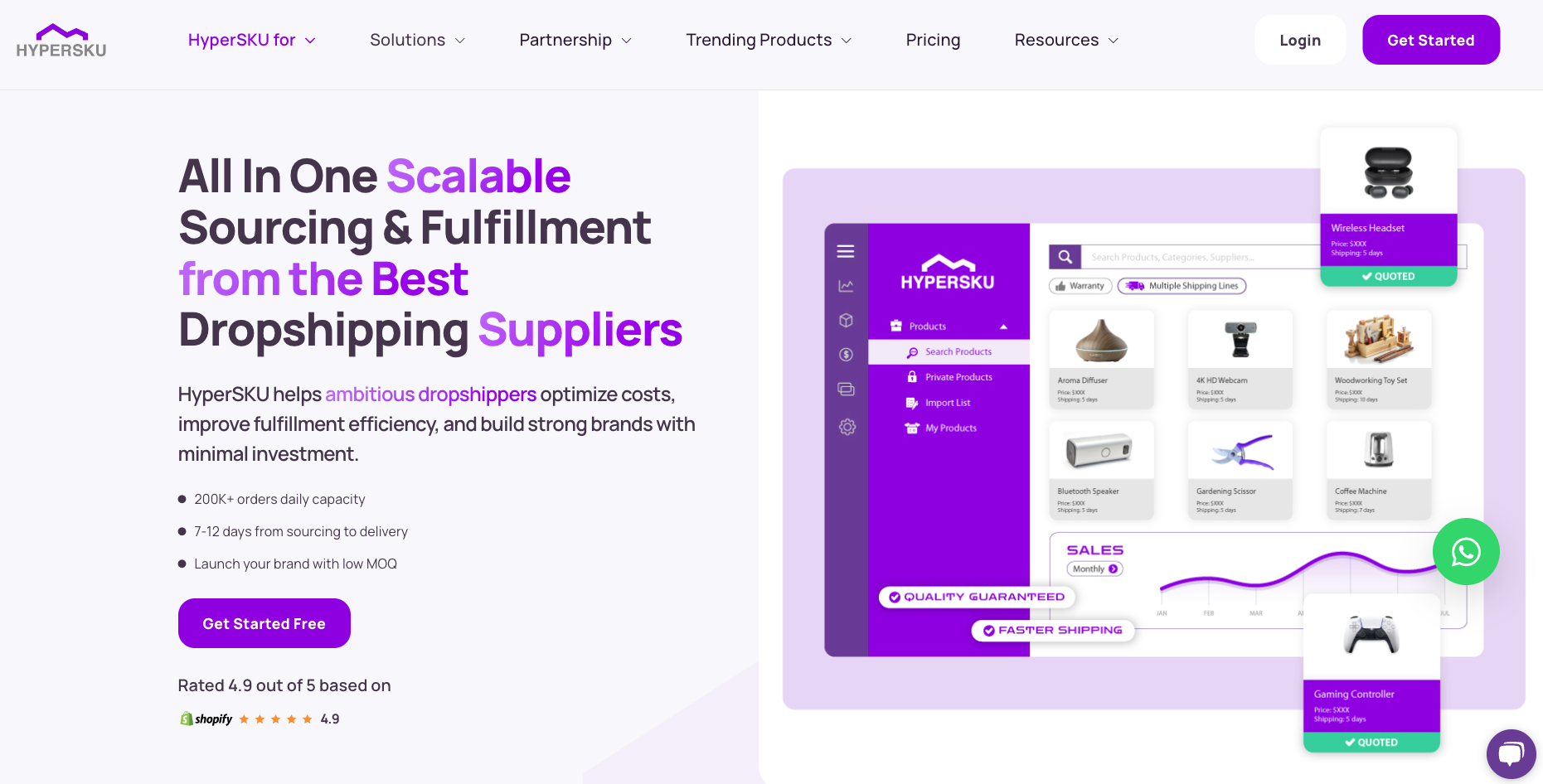
Full Backend Support – From supplier management to automated fulfillment, HyperSKU powers your backend engine just like other platforms, without the price tag. We also got dedicated 3 to 1 support for you to achieve your eCommerce growth.
Cross-Border Logistics – HyperSKU connects you to a network of verified suppliers and handles global fulfillment with real-time tracking.
Less Manual Work, More Control – Compared to private agents who often rely on spreadsheets and manual follow-ups, HyperSKU gives you a professional dashboard to manage operations efficiently.
You get all the key benefits of a subscription-based tool, without committing to another monthly bill.
Final Thoughts
Subscription-based tools can streamline, automate, and scale your dropshipping business—but that doesn’t mean you have to pay a monthly fee to get those advantages. Platforms like HyperSKU are built to give you a robust, no-subscription experience with the same powerful features that competitors charge for.
Curious how HyperSKU can work for your business? Start exploring here!
Why Every Serious eCommerce Seller Needs Mastermind Groups?
Scaling an eCommerce business today isn’t just about having the right product or ad strategy—it’s about surrounding yourself with the right people. That’s where eCommerce mastermind groups come in: high-level communities designed to connect ambitious founders, share what’s working, and spark actionable growth.
One great example is the HyperSKU Mastermind, an invite-only experience for global eCommerce sellers ready to scale smarter and faster.
Unlike online courses or one-way coaching, business mastermind groups offer a unique space for collaboration, idea exchange, and long-term accountability. You’re not learning in a vacuum—you’re growing alongside other operators who understand the challenges, speak the same language, and push you toward better results.
In this post, we’ll walk through how masterminds work, what to look for when choosing one, and introduce a standout option for those ready to level up: HyperSKU’s Mastermind happening this May, designed exclusively for global eCommerce founders.
What Is an eCommerce Mastermind Group?
An eCommerce mastermind is a curated group of online business founders and operators who meet regularly—either virtually or in person—to exchange ideas, share strategies, and solve challenges together. Unlike solo entrepreneurship or passive learning, a mastermind creates a space for peer-to-peer mentorship, strategic feedback, and high-impact accountability.
These groups typically include 5–15 members with similar levels of business maturity or shared goals. Conversations go far beyond surface-level tactics—they often involve deep dives into team structure, profit margins, tech stacks, ad performance, fulfillment logistics, and brand scaling.
The best mastermind groups aren’t just about networking—they’re about collaborative growth, where you gain from others’ wins, learn from their mistakes, and accelerate faster with collective support. Think of it as your private boardroom of eCommerce minds who actually get it.
Benefits of Joining a Mastermind for eCommerce
Running an eCommerce business can often feel like a solitary journey—especially when you’re scaling quickly, making high-stakes decisions, or navigating unfamiliar territory. That’s where a well-structured eCommerce mastermind can make a real difference.
1. Clarity Through Feedback
When you’re deeply involved in your own operations, it’s easy to develop blind spots. A mastermind group provides objective insights and constructive feedback from peers who understand the challenges you’re facing and can offer fresh perspectives.
2. Accelerated Growth
Mastermind members often share their proven strategies—ranging from high-converting marketing funnels to backend automations and customer retention tactics. You benefit from collective experience, reducing trial and error.
3. Strategic Accountability
Setting goals is easy. Achieving them is harder. Mastermind settings are built around accountability, helping members commit to their plans and follow through with focused action.
4. High-Trust, Curated Network
Unlike open online communities, masterminds are usually invite-only or carefully selected. This means you’re surrounded by serious operators, not beginners—creating an environment where trust, collaboration, and partnership opportunities can thrive.
5. Global Perspective
A diverse group brings diverse experience. Especially in global mastermind settings, members exchange insights on cross-border logistics, regional trends, compliance risks, and cultural nuances—helping you scale internationally with confidence.
What Makes a Great Mastermind Group?
An effective eCommerce mastermind goes beyond just networking. It’s about structure, shared insight, and long-term business impact. Here’s what to look for:
1. Curated Group of Founders
The best masterminds gather eCommerce founders from a range of niches—DTC brands,, marketplace sellers—creating space for cross-learning and idea exchange.
2. High-Impact Guidance
Led by seasoned facilitators or guest mentors with real-world experience, a strong mastermind offers guidance grounded in results, not theory.
3. Structured, Results-Driven Sessions
Regular meetings follow a clear itinerary—hot seat challenges, roundtable discussions, and accountability check-ins—so every session moves the needle forward.
4. Access to Extra Resources & Network
Top-tier masterminds give members exclusive access to insider tools, market insights, and most importantly, a vetted circle of eCommerce operators and service providers.
Top eCommerce Masterminds in the EU & US
Looking to connect with fellow eCommerce founders, gain strategic clarity, and scale your brand faster? Below are five curated in-person eCommerce mastermind events in the EU and US that offer high-level insights, intimate networking, and business breakthroughs.
1. HyperSKU Mastermind – Germany 2025
Location: Germany (EU)
The HyperSKU Mastermind is a curated 3-day event designed for 6–8 figure eCommerce founders. With limited spots available, it offers strategic workshops, small-group discussions, and high-impact networking tailored to help brands scale, automate, and expand globally. Hosted by HyperSKU, this mastermind connects top founders with expert mentors and hands-on support from logistics and fulfillment professionals—ideal for those ready to accelerate their international growth.
2. Master B2B Mindshare Summit – Chicago 2025
Location: Chicago, United States
This one-day private summit, taking place on March 12, 2025, at the University of Chicago Booth School of Business, is built for senior B2B eCommerce leaders. Through practitioner-led discussions and group collaboration, it focuses on key eCommerce growth pillars like technology, content, change management, and customer experience.
3. The MasterMinders – Manchester 2025
Location: Manchester, UK (EU)
A 3-day mastermind-style event that includes networking parties, intensive strategy sessions, and expert guidance from top marketers and founders. The MasterMinders is known for attracting high-performing entrepreneurs looking to sharpen their eCommerce skills—with a strong focus on digital growth strategies, including SEO, paid traffic, and conversion rate optimization. This makes it an excellent pick for sellers aiming to boost their visibility and scale efficiently.
4. Brands10X Mastermind Series – Multiple US Cities
Location: US (Miami, NYC, Toronto, Vegas, etc.)
Hosted across key cities in North America, Brands10X brings eCommerce brand owners together through private dinners and mastermind-style sessions. These curated gatherings foster meaningful connections and strategic idea sharing among successful entrepreneurs.
5. eCommerce Boost Day – Manchester 2024
Location: Manchester, UK (EU)
Organized by eCommerce Camp, this in-person strategy day is designed for experienced founders and marketers to refine their Q4 strategy and prepare for the year ahead. It’s a hands-on, insight-driven day focused on real-time planning and performance optimization.
Why Choose HyperSKU Mastermind Germany
Unlike many large-scale events where connections are shallow and sessions feel rushed, the HyperSKU Mastermind Germany offers an experience designed for real impact. Here’s what sets it apart:
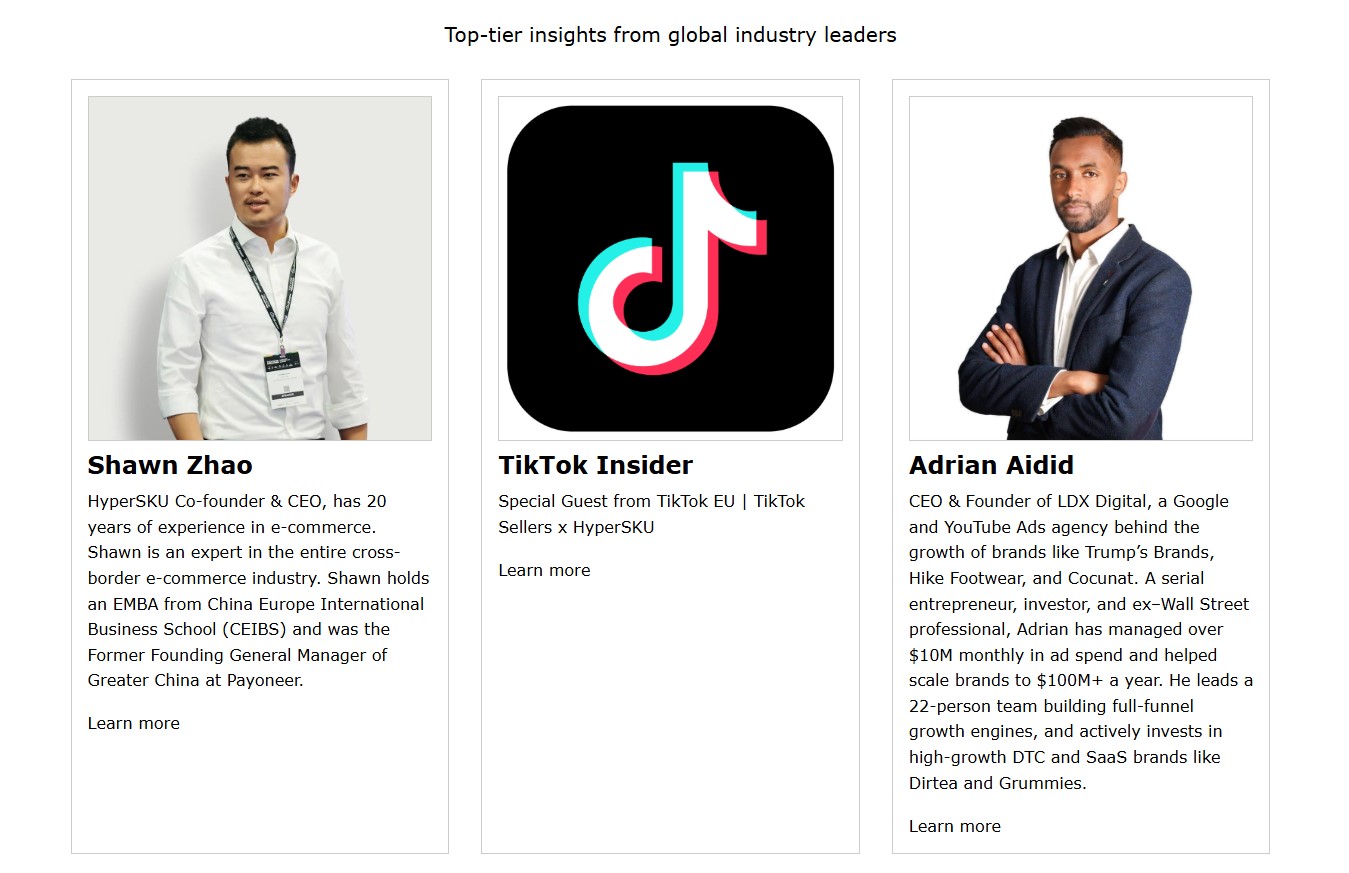
- Curated for eCommerce Elites
Every speaker is hand-picked from the top tier of the global eCommerce space. From brand owners scaling 8-figure operations to logistics innovators redefining fulfillment, expect insights grounded in real-world success, not recycled theory. - 10+ Power Sessions That Deliver
Our agenda is lean but powerful. With over ten focused sessions covering strategy, operations, growth, and marketing, every hour is packed with actionable insights. - Small-Scale, High-Impact
We keep it intimate on purpose. This isn’t about sitting in a crowd—it’s about sitting with the right people. Expect meaningful one-on-one conversations, peer feedback, and honest discussions you won’t find at crowded expos. - A Venue Made for Visionaries
Held at Châteauform’ – Burg Hemmersbach near Cologne, our venue combines natural beauty with modern amenities. It’s private, all-inclusive, and designed to help you step away from daily noise so you can think big, plan smart, and connect deeply.
Final Thoughts
In today’s fast-moving eCommerce world, it’s not enough to just keep up—you need to connect with the right people, in the right room, at the right time. The masterminds we’ve listed above offer valuable paths forward, but if you’re ready for something truly transformative…
Join us at HyperSKU Mastermind Germany 2025.
With elite speakers, curated participants, and an immersive, all-inclusive venue, this is where serious eCommerce founders come to unlock new strategies, new partnerships, and next-level growth.
Spots are limited.
If you’re scaling and looking for clarity, community, and momentum—this is the room you want to be in.
FAQ: HyperSKU Mastermind 2025
Q1: What is the HyperSKU Mastermind?
A1: HyperSKU Mastermind is an exclusive, in-person event for DTC brands, cross-border sellers, marketers, and industry partners. It’s designed to foster high-level knowledge exchange and real connections in an intimate setting.
Q2: When and where is the event?
A2: The event takes place on May 22–24, 2025, at Burg Hemmersbach, a private castle near Cologne, Germany.
Q3: Do I need to book my own hotel?
A4: No — accommodation is included in your ticket and will be arranged by the HyperSKU team.
Q4: What language will the event be in?
A5: All sessions and networking activities at the HyperSKU Mastermind will be conducted in English.